












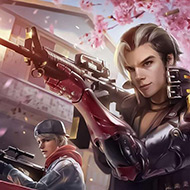
Free Fire

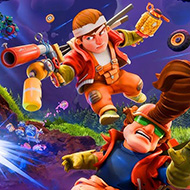




You drop onto Bermuda’s coastline with nine other squads already sprinting for the same loot crate, and by the time you’ve grabbed a shotgun and a med kit, the safe zone has already started shrinking. Free Fire compresses the battle royale formula into matches that rarely run past ten minutes, which is exactly why it caught on with players who wanted the genre’s tension without the hour-long commitment.
| Genre | Battle Royale / Shooter |
| Platform | Mobile / Browser |
| Match Length | ~10 minutes |
| Players per Match | Up to 50 |
Landing Zones and Early Rotations in Free Fire
Every round of Free Fire starts the same way: a cargo plane crosses the map and fifty players choose the exact second they jump. Landing at Clock Tower or Peak on the Bermuda map gets you into a gunfight almost immediately, while quieter edges like Riverside give you time to loot before the circle starts pulling everyone inward. New players often think the goal is grabbing the best gun immediately, but the more experienced pattern is grabbing whatever ammo type is already in your hands and rotating toward higher ground before the third zone collapse.
The zone timer is the real opponent in most matches. Players talk about “playing the circle” more than they talk about specific gunfights, because positioning ahead of the blue wall determines whether you fight on your terms or get caught crossing open ground. Vehicles like the Monster Truck or the Bike close that gap fast, but they also announce your position to anyone camping a ridge.
Loadout choices split the community. Some players commit to an AWM the moment they find one and play every fight from range; others stick to an MP40 or a Groza and force close-quarters engagements where reaction time matters more than aim. Neither is objectively correct — it depends on whether your squad is pushing or holding.
Characters, Skills, and How They Shape Free Fire Fights
Free Fire’s character roster is where the game separates itself from flatter battle royale competitors. Characters like Chrono deploy a force field that blocks incoming damage while letting allies shoot out of it, which turned him into a near-mandatory pick during ranked seasons before balance patches reined him in. Alok’s healing aura turned team fights into extended trades rather than quick eliminations, and squads built entire rotations around keeping him alive.
Kelly’s sprint bonus rewards aggressive players who close distance before an enemy can reposition, while Moco’s ability to tag enemies through walls after landing a hit rewards a completely different playstyle built on information rather than raw damage. Picking a character isn’t just cosmetic — it’s the first tactical decision of the match, made before the plane even crosses the map.
Pet companions add another layer on top of character skills, stacking passive bonuses that veteran players min-max alongside their loadout. It’s a system that rewards players who’ve put in the hours, which is part of why the skill gap between a fresh account and a max-level one feels so steep in the early game.
What Beginners Get Wrong in Free Fire
The most common early mistake is looting too long in a hot drop zone. Free Fire’s audio cues are loud and directional, and a new player who doesn’t recognize a nearby gunshot as a warning to reposition will often die to a third party before ever seeing their actual opponent. The second mistake is ignoring grenades entirely — cooked frags and gloo wall placement decide a surprising number of close fights that look like pure aim duels from the outside.
Gloo walls specifically confuse newcomers. They’re not just cover; thrown correctly, they can block a doorway mid-firefight or give you three seconds to heal that would otherwise get you killed. Players who master gloo wall timing tend to win fights they have no business winning.
What does the shrinking zone actually do to gunfights in Free Fire?
The zone forces engagements that wouldn’t otherwise happen — squads who spent the whole match avoiding each other get funneled into the same shrinking circle in the final minutes, which is why so many matches end in chaotic three- or four-way fights rather than clean one-on-one duels.
Why do ranked matches in Free Fire feel so different from casual ones?
Ranked lobbies restrict certain character skills and adjust loot distribution, which pushes players away from cheese strategies that work in casual and rewards consistent positioning and aim instead — it’s a noticeably slower, more deliberate pace.
What’s the fastest way to improve at looting efficiently in Free Fire?
Most experienced players stop opening every crate individually and instead learn the map’s fixed high-value spawn points, so they can loot a small number of guaranteed locations instead of searching buildings at random.
Free Fire’s identity comes from how much tension it packs into a short window — Chrono’s shield, a well-placed gloo wall, and a shrinking Bermuda map all combine to make ten minutes feel like a full battle royale campaign. Once you stop treating every drop as a race for the best gun and start reading the circle the way experienced squads do, the game opens up as something closer to a positioning puzzle than a straight shooter.