




















Bad Parenting 2












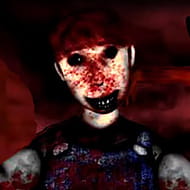
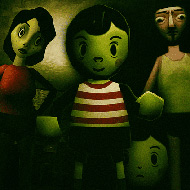
Bad Parenting 2 looks like a slow, melancholy story about a boy missing his father, but it plays like a puzzle box built entirely out of repressed memory, and the two impressions never fully reconcile — which is exactly the point.
The Shape of Bad Parenting 2’s Sequel Structure
Where the first chapter set up the disappearance and let dread build slowly, this sequel assumes you already understand the stakes and spends its runtime forcing you to actually process them. The boy’s fragmented recollections aren’t shown to you in order; you piece together what happened to his father by exploring settings that shift subtly each time you revisit them, and Mr. Red Face’s presence is the constant that ties every fragment back together.
The pacing is deliberately uneven. Some rooms hold you for a long, quiet stretch with almost nothing happening except environmental detail changing at the edge of your vision, and then a single sharp event breaks the calm without warning. That rhythm is what most reviews single out as the game’s biggest departure from typical horror pacing.
Mr. Red Face as a Mechanic, Not Just a Villain
Mr. Red Face isn’t scripted to appear on a timer the way a lot of horror antagonists are. His presence in a scene is tied to how much of the boy’s memory you’ve uncovered, meaning cautious players who avoid triggering memory fragments can go long stretches without seeing him at all — right up until a story beat forces the confrontation regardless of how carefully you played.
That design choice divides players. Some find it makes Mr. Red Face scarier because his appearances feel earned by the story rather than by a proximity meter. Others find it frustrating precisely because caution doesn’t reliably delay him, which removes a layer of player agency that horror games usually lean on.
Piecing Together What Happened to the Father
The central mystery isn’t solved through a single cutscene dump. Memory fragments recovered across different rooms contradict each other slightly before the fuller picture clicks into place, and the game trusts you to hold those contradictions in your head rather than resolving them immediately. Players who rush through exploration tend to miss the smaller environmental details that make the later revelations land — a photograph moved half an inch, a door that was locked on a previous visit and isn’t anymore.
What First-Time Players Get Wrong
Treating every room as a threat check: new players often move through spaces scanning only for Mr. Red Face, which means they walk past the memory-fragment details that actually drive the story forward and leave the ending feeling unearned.
Assuming safety equals progress: avoiding triggers doesn’t mean avoiding consequences — the story escalates on its own schedule, and players who play too cautiously sometimes get blindsided by a forced confrontation they thought they’d delayed indefinitely.
Rushing the quiet stretches: the slow rooms are doing narrative work even when nothing is chasing you, and skipping through them quickly is the single biggest reason players report the ending feeling confusing on a first playthrough.
The Difficulty Curve Bad Parenting 2 Hides
Bad Parenting 2 doesn’t get harder through faster enemies or tighter timers. It gets harder by asking you to hold more contradictory information at once, and by the point Mr. Red Face’s full role in the family’s history becomes clear, most players are working backward through earlier scenes in their memory to reconcile what they thought they understood. That’s a difficulty curve built entirely around comprehension rather than reflexes, which is unusual even within the horror genre this game sits in.
An Ending That Punishes Skimming
Early in the game, small inconsistencies read as background flavor. By the time you reach the fuller confrontation with Mr. Red Face, those same inconsistencies turn out to have been the actual plot, and players who treated them as flavor the first time through often replay the game specifically to catch what they missed. That replay pattern is one of the more distinctive things community discussions bring up — people don’t replay for difficulty, they replay for comprehension.
Where Players Land on the Sequel
The most honest criticism floating around discussions of Bad Parenting 2 is that its refusal to explain itself clearly can read as pretentious rather than clever, depending on how much patience a given player has for ambiguity. That’s a fair critique, and the game doesn’t do much to soften it — there’s no difficulty setting for narrative clarity, and either the fragmented structure works for you or it doesn’t. What keeps people talking about it anyway is that the moments it does land, particularly anything involving Mr. Red Face directly confronting the boy about his father, land harder because of the ambiguity rather than in spite of it.
Whatever side of that debate you fall on, Bad Parenting 2 isn’t trying to be a jump-scare gallery with Mr. Red Face as the mascot — it’s trying to make you sit with a family’s unresolved grief long enough that the horror stops feeling supernatural and starts feeling uncomfortably familiar.