











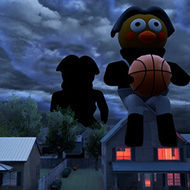
KunKunNest


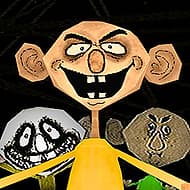

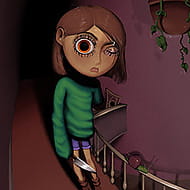
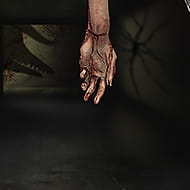

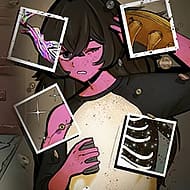

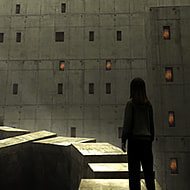
You round the same corner of the same hallway for the third time, and a note pinned to the wall wasn’t there a second ago. That’s the moment KunKunNest stops feeling like an ordinary haunted house and starts feeling like a puzzle box that resets every time you guess wrong. Underneath its display name, what’s actually running here is Apocrypha, a first-person loop-horror game built entirely around one warning scrawled by whoever came through before you: the arrows never lie.
| Genre | Horror / Puzzle |
| Perspective | First-person |
| Core Tools | Phone, Flashlight |
| Session Length | 10-20 minutes |
The Loop KunKunNest Traps You In
The premise is simple to describe and brutal to survive. You wake up inside a house that repeats itself the instant you make a wrong turn, and the only way out is to follow directional cues left behind by whoever was trapped here before you. Right-click brings up your phone, left-click swings your flashlight, and between the two you’re expected to read a house that’s actively trying to make you doubt what you just saw.
What makes KunKunNest land differently than a jump-scare gauntlet is how quietly it punishes carelessness. There’s no health bar counting down while you explore. Instead, one bad guess about which door leads forward just quietly sends you back to where you started, notes and all, with the loop resetting around you like nothing happened.
Players who’ve cleared it describe the first loop as disorienting almost on purpose, since the game wants you unsure of your own memory before it starts trusting you with real information.
Reading the Signs Instead of Fighting the House
Every note you flashlight-scan in KunKunNest is written by the same unseen precursor, and together they form the game’s actual rulebook: arrows painted or scrawled somewhere in a room point toward the real path, and second-guessing them is almost always the wrong call. The phone doesn’t map the house for you, it just lets you re-read whatever you’ve already found, which means memory and attention matter more than any inventory system.
This is where the game earns its “escape the loop” tagline. You’re not solving a lock-and-key puzzle in the traditional sense, you’re building trust in a communication system left by someone who clearly didn’t make it out unscathed.
- Right-click phone: re-reads notes you’ve already discovered.
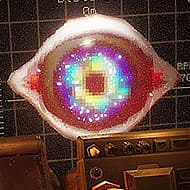
- Left-click flashlight: reveals new arrows and messages in dark corners.
- A wrong door resets the loop from its start point, not from zero.
The Thing That Patrols KunKunNest’s Halls
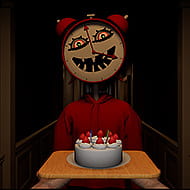
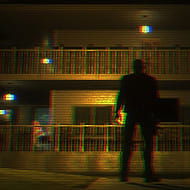
KunKunNest isn’t only about signage. Something moves through the same rooms you’re navigating, and its patrol pattern is loose enough that memorizing a single safe route won’t save you twice. The one mercy the game offers is speed: it’s noticeably slower than you are, so a level head and a clear exit in mind beats blind panic almost every time it appears.
Community chatter around the game tends to split here. Some players find the slow-but-persistent chase genuinely tense precisely because you can outrun it if you don’t freeze, while others think a faster, less forgiving threat would have matched the dread the notes are building better. Both camps agree the arrow-reading is the real spine of the experience, not the chase.
Do you have to fight anything in KunKunNest?
No. The only real strategy against whatever patrols the halls is distance and a plan, since it moves slower than you do but won’t stop searching once it’s aware of you.
What happens if you misread an arrow in KunKunNest?
You’re sent back through the loop rather than losing outright, which is part of why players describe early runs as confusing on purpose until the note system starts making sense.
Is there a way to skip reading the notes?
Not really. The notes are the only guidance the game gives, so skipping past them just means guessing at doors blind, which is the fastest way to keep resetting the same loop.
Whether you know it as KunKunNest or by its real identity, Apocrypha’s whole design lives or dies on whether you trust an arrow you half-glimpsed under flashlight glare, and that tension between memory and doubt is what keeps players circling back to the loop long after they’ve technically found the exit.