




















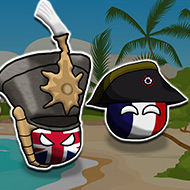
Country Ball Europe 1890







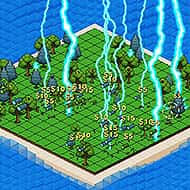


A declared war means nothing on its own in Country Ball Europe 1890 until cards start hitting the table, which is the detail that separates this from a typical map-painting strategy game. Territory changes hands through turn-based combat resolved with cards dragged onto your countryball mid-fight, not through simulated numbers ticking away in the background.
| Genre | Turn-based strategy with card combat |
| Playable countryballs | 50 or more |
| Modes | Campaign and conquest |
| Diplomacy options | Alliances, puppet states, annexation |
Country Ball Europe 1890 Turns Diplomacy Into a Card Game
Choosing a campaign or conquest mode and picking a countryball sets the starting position, but almost nothing after that plays out passively. Alliances, war declarations, and puppet arrangements all require active management, and letting diplomacy run on autopilot tends to leave a player exposed to a rival countryball who didn’t.
Fifty-Plus Countryballs, Fifty-Plus Different Starting Problems
With more than 50 countryballs available, starting position varies enormously — a smaller nation surrounded by stronger neighbors faces a completely different opening strategy than a countryball with room to expand uncontested. Picking a countryball without considering its map position is one of the more common ways a new player ends up cornered within the first several turns.
Declaring War Is the Easy Part of Country Ball Europe 1890
The declaration itself takes one decision. Winning the resulting combat takes a deck of cards played well, which means a countryball with a weak military but a strong card hand can still hold its own against a larger neighbor who plays combat carelessly.
Puppet States: Conquest Without Full Annexation
- Puppeting a weakened countryball keeps it nominally independent while pulling it under your influence, which avoids the cost of full annexation.
- Puppet states can later be annexed outright once a player is ready to absorb them completely.
- Removing a puppet or ally relationship is possible, though doing so carelessly tends to damage standing with other countryballs watching how alliances are honored.
Combat Cards and Why Drag-and-Drop Timing Matters
Each card carries a distinct combat effect, and dragging one onto your countryball during a fight applies it at that specific moment rather than queuing it for later. Playing a strong card too early can waste its effect on a fight that was already winning, while saving it too long risks losing the engagement before it gets used at all.
Training Your Countryball Between Battles
Between conflicts, a countryball can be trained, taught new fighting capability, and equipped with better weapons, all of which feeds directly into how combat cards perform in the next fight. Skipping this between wars is a common reason an early-game countryball starts losing fights it should be winning as opponents keep training and it doesn’t.
Campaign Mode Versus Jumping Straight Into Conquest
Campaign mode frames objectives around a structured path, while conquest mode drops a player into open-ended territorial expansion with fewer guardrails. Newer players often find campaign’s structure easier to learn the card combat system within, before taking that knowledge into a full conquest run.
Why Annexing a Puppet Too Early Backfires
Annexing a puppet state before it’s fully stabilized can strain resources and provoke other countryballs who were watching how that relationship was handled. Patience with puppet states before full annexation tends to pay off more than rushing the conversion for a quick territory boost.
Do you need a strong military to win a war in Country Ball Europe 1890?
Not necessarily — card play during combat can offset a weaker starting military, since the cards themselves determine most of a battle’s outcome rather than raw troop numbers alone.
Can alliances be broken without consequence?
Breaking an alliance or removing a puppet is possible, but doing so tends to affect how other countryballs approach diplomacy with you afterward, since reputation carries between interactions.
Is conquest mode harder than campaign mode?
It’s less structured rather than strictly harder, giving fewer guided objectives and more open-ended territorial decisions than campaign mode provides.
Country Ball Europe 1890 rewards patience as much as ambition — a small countryball that trains carefully and plays its combat cards well can out-maneuver a larger neighbor who declared war expecting size alone to settle things.