





















sys:tan restore







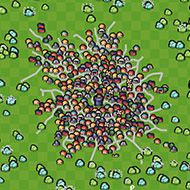





What does it actually mean to give a broken computer a deep clean by blasting shapes apart? That's the entire premise of sys:tan restore, a small incremental game built around repairing a system that has clearly been neglected for a long time.
| Genre | Incremental, shape-clearing |
| Core Mechanic | Blasting shapes to clear corruption |
| Party System | Caretakers with individual skill trees |
| Theme | An anti-virus system personified as Systan |
What sys:tan restore Actually Has You Doing
Underneath the presentation, sys:tan restore is a numbers game: shapes appear representing whatever is clogging up the system, and clearing them chips away at the mess a little at a time. There's no elaborate story sequence gating any of it; the game trusts the loop of blasting shapes and watching numbers climb.
That trust is well placed for the audience it's built for, since incremental fans generally show up expecting exactly that kind of steady, readable progress rather than a plot.
Newcomers who haven't played anything like this before sometimes expect more explicit direction and are surprised by how much the game leaves to be inferred from the numbers themselves.
Meet Systan and the Caretakers Working the System
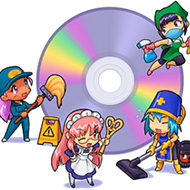
The system being restored is personified as Systan, an anti-virus program styled with the kind of anime-character presentation that gives the whole project its identity. Around her, a small party of caretakers does the actual restoration work, each one representing a different piece of the cleanup effort.
That framing, a broken system given a face rather than treated as an abstract meter, is what a lot of players mention first when describing the game to someone who hasn't tried it.
Assembling a party that covers different roles matters more than picking one favorite caretaker and ignoring the rest.
Blasting Shapes: The Core Loop of sys:tan restore
Every session comes back to the same basic action: shapes show up, caretakers blast through them, and the system inches closer to being clean. Early on this feels almost too simple, but the loop is built to be revisited rather than mastered in one sitting, which is standard for the genre it belongs to.
Players who enjoy watching numbers scale tend to get pulled in fastest, since that steady growth is really the entire hook.
By the time a second or third session rolls around, the shape-blasting stops feeling repetitive and starts feeling like a rhythm a player has actually built for themselves.
Skill Trees and How Each Caretaker Specializes
Each caretaker branches into their own skill tree, meaning a party built around one strategy plays noticeably differently from a party leaning on another. Specializing early can speed up a specific part of the cleanup, but it also means other areas of the system lag behind if left unattended for too long.
A caretaker specialization: the particular branch of a skill tree a player invests points into, ends up being the main long-term decision the game asks a player to make.
Players who like optimizing builds tend to spend far more time inside the skill trees than on the shape-blasting itself, treating the trees as the real game underneath the surface loop.
Why the Early Minutes in sys:tan restore Feel Slower Than They Should
New players sometimes underestimate how much of the early game is about setup rather than payoff, since a party with underdeveloped skill trees clears shapes at a noticeably slower pace than a party that's been given a chance to grow. Spending too much time blasting shapes manually instead of investing into the caretakers is the single most common early mistake.
Once the first few skill points land in useful places, the pace picks up quickly and the early sluggishness stops being an issue.
That early slowness is honestly one of the more divisive parts of the design, since some players find it a fair on-ramp while others feel the game takes too long to hand over its more interesting decisions.
Scaling Up: How Difficulty and Pace Shift Over a Run
As caretakers level up, the shapes clogging the system don't stay the same either, and keeping pace with that scaling is where most of the game's actual challenge lives. A party that specialized too narrowly early on can find later shapes taking noticeably longer to clear than expected.
That rising pressure is what keeps sessions from feeling like idle busywork once the numbers get large.
Balancing every caretaker's growth against the others becomes the real skill test once a session runs long enough for the gap between strong and weak caretakers to actually show.
The Anime-Software Theme and Why It Works Here
Framing an anti-virus program as a character named Systan gives the cleanup premise a personality that a plain progress bar never could, and it's a big part of why people remember this game after one sitting. The presentation leans fully into that anime styling rather than treating it as a joke layered on top of a generic incremental.
Community reaction to the music in particular comes up often, with players specifically calling out the soundtrack as one of the more memorable parts of a short session.
Not every player connects with the theme immediately, and some come in expecting a more conventional incremental before the character-driven framing wins them over.
What Players Praise and What They Argue About in sys:tan restore
Most positive reactions single out the music and the addictive pull of watching a party of caretakers slowly clear a system that started out an absolute mess. That combination of a strong hook and a likable presentation is what keeps people coming back for another short session rather than walking away after one.
One recurring point of confusion is the game's own listing, which files it under a card game category on its storefront despite playing almost entirely like a shape-blasting incremental with skill trees. Regulars still bring that classification quirk up when introducing newcomers to it.
Being an early, still-growing project also means some players run into rough edges and report them, which is normal for something this size and doesn't take away from what already works.
Getting More Out of a Long Session
Spreading skill points across the whole party rather than stacking them onto one favorite caretaker tends to pay off once the shapes start scaling up. Players chasing the fastest possible cleanup usually end up rebalancing their caretakers more than once as they learn where the system's slowest bottlenecks actually are.
Sticking with a session past the early slow stretch is consistently where the game starts to click for people who almost gave up on it too soon.
Treating the skill trees as the real decision space, rather than an afterthought bolted onto the shape-blasting, is the clearest way to see everything this small game is actually offering.
sys:tan restore turns a simple idea, clean up a broken system one shape at a time, into something with real staying power, and once Systan's own personality settles in alongside a party of caretakers finally hitting their stride, it's easy to see why players keep coming back for one more session.