






















Jammed













In Jammed you start with an empty map, a blank grid of districts waiting to be linked, and nothing else. There’s no tutorial hand-holding you past this point — you pick up the pencil tool, draw your first one-way road, and watch what happens when traffic actually starts moving. That first minute tells you almost everything about what the rest of the game demands from you.
| Genre | Simulation, Strategy, City Builder |
| Platform | PC (Windows) |
| Developer | Szaloki Sandor |
| Price | $4.99, with a free demo available |
Drawing Roads and Reading the Grid in Jammed
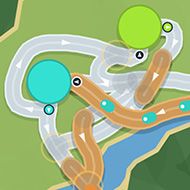
The core loop is simple to describe and much harder to execute cleanly: place districts, connect them with hand-drawn one-way roads and bridges, then run the simulation and watch hundreds of cars try to use whatever you built. Jammed doesn’t grade you on looks. A road network that seems tidy on paper can still choke the moment real traffic volume hits it, and the game is fairly ruthless about exposing bad habits early.
New players almost always make the same mistake: they connect districts with the minimum number of roads possible, treating the map like a wiring diagram instead of a living system. That works for the first few minutes. It stops working the second a new district appears and starts pulling traffic through an intersection that was never built to handle a second source.
Bridges complicate things further. Crossing a river commits you to a chokepoint, so where you place that bridge early on tends to define how much redesign work you’ll be doing later. Players who treat bridge placement as a permanent decision, rather than something to plan around future growth, run into the most frustrating gridlock.
Why Traffic Jams Escalate as Jammed Progresses
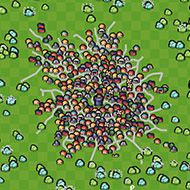
The game keeps adding districts as you play, and that’s where the real difficulty curve lives. A road layout that ran smoothly for the first stretch of a session can become overloaded the instant a new district spawns and starts routing cars through it. You can’t just set up a network once and walk away — Jammed expects you to keep coming back and redesigning intersections that used to be fine.
This is where the achievement list doubles as a rough difficulty ladder. Working toward Novice Engineer feels achievable within a single sitting, but Real Engineer and the aptly named That’s a City ask for sustained, city-scale planning rather than a couple of clever fixes. Getting there means thinking several districts ahead instead of solving problems one at a time as they appear.
Score-focused players tend to obsess over interchange efficiency, timing exactly when to widen a junction before it becomes a bottleneck rather than after. Meanwhile, more casual players just want to see their city hum along without total gridlock, and that’s a perfectly valid way to enjoy the game — Jammed doesn’t force you into a single playstyle to have fun with it.
Interchanges, Bridges, and Advanced Layouts
Once you’ve got a handful of districts running smoothly, the game starts rewarding more ambitious interchange design — multi-road junctions that split traffic across several directions instead of funneling everything through one intersection. This is also where the export feature becomes genuinely useful: turning your best traffic solutions into GIFs lets you study your own layouts after the fact, which is more valuable than it sounds when you’re trying to figure out why one interchange keeps backing up.
Leaderboard chasers lean hard into this stage, since Jammed tracks performance well enough to make competitive redesigns worth pursuing.
What Long-Time Players Say About the Pacing
With only a handful of user reviews so far, Jammed is still a young release, and that shows in a few places — some players note the game could use more feedback on exactly why a particular junction is failing, rather than just watching cars pile up. It’s a fair criticism for a game built almost entirely around reading visual traffic patterns.
Is there a free way to try Jammed before buying?
Yes — a Jammed Demo is available for download directly through Steam, letting you test the road-drawing and simulation systems before committing to the full $4.99 purchase.
How do you actually fix a traffic jam once one starts?
Most jams in Jammed come down to a single overloaded junction. Widening the interchange, adding a second bridge, or rerouting one-way roads to spread traffic across two paths instead of one is almost always more effective than trying to fix the district that’s generating the traffic in the first place.
Does Jammed have more than one map to play on?
The game ships with multiple handcrafted maps rather than procedurally generated ones, so each map’s river placement, starting districts, and bridge opportunities are designed by hand rather than randomized.
Jammed isn’t trying to be a sprawling city-builder with zoning and budgets — it’s a tighter, more focused puzzle about roads, bridges, and the moment a district you forgot about starts sending traffic somewhere you didn’t plan for. Chasing That’s a City is really the whole point: building a network patient enough to survive its own growth.