






















TurretGirls

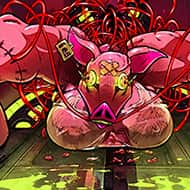

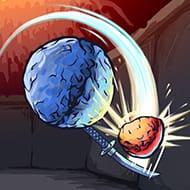


You’re locked into your seat on the turret platform, generators humming behind you, and the first wave of aliens is already pouring out of a wormhole that wasn’t there ten seconds ago. This is TurretGirls in a single moment: fixed position, escalating chaos, and no backup coming.
| Genre | On-rails shooter / tower defense hybrid |
| Platform | Windows (PC) |
| Playable characters | Girl, Raven |
| Session length | Roughly 90 seconds per “day,” across multiple stages |
Defending the Superweapon in TurretGirls
The premise is stripped down on purpose. Unstable wormholes are dumping alien forces onto Earth, and your job — as a member of the Planetary Alien Neutralization & Tactical Strike Unit, or P.A.N.T.S.U. for short — is to protect the power generator feeding humanity’s last-resort weapon, referred to in-game simply as THE SUPERWEAPON. You do this from a fixed turret, which is where the on-rails shooting meets tower-defense-style resource management.
What separates the game from a straightforward shooting gallery is that firepower alone doesn’t win fights. You’re managing frontline generators — labeled G1 through G5 in the interface — that need to be built, protected, and upgraded alongside your own weapon systems. Losing a generator isn’t just a setback; it starves the superweapon of the charge it needs, which turns each wave into a balancing act between offense and infrastructure.
Community reaction has been largely positive since launch — the game currently sits at 4.7 out of 5 across roughly 49 ratings — though it’s a small, still-growing player base rather than a mainstream hit, and that context matters when weighing any single opinion about it.
Girl, Raven, and the Roster TurretGirls Actually Has
At launch, TurretGirls shipped with a single playable character, referred to in-game as Girl. Raven was added later as a second playable option through a content update, expanding the roster to two. Each brings a different feel to the turret seat, and the addition of Raven was treated as a major milestone in the game’s development log rather than a minor patch.
Players who’ve spent real time with the game note that the roster is still narrow compared to what the concept could support — one detailed community writeup rated the character content at 4 out of 5, specifically praising Girl’s personality fitting the game’s tone while acknowledging there isn’t much roster depth yet beyond the two available fighters.
Reading the Damage State
One of the more talked-about systems is cosmetic rather than mechanical on paper, but it functions as a live readout of how much punishment you’re absorbing: your uniform visibly degrades as you take hits, described by the developers as “battle-tested” and “strategically disposable.” It’s a quick-glance way to gauge how close you are to a mission failure without needing to watch a separate health bar, and it ties directly into the game’s tongue-in-cheek tone rather than being played straight.
Combat itself splits opinion. The dodge mechanic, meant to let you slip past incoming projectiles, carries a brief movement pause on the recovery frame — useful once you’ve internalized enemy patterns, but punishing if you mistime it during a dense wave. One veteran player summed this up plainly in a public review: the dodge “feels a bit extra” at first and only clicks once the game forces you to rely on it.
Enemy variety draws from a handful of archetypes — flying units, ground crawlers, acid-spitters, and larger “gunk”-throwing threats that soak up sustained fire. None of it reinvents the on-rails shooter formula, but the generator-defense layer underneath keeps encounters from feeling like pure reflex tests.
Photo Mode and the Update Cadence
TurretGirls has kept a steady post-launch update rhythm, adding a Photo Mode, new stages, difficulty systems, and additional weapons across multiple patches through 2026. That consistency has earned it some goodwill even from players who think the core loop is thin — the general sentiment in the comments is that the game is worth the price because the ongoing support shows real effort, even if the moment-to-moment sessions are short.
Difficulty is structured around three selectable levels, each with a separate “Neverending” variant for players who want to push a single run as far as possible rather than clearing a fixed stage. That split matters for pacing: the standard levels are built around short, escalating “days” of roughly a minute and a half each, while Neverending mode removes the ceiling entirely and becomes a pure survival test.
What do the generators actually do in TurretGirls?
The G1 through G5 generators feed power directly to the superweapon charge. Losing one slows your progress toward activating it and usually forces you to divert fire away from incoming aliens to rebuild, which is the main source of difficulty spikes in longer sessions.
Is there more than one playable character?
Yes — Girl was the original playable character at launch, and Raven was added afterward through a dedicated content update, giving players a second option with a different feel on the turret.
How long does a single run of TurretGirls take?
Individual “days” run around 90 seconds, but they stack up quickly across a stage, and Neverending mode removes any fixed endpoint for players who want a longer survival challenge.
TurretGirls isn’t trying to be a deep tactics game, and it doesn’t pretend otherwise — it’s a tight loop of turret fire, generator triage, and protecting THE SUPERWEAPON one wave at a time, carried by Girl and Raven and by a developer that’s kept adding content well past launch. For short bursts of alien-blasting chaos, it delivers exactly what its premise promises.