
















BOMBANANA!


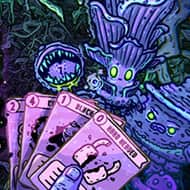



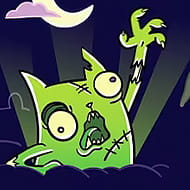
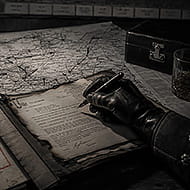
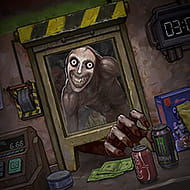


You’re crouched over a ticking device with your hands shaking, and the only person who can see the wire colors is fifteen feet away, watching a silent countdown timer and unable to say a word to you. That’s a normal ninety seconds in Bombanana. The game drops three players into a cramped minivan with a live bomb between them, and none of the three can rely on the sense the others take for granted.
| Genre | Co-op puzzle, party |
| Players | Exactly three, no more, no less |
| Perspective | First-person |
| Core mechanic | Asymmetric communication under time pressure |
Every match in Bombanana locks each player into one of three roles, and the whole game is built around the gap between them. The Blind Monkey is the only one who can physically touch the bomb, but they see nothing but a black screen and have to read the device by feel, including the raised Braille panels tucked into some of the modules. The Deaf Monkey can see everything clearly and often holds the printed manual, but hears nothing the other two say. The Mute Monkey can see and hear perfectly, sitting in the middle of the conversation, but can’t speak a single word back. Getting instructions from one monkey to another is the entire game, more than any individual puzzle module.
Building a Communication Chain Without Talking
Most new groups walk into their first bomb thinking Bombanana works like a standard defusal party game, where someone reads a manual and calls out the steps. That assumption falls apart within the first module. Since voice chat is restricted per role, information has to be relayed through whatever channel a given pair of players actually shares. The Mute Monkey ends up as a kind of translator, using gestures, pointing, or written notes to bridge what the Deaf Monkey can read and what the Blind Monkey needs to hear. Beginners lose their first few bombs simply because nobody establishes a system before the timer starts.
Groups who improve fast tend to agree on a shorthand before the countdown even begins — a set number of taps for “cut,” a specific gesture for “wrong wire.” Players who gravitate toward the planner role in other party games usually end up steering this setup phase, while players who like fast improvisation tend to thrive once the panic sets in and the plan collapses anyway.
What surprises a lot of players the first time through is how little the puzzles themselves matter. The wire-cutting, the dial-turning, the button sequences — none of it is hard on paper. The difficulty lives entirely in translation errors, and Bombanana leans into that by making sure no single player ever has the full picture.
Puzzle Modules and How Difficulty Escalates
Each bomb is built from a set of Puzzle Modules, and difficulty climbs by stacking more modules onto a single device rather than by making any one module individually brutal. Early bombs in the game might carry two or three modules with generous timers. By the time a group reaches the mid-tier bombs, four or five modules run simultaneously, and the Blind Monkey has to prioritize which one to solve first while the other two argue — silently, or through whatever channel they’ve got — about what matters most.
The Level System ties progression to successful defusals rather than to time played, so a group that keeps failing the same bomb will keep replaying it rather than getting pushed forward. That’s a point some players find frustrating, since a single miscommunication near the end of a long bomb resets the whole attempt, and Bombanana currently offers no partial-credit system for a bomb that was almost solved.
Later modules introduce elements that only the Deaf Monkey can interpret through the manual’s illustrations, or that only the Blind Monkey can register through vibration and texture. This forces the communication chain to work in both directions rather than flowing one way, which is usually where a lot of the shouting starts.
Free Mode and Designing Your Own Bomb
Once a group has cleared the main progression, Free Mode opens up the option to build a custom bomb, mixing and matching modules and setting a timer length manually. It’s less a game mode and more a trust exercise — you’re deciding how much confusion your friends can actually survive. Community discussion around Bombanana treats Free Mode bombs almost like a currency, with players sharing brutal combinations for others to attempt.
- Players who enjoy structured escalation tend to favor the standard Level System progression.
- Players who like chaos and improvisation gravitate toward stacking unfamiliar modules in Free Mode.
- Players coordinating remotely rely heavily on the Mute Monkey’s gestures being visible on camera, which some groups find limiting compared to sitting in the same room.
What players ask before their first bomb
Can Bombanana be played with two people instead of three?
No. The game is built around exactly three roles working together, and the Blind Monkey, Deaf Monkey, and Mute Monkey setup doesn’t function with a role missing. Groups looking for a two-player alternative won’t find one built into Bombanana.
What happens if the Mute Monkey can’t get information across in time?
The bomb simply runs out of time and the round ends in failure, sending the group back to retry the same bomb rather than advancing. There’s no partial success state tied to individual modules.
Does the Blind Monkey ever get to see anything?
Not visually. The Blind Monkey experiences the entire bomb through touch, sound cues, and the Braille panels on certain modules, which is part of why the role tends to be the most physically tense of the three.
Bombanana isn’t really testing whether three people can solve puzzles — it’s testing whether the Blind Monkey, Deaf Monkey, and Mute Monkey can turn a room of missing information into something workable before the timer runs out, and most groups only figure out how in the middle of their third or fourth attempt.