









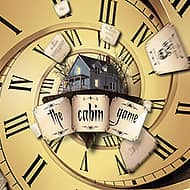
The Cabin Game












You shuffle your hand, glance at the three other players squeezed into the lobby with you, and flip the first card. The room reshapes itself as you play it — a wall where there wasn’t one, a door that wasn’t there a second ago — and somewhere in the cabin, something reacts to the choice you just made. The Cabin Game turns escape-room tension into a literal card game: every hand you’re dealt both maps the house and decides how much danger you’re inviting into it.
| Genre | Co-op horror card game, 1-4 players |
| Status | Early Access |
| Core Mechanic | Playing cards to build the cabin’s layout and trigger events |
| Content at Launch | 30+ cards and 12 monster types, with more planned during Early Access |
How a Round of The Cabin Game Actually Plays Out
There’s no fixed floor plan waiting for you when a match starts. The cabin is built by the players themselves, one card at a time, and that’s the twist that separates The Cabin Game from a normal haunted-house crawl: the danger you run into later is a direct result of the rooms you chose to place earlier. A hallway placed carelessly in round one can turn into a chokepoint you’re all fighting over by round four, and there’s no undo button once a card is down.
Beginners consistently make the same early mistake — they play cards purely for the short-term clue or item they unlock, without thinking about what shape they’re leaving the cabin in. Since the deck is reshuffled at the start of every game, no single strategy carries over cleanly from one session to the next, but the habit of reading a card’s long-term layout consequences, not just its immediate reward, does.
Difficulty escalates less through tougher monsters and more through compounding decisions. Early rounds are forgiving; a bad room placement is annoying but survivable. By the late game, with more of the deck exhausted and fewer safe cards left to play, the same mistake can trap the whole group with no clean way out, which is exactly the pressure the game is built around.
Playing With Others in The Cabin Game vs Going It Alone
The social layer is where most of the game’s personality shows up. You can carry a struggling teammate through a rough hand, or you can quietly let the environmental consequences of a card fall on someone else — the game never forces cooperation, it just makes selfishness a viable, slightly monstrous option. Groups who talk through every card before playing it tend to build safer cabins; players who rush turns to keep the pace fast tend to build more chaotic, higher-risk ones almost by accident.
Solo players get a smaller, more controlled version of the same tension, without teammates to blame for a bad room. It’s a legitimately different rhythm, and one some early reviewers have noted feels thinner than the full co-op chaos, which is a fair trade-off to know about going in.
- Cautious players who scout a card’s effect before committing tend to avoid boxing the group into dead ends
- Social players who narrate their hand out loud generally keep the group’s cabin layout more coherent
- Risk-takers chasing candy and rare cards fast often trigger monster events earlier than the group is ready for
The Boo Factory, Candy, and What It’s Actually For
Between matches, candy collected in-game funds The Boo Factory, the cosmetic and lobby-customization hub where players kit out their character and mess with friends using tricks and treats. None of it changes the core card mechanics, but it gives repeat sessions a reason to keep escaping instead of stopping after one clean run, and it’s become a bigger part of the community conversation than a lot of early reviews expected from what’s technically still a horror game.
One thing worth being upfront about, since it’s already a divisive point in the Early Access reviews: the current build has 30-plus cards and a dozen monster types, and while that’s enough for real variety, players deep into repeat sessions are already asking for more content faster than the roadmap promises it.
How many players can join The Cabin Game?
Matches support one to four players, and the cabin’s layout and difficulty scale with how the group plays its cards rather than with a fixed player-count setting.
Does The Cabin Game have a set map?
No — the cabin is assembled by the players’ own card choices each match, so no two games build the same layout twice.
Is The Cabin Game finished or still in Early Access?
It’s currently in Early Access, with the developers planning roughly six to eight months of updates that add more cards, monsters, and store items before a full release.
What makes The Cabin Game worth returning to isn’t any single scare, it’s the slow-building realization that the monster in the hallway is there because of a card you played two rounds ago at The Boo Factory’s expense. Escape rooms usually punish you for what you missed; this one punishes you for what you built, and that’s a sharper kind of horror than most cabin games bother reaching for.