
























[HERROR] Gas Station Case
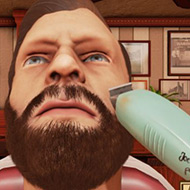













You clock in, flip the station lights on, and settle behind the counter for another slow shift. In [HERROR] Gas Station Case you’re Dan Cooper, a 25-year-old attendant who just got laid off from a uranium plant and took this night job to keep the lights on at home. Then his friend Michael turns up talking about a strange case he found by the lake, and the shift stops being slow.
| Genre | First-person narrative walking simulator |
| Setting | Night shift at a small-town gas station |
| Playable character | Dan Cooper |
| Series position | First episode of an anthology |
Working the Counter in Gas Station Case
The core loop is closer to a job simulator than a chase game. You ring up customers, answer the station phone, restock shelves, and refuel cars while keeping half an eye on the parking lot. Nothing about the early shift screams danger — that’s the point. [HERROR] Gas Station Case spends its opening stretch training you to read the mundane so the wrong details actually register later, like a customer who lingers too long by the coolers or headlights that never leave the lot.
Beginners tend to rush the routine tasks, clicking through dialogue and skipping the small talk with regulars. That’s a mistake, because several early conversations plant details you’ll need once Michael’s discovery starts pulling the story sideways. Slowing down during the job-sim segments is where most of the game’s texture lives.
One moment players consistently bring up in community threads is the sound design during a routine fuel-up gone wrong — a specific hum from the pumps that shifts pitch right before something changes in the environment. It’s not a jumpscare, just a detail you only notice because you’ve heard the normal version dozens of times already.
Michael, the Lakeside Case, and the Woods
Once Michael shows up with the case from the lake, the game’s pacing tightens. People start going missing in the woods around the station, and Dan’s ordinary night job starts folding into something he didn’t sign up for. The narrative doesn’t explain everything up front; it drops small, physical clues — a torn jacket, a name scratched somewhere it shouldn’t be — and lets you piece the timeline together instead of spelling it out.
This is where the difficulty, such as it is, comes from tension rather than mechanics. There’s no combat and no fail state in the traditional sense; the challenge is emotional pacing. Players who go in expecting a run-and-hide game are often surprised that [HERROR] Gas Station Case is closer to an interactive short story with dread built into its rhythm.
Silent Screamers Mode and Choosing Your Scare Level
A toggle called Silent Screamers strips out or softens the jumpscare beats while keeping the atmosphere and dialogue intact. It’s aimed at players who want the story and the VHS-flavored tension without the sudden audio spikes, and it’s become a talking point in early discussions precisely because it lets streamers and jumpscare-sensitive players finish the same story everyone else does.
- Story-focused players lean on Silent Screamers to prioritize dialogue and pacing over shock value.
- Completionist players tend to leave it off on a first run to catch every scripted beat as intended.
- Atmosphere-first players often replay with different settings just to compare how the same scene lands.
The VHS Look and the Cozy-to-Wrong Turn
Visually, the game leans on a soft VHS filter and warm, almost cozy lighting for the counter and shelves — a deliberate contrast to the woods outside, which lose that warmth fast. The tape-style visuals aren’t just an aesthetic flourish; they reinforce the sense that you’re watching a recorded memory of a night that went wrong, which matches the found-footage lineage the game pulls from.
Something players openly debate is pacing: the job-sim opening runs long enough that a handful of reviewers wanted the case-and-woods plot to kick in sooner. It’s a fair critique, and it’s the kind of trade-off that comes from building tension through routine rather than immediate threat.
What happens if you skip the dialogue with customers early on?
You can technically rush through, but several context clues about the missing people and Michael’s find are seeded in early customer chatter. Skipping it doesn’t break the game, but it makes the back half feel less earned.
Does [HERROR] Gas Station Case have multiple endings?
The story is built as a single linear episode rather than a branching one, so the emphasis is on how the mystery of the case unfolds rather than choosing between outcomes.
Is Silent Screamers mode required to finish the story?
No — it only adjusts scare intensity. The full narrative, including Michael’s arc and the disappearances in the woods, plays out identically with the setting on or off.
By the time the case Michael found finally gets explained, [HERROR] Gas Station Case has quietly turned a night of refueling cars and answering phone calls into something you can’t shake off during the walk to your own car afterward. It’s a short, deliberate opener to an anthology, and Dan Cooper’s shift is the kind of game moment that sticks with you long after the counter lights go dark.