





















Babel Legacy



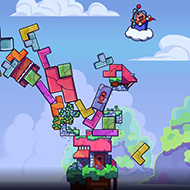






In Babel Legacy you start with a bare patch of ground, a handful of villagers, and a card selection screen that decides what gets built next — and that opening condition matters more than it looks. Every run begins from almost nothing, and the choices made in the first few minutes of a game shape how far the city climbs before the run ends.
| Genre | Idle / Incremental City-Builder |
| Platform | PC (Windows, Linux) |
| Setting | Fantasy, top-down |
| Core Loop | Resource gathering, card-based building selection, city growth |
Resource Gathering and the Card Selection Screen
The core of Babel Legacy is simple to describe and slower to master: villagers mine ore, chop wood, and gather stone automatically once buildings are placed, and the player’s main job is choosing what gets placed next. Instead of an open building menu, the game hands out a small set of building cards at intervals, and picking one over another quietly commits the run to a direction. A windmill early might look weaker than a well, but the resource it produces can matter more once the city reaches its next Age.
New players tend to grab whichever card produces the most obvious short-term gain, and that habit is one of the first things beginners get wrong. A building that looks slow at level one can end up carrying an entire Age if it stacks with the right upgrades later. Players who lurk in the Discord tend to talk about “reading the tree before the run,” meaning they check what the Upgrade Tree rewards before committing to early cards.
Idle-focused players tend to treat the card screen almost passively, letting the Auto Buildings Selection setting pick automatically so the city keeps expanding while they do something else. Active players disable it, because manual picks let them chase a specific Age transition instead of whatever the default option happens to be.
The Upgrade Tree and Long-Term Progress in Babel Legacy
Progress outside a single run comes from the Upgrade Tree, which stays visible during play but only unlocks its purchases once a run ends. This is where Workshops and the more aggressive options players call “bombs” live — permanent modifiers that change how future runs start rather than what happens inside the current one. It’s a structure that rewards patience: a run that looks unimpressive can still be worth finishing if it feeds enough resources into tree progress.
By the time a player reaches the later Ages, the tree stops being optional. Base production alone can’t keep pace with what later buildings demand, so tree investment becomes the actual difficulty curve of the game, more than any single run’s card luck.
One detail only players who’ve spent real time with Babel Legacy notice: the moment resource gathering effects flicker back in after a save reload, right before offline progress finishes calculating. It’s a small visual tell that the city picked up exactly where it left off.
Handling the Later Ages and Save Data
Each new Age in Babel Legacy raises the ceiling on what a city can produce, but it also resets the value of early buildings, which is a point players debate openly — some find the reset satisfying, others feel it undercuts investment in a run’s opening minutes. Cloud saves and achievements track long-term progress across this, so a run doesn’t have to be perfect to still count toward the bigger picture.
- Cards drawn early determine which resource chain snowballs fastest
- The Upgrade Tree only opens its purchases after a run concludes
- Workshops and bomb-type upgrades change how future runs begin
- Auto Buildings Selection trades control for convenience
- Offline progress calculates the moment a save reloads
Save file structure has changed between updates, and the community discussion around this — old saves occasionally needing a fresh start — is one of the more common threads in the game’s Discord.
What happens if a card selection gets missed in Babel Legacy?
If Auto Buildings Selection is off and no card is picked in time, the run simply continues without adding a new building that round, which is why several forum threads specifically warn new players to check their settings before starting a session.
How does the Upgrade Tree interact with a run in progress?
The Upgrade Tree in Babel Legacy is visible mid-run but locked for purchases, meaning players can plan which Workshop or bomb-type upgrade to buy without being able to spend on it until the current run has ended.
Why do resource ages reset early building value?
Each Age shifts the game’s production ceiling upward, which naturally makes early-tier buildings contribute less relative to the whole city, a tradeoff players openly discuss as the price of long-term growth.
Babel Legacy rewards the kind of player who treats a single disappointing run as tree fuel rather than wasted time, and that mindset — more than any one card pull — is what actually gets a city past its first few Ages. Between the Workshops, the bomb upgrades, and the quiet moment a save clicks back into place after a reload, the idle surface stays calm while asking for real planning underneath.