























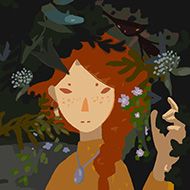
Good Folk Cafe









What do you actually feed a creature that isn’t human, doesn’t speak your language, and has opinions about wild garlic? Good Folk Cafe throws that question at you almost immediately, and figuring out the answer through trial, error, and a little Irish folklore is the entire heart of the game.
| Genre | Cosy management and life sim, story-rich |
| Setting | Rural Ireland, a wooded glen |
| Protagonist | Aoife |
| Core Loop | Forage by day, cook for otherworldly visitors by night |
Foraging the Glen in Good Folk Cafe
You play as Aoife, living alone in a glen and spending each day wandering the countryside to gather real plants — nettles, wild garlic, and other foraged ingredients the game roots directly in Irish flora rather than inventing a fantasy botany from scratch. Good Folk Cafe treats this walking-and-gathering rhythm as the calm half of its loop, and it means it: there’s no combat, no timer pressuring you through the woods, just a small timing-based minigame for each plant you pick.
Once your basket fills, you head home to identify what you’ve collected using a plant book, and that’s where the game’s cultural grounding really shows — each entry lists the plant’s name in Irish alongside the English, a detail players specifically singled out as one of the demo’s most charming touches. It turns a simple inventory screen into something closer to a language lesson you didn’t ask for but end up enjoying.
Night is when the loop shifts. That’s when the fae — the “good folk” the title references — arrive at Aoife’s door expecting a meal, and what you’ve foraged that day determines what you’re able to offer them.
What New Players Rush Through
The most common early mistake is treating foraging as a chore to clear quickly so you can get to the cooking. Good Folk Cafe doesn’t reward that impatience. Ingredients gathered without reading their flavor profiles later leave you guessing blind at dinner, and a rushed forage run often means an evening with nothing that actually satisfies your visitor.
The second mistake is ignoring the neighbor. Early demo players who beelined straight to the fae encounters missed out on story content that only unlocks once Aoife’s home reaches certain repair milestones — content that ties directly into the mystery the game is quietly building around her family’s past.
There isn’t a fail state that punishes exploration, which is part of why the mistake is easy to make twice. Good Folk Cafe is forgiving enough that players can miss a system for an hour or more without realizing anything was skipped.
Feeding the Fae Without Knowing Their Tastes
Each visiting creature has flavor preferences you’re never handed outright — you learn them by cooking, watching the reaction, and adjusting. Ingredients carry distinct profiles, and matching the right combination to a specific fae’s taste is the closest thing Good Folk Cafe has to a puzzle.
- Different foraged plants carry different flavor notes players have to track themselves
- A satisfied fae rewards Aoife with building materials rather than currency
- Reactions are shown through a distinct curling animation the community already treats as a signal to watch for
Players in early demo threads describe this system as more observational than mechanical — there’s no visible meter telling you you’re close, just the creature’s own behavior as feedback. That ambiguity is one of the more divisive design choices so far: some find it atmospheric and true to the folklore framing, others want a clearer indicator before committing scarce ingredients to a guess.
Rebuilding Aoife’s Home One Delivery at a Time
Wood, nails, and other materials handed over by satisfied fae go toward repairing Aoife’s home, and each repair unlocks something tangible rather than cosmetic. An expanded inventory means longer foraging trips before you have to turn back, and further along, a bike becomes available for reaching parts of the glen otherwise out of range.
The current demo build doesn’t let players actually ride that bike yet, which has been a mild point of anticipation rather than frustration in early feedback — it signals a larger map is coming without forcing the demo to promise more than it delivers right now.
The Neighbor Who Trades Stories for Company
As Aoife’s home comes back together, a neighbor begins visiting to share local folklore, and this is where Good Folk Cafe’s writing does its heaviest lifting. These aren’t lore dumps; they’re framed as conversation, tying the Irish storytelling tradition the developers researched directly into the plant identification and fae encounters players have already been experiencing hands-on.
It’s a slow-burn narrative device, and by design — the game clearly isn’t in a hurry to explain what happened to Aoife’s family, and players who’ve finished the current demo describe the pacing as deliberately unresolved rather than incomplete.
How the Cooking Loop Deepens Over a Playthrough
Cooking starts simple: pick ingredients, combine them, serve the dish. But once you’ve met a few different fae, the loop asks more of you.
- Identify the ingredients you’ve foraged that day using the plant book
- Cross-reference what you already know about a given fae’s preferences from past visits
- Chop and combine ingredients into a dish, paying attention to flavor pairing rather than just quantity
- Serve the dish and watch the reaction to refine your understanding for next time
This is where community vocabulary has started to form — players talk about “reading” a fae the way you’d read a customer in any cooking game, except here the payoff is folklore-flavored rather than a satisfaction meter ticking upward.
What the Demo Doesn’t Let You Do Yet
Good Folk Cafe is still early. The bike sits unusable, the roster of fae is limited, and several systems teased in developer updates — including deeper customization for Aoife’s home — aren’t in the current build. That’s an honest limitation rather than a hidden one; the developers have been upfront that this is a first public slice of a much larger project.
For players used to fully realized cozy sims, that scope might feel thin. For players drawn to the folklore angle specifically, the smaller footprint makes the writing and the plant research feel more considered rather than stretched.
Community Notes on Good Folk Cafe’s Pace
The most consistent piece of praise circulating in early reception is how unhurried everything feels — no fail states, no punishing resource scarcity, just a loop that rewards attention over speed. The most consistent critique is the opposite side of that coin: some players want a bit more friction, worried the current build leans too gentle to sustain a longer game once the novelty of the fae wears off.
Both reactions are reasonable responses to a demo, and Good Folk Cafe hasn’t committed publicly to how much tension the finished game will add.
How do you know what a fae in Good Folk Cafe wants to eat?
There’s no direct hint system — you learn preferences by serving dishes and watching how each fae reacts, then adjusting future meals based on flavor profiles you’ve picked up from the plant book.
Can you use the bike in the current demo?
Not yet. The bike is unlocked through home repairs but riding it isn’t functional in the current build, signaling a larger explorable area planned for a future update.
Why are plant names shown in Irish?
The developers built Good Folk Cafe around Irish landscape and folklore research, and the plant book reflects that directly by listing each foraged plant’s Irish name alongside the English one.
Good Folk Cafe isn’t trying to rush you toward anything — not the fae, not the bike sitting unused by Aoife’s door, not the neighbor’s half-told stories about a family history the game clearly isn’t finished with. It’s a quiet game about paying attention, and so far that patience is exactly what it’s asking players to bring to it.