





















67 Minutes in Heaven












What actually happens when a party game called “7 Minutes in Heaven” gets stretched into 67 and set inside an abandoned house that clearly doesn’t want visitors? That question is the entire premise of 67 Minutes in Heaven, a first-person horror adventure from One Flow Man that takes a familiar teenage party trope and slowly bends it into something genuinely unsettling.
| Genre | First-person horror adventure |
| Developer | One Flow Man |
| Endings | 3 (plus 1 secret) |
| Price | Free to play |
A Double Date That Goes Sideways
The story starts small — your friend Braden wants you along on a date with Katie, who brings her friend Monnie to balance the numbers, and the group ends up sneaking into an abandoned house because none of them can host at home. A loud noise sends you off alone to investigate before the actual party game even begins, which doubles as a natural way to learn the house’s layout without a hand-holding tutorial.
Once the group finally sits down to play 67 Minutes in Heaven itself, the situation escalates quickly from teenage awkwardness into full supernatural horror, and the shift feels earned precisely because the opening stayed so grounded.
Giggles, Ewws, and Dialogue That Actually Matters
Every dialogue choice pushes you toward one of two response categories — get a giggle and you drift toward the good ending, get an ewww and you drift toward the bad one. There’s also a secret third ending entirely unrelated to dialogue choices, which players have been hunting down since release.
What beginners consistently misjudge on a first playthrough is treating dialogue like flavor text rather than a real mechanical system tracking their choices toward a specific outcome.
PSX-Style Graphics and 80s Horror Atmosphere
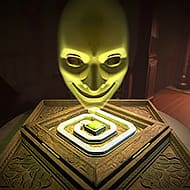
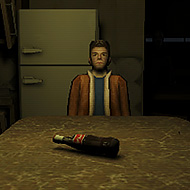
Built in Unity with a deliberate PSX-era visual style, 67 Minutes in Heaven leans hard into low-budget 80s horror movie atmosphere rather than modern jump-scare polish. Reviewers have specifically praised how the blend of retro graphics with modern lighting creates an uncanny-valley effect that keeps the abandoned house feeling wrong even in well-lit rooms.
Headphones Are Not Optional
Audio carries most of the tension in 67 Minutes in Heaven, and while the scares themselves are fairly telegraphed, playing without headphones noticeably dulls the build-up that makes them land. This is one of the more consistent pieces of advice repeated across player reviews.
TVs You Can Turn On and Hidden Events
Scattered interactive details, including televisions players can switch on throughout the house, hide additional lore and events that only surface through replaying with different choices — a detail that rewards a second full playthrough rather than just chasing the alternate endings.
How many endings does 67 Minutes in Heaven have?
There are three main endings driven by dialogue choices, plus one additional secret ending that isn’t tied to conversation outcomes at all, giving completionists a reason to replay beyond just seeing the good and bad paths.
Is 67 Minutes in Heaven appropriate for all audiences?
The game includes dialogue references to romantic and sexual topics without explicit depiction, plus a couple of scenes simulating kissing through camera framing, details the developer notes directly for players deciding whether it fits their comfort level.
Do the good and bad endings differ significantly?
Some players have pointed out the endings feel similar regardless of path, since the protagonist’s fate doesn’t shift as dramatically as the giggle-versus-ewww system might suggest, a criticism that’s become a recurring point in community discussion.
67 Minutes in Heaven succeeds by respecting its own small scope — Braden, Katie, and Monnie never overstay their welcome, the abandoned house never runs out of new details to notice, and the whole experience wraps up tight enough to make a second playthrough, chasing a different ending, feel worth the time.