





















SNAPTIC





What do you do when the only home you have ever known goes silent? In SNAPTIC, you guide Anon through an abandoned 2007 laptop that has switched itself on again, hunting for the Wi-Fi password that could reconnect him with his friends before the files around them are destroyed. It is a physics-based puzzle-platformer drenched in Y2K web nostalgia, and the mystery of what happened to the network matters as much as the jumps do.
Waking Up Inside an Old Laptop: The Premise of SNAPTIC
Anon is a featureless humanoid living inside a machine that has been offline for years. He digs through cache files, old chat logs, and nostalgic camcorder footage to learn why the network shut down and how much time has passed since it did. The stakes are personal rather than world-ending: if the mystery stays unsolved, his friends could be lost, detached from the internet forever as their files are destroyed. This game gives a quiet setting a real ticking clock.
In plain terms, the goal is to recover the Wi-Fi password, and everything else is the route to it. The platforming, the puzzles, and the story fragments all point toward one question: who or what switched the laptop back on? The demo shows an abstract 3D level in blue and violet tones, filled with interface windows and desktop objects that double as terrain.
Think of the laptop as a world, not a menu.
Magnet Walls and Marble Form: Movement in SNAPTIC
The core mechanic is a pair of linked abilities. Anon can turn himself into a marble, and in that form he can cling to magnetic walls, use them for jumps, and stretch his airtime to reach farther ledges. Magnetization turns a flat surface into a decision about speed and angle instead of a place to land. It is the kind of mechanic that sounds simple in a sentence and takes an hour of fiddling to really feel.
Beginners will likely make the usual platformer mistake of trying to land every jump precisely. In a physics-driven world, reading momentum matters more than timing a single button press. By the time you reach a magnet wall, the smarter move is to plan your approach angle a few steps earlier, since the marble carries whatever speed you gave it.
The demo focuses on movement and exploration, so the full depth of the puzzle design is still an open question. Momentum-chasers and speedrun-minded players will stress-test the marble form first, while puzzle purists are waiting to see whether the later rooms demand real lateral thinking.
Auralyn, Valence and the Residents of the Machine
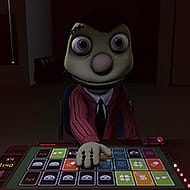
Anon is not alone in the laptop. Auralyn is described as the manager of the machine, which makes her the closest thing the system has to an authority, and Valence is a more mysterious presence whose role has not been explained. Characters like these turn empty folders into a community, and they are the reason the mystery feels like a story about people instead of data.
The friends Anon is trying to save matter just as much, because they are the reason the Wi-Fi password is worth finding. Dialogue with the machine’s residents, along with scattered chat logs, builds the sense that this was once a lively place. Players who enjoy atmosphere-heavy storytelling will probably linger in every conversation.
Nobody outside the developer’s circle can say yet how Auralyn and Valence fit into the shutdown, which leaves plenty of room for theories. Lore hunters are already treating the trailer lines and the demo’s text as clues, and that guessing is part of the fun right now.
Cache Files, Chat Logs and Camcorder Footage
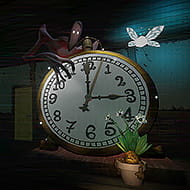
Cache files are the backbone of the mystery. They hold pieces of what the laptop once stored, and Anon follows them to learn what caused the shutdown. Exploring each corner pays off, since the trailer hints that answers hide inside the files.
Chat logs carry the human side of the story. They give Anon’s friends a voice and make the abandoned system feel recently lived in. Reading them is optional in spirit but hard to skip once the first one lands.
Camcorder footage adds the nostalgic layer, with grainy recordings that feel like someone else’s memories. These clips are where the emotional weight of the lost home hits hardest, and they are the part most likely to divide opinion between players who love the mood and those who want more action.
How Puzzles Grow as New Programs Appear
Beyond platforming, the game promises physics-based puzzles that grow more complex as you discover more programs on the laptop. That structure suggests each program works as its own kind of space, with its own rules for objects, surfaces, and magnetism. If it works as described, the laptop becomes a collection of puzzle rooms stitched together by Anon’s marble form.
Early on, expect puzzles built around the basics: magnet walls, momentum, and the simple question of what can be pushed or pulled. Once new programs unlock, those basics should start to combine, and that is where the physics-based design will either shine or stall. Anyone who enjoyed a good puzzle-platformer built on one clever mechanic will be watching closely.
The honest caveat is that the demo cannot show how far the puzzles escalate. Players who want to know whether the later programs stay inventive will have to wait for the full release, and no launch date has been announced.
Frutiger Aero Colors and PS1 Edges: What Players Debate
Nostalgia-driven projects always invite one argument: is the style carrying the design, or is the design carrying the style? Here, the glossy Frutiger Aero palette and chunky PS1 geometry look striking in motion, and the motion-graphics feel gives everything a polished, designed look. Some players still want proof that the puzzles hold up once the novelty fades, and that caution is fair for any game this young.
Another common talking point is Anon’s silhouette, which many fans compare to the yellow running man from classic instant messenger apps. SNAPTIC has no official connection to that brand, but the comparison shows how effectively the design triggers memories of the early-2000s web. Players who grew up on those chat windows are the obvious audience, though the mystery works fine without the memories.
A frequent question is whether a demo exists, and the answer is yes: a movement-focused demo is available on Steam for PC. It is the easiest way to test whether the marble and magnet physics feel right to you, and if the momentum clicks, the rest of the premise will likely land too.
SNAPTIC rewards players who enjoy being lost in a strange place and slowly finding their way back. Anon’s search for the Wi-Fi password, the pull of the magnet walls, and the questions hanging over Auralyn and Valence give the whole mystery a clear shape. Whether the final puzzles match the atmosphere is the real test.