














Dominus Gladiatus










What happens when your strongest gladiator walks into the arena tired and still nursing an injury from the last duel? In Dominus Gladiatus that single call can undo weeks of careful training, and the game never lets you pretend otherwise.
| Genre | Gladiator management simulator with auto-battler combat |
| Setting | Ancient Rome, run through a gladiator school called a Ludus |
| Mode | Single-player |
| Structure | 160-day tournament against rival Domini |
| Combat | Duels and team battles that play out automatically |
| Art style | Hand-drawn 2D |
Running Your Ludus in Dominus Gladiatus
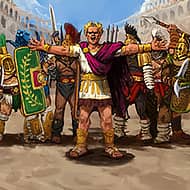
You play as a Dominus, the master of a gladiator school, not as a fighter. Your job is to take control of a Ludus, recruit men from the markets, forge them into gladiators and prepare them for the arenas of Rome. Everything that matters happens before the gates open, because the fights themselves play out as auto-battler combat. That shift puts the pressure on your planning rather than your reflexes. Anyone expecting a hack-and-slash will notice within minutes that the real weapon here is your schedule.
The Ludus is the heart of the operation, and it grows. You expand it with new facilities, train gladiators and develop their skills over time. Management fans will feel at home with the layered decisions, since each upgrade competes with rest, gear and recruiting for your attention.
Early in the season you have a thin roster and few choices, which is the safest time to learn how the systems fit together. By the time rival Domini start leaning on your school, you want those habits locked in. The game rewards the player who treats every day as a small budget decision.
The Slave Market and Spotting Hidden Potential
The markets of Rome are described as filled with desperate men and future champions, and your first real skill check is walking through them. You recruit new gladiators, spot hidden potential and strengthen your roster as the battles grow deadlier. Every recruit carries different strengths, weaknesses and possibilities, which means no two schools should end up looking the same. The temptation is to chase the most obvious fighter, yet raw talent and hidden potential are not always the same thing. A cheaper recruit with room to grow can outlast a polished one who has nowhere left to go.
Numbers on a recruit matter, but so does the role you want him to fill. Gear and training will shape what a fighter becomes, so think about the team you want before you spend. A roster built with a plan will almost always outperform a pile of individually good fighters.
There is an uncomfortable edge to this part, and the game does not hide from it. You are buying men, and the setting treats them as property. Whether that adds grim authenticity or leaves a sour taste depends on the player.
Morale, Fatigue and Injuries: Deciding Who Fights
The roster screen is where most of your time goes, and several pressures decide who is ready to step out onto the sand. Each one pulls against the others:
- Morale: how steady a gladiator stays when the crowd roars
- Fatigue: how far you can push a fighter before he pays for it
- Injuries: wounds that can turn an ordinary fight into a death sentence
- Discipline: how well a gladiator holds to the shape you have trained into him
Sending an injured or exhausted fighter into the arena may solve today’s problem, but it can damage the school’s future. That is the central tension, and it explains why a careless Ludus is said to bury its champions. Weighing one more win against one more week of recovery is the heart of the loop.
The skill that separates tidy seasons from messy ones is rotation. Deep rosters absorb injuries, while thin ones cannot. Around the midpoint of the 160 days you will feel which kind of school you built.
Arming Your Gladiators for the Sand
Gear is the other half of preparation. You equip gladiators with weapons and armor suited to their role in the arena, and the right choice can mean the difference between victory and death. Roman blades, shields, helmets and armor all feed into how a fighter performs once the duel starts. Because combat is automatic, a bad loadout cannot be fixed mid-fight, and that makes pre-fight checks feel heavy.
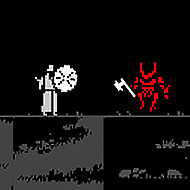
The arena offers more than one format, with savage duels and team battles both on the menu. A fighter who shines alone may add little to a team, so it pays to check how your roster looks in both.
This is also where the auto-battler label starts to divide opinion. Auto-battler fans love watching a plan play out without touching it, while others miss the control of steering a fight themselves. Both camps are right about what the game offers.
Six Domini and 160 Days Toward the Grand Final in Dominus Gladiatus
You pick one of six Domini, each with their own strengths, methods and ways of disrupting rivals, and the five you leave behind become your competition. The tournament runs for 160 days, and you face the others one by one on the road to the grand final. Each rival builds their own school, so you are racing schools that grow while you do. That pressure turns what could be a quiet management loop into a season with a clock on it.
Early in the tournament, rivals feel like a distant threat. Once a rival Dominus starts disrupting your Ludus, the tone changes and every small mistake gets amplified. This is where a thin roster or a worn-out star shows up as a real problem.
The best advice is to pick a Dominus whose strengths match how you naturally play. History buffs may enjoy the Roman flavor of choosing a house to lead, but the choice matters mechanically too, since your pick shapes your path to the final.
Winning the Crowd and Living with Permanent Death
The crowd is ruthless, and Rome remembers spectacle. Win their favor and they may turn the arena to your advantage, but lose it and the crowd becomes another enemy. That means survival is not decided by steel alone, and pure efficiency can cost you the audience. Reputation and showmanship are real resources here.
Then there is permanent death, the most divisive part of the game. One mistake can cost a gladiator his life, and the store page says so openly. A fighter you trained for weeks can be gone in a single auto-resolved duel. This is where fairness debates start, since you cannot step in once the fight begins.
The fair view is that the loss is part of the design, not a flaw. The tension of every fight comes from knowing that your preparation is all you have. Still, if you dislike losing fighters you have grown attached to, expect some pain.
Dominus Gladiatus Questions Before Your First Season
Three questions are worth answering before you commit to a school.
- How long is a full tournament in Dominus Gladiatus? A full run covers 160 days against five rival Domini, ending at the grand final. Each day is a chance to train, rest, equip or recruit, so the calendar itself is a resource. Early days tend to be about building the roster, while later days are about keeping it alive.
- Can gladiators die permanently? Yes, the game uses permanent death, and one mistake can cost a gladiator his life. Injuries, fatigue and morale are your warning lights, so check them before every fight. Armor and helmets also matter when a duel could turn deadly.
- Do you control gladiators during arena fights? No, combat plays out automatically as an auto-battler, in both duels and team battles. Your influence comes from training, gear, rest decisions and roster choice before the gates open. The crowd is the one wild card you can sway through spectacle.
Dominus Gladiatus is at its best when the roster screen feels like a gamble you chose to take. Whether you pick your Dominus for strength or for style, the real test is whether your Ludus can reach the grand final before day 160 with a roster still breathing. The sand does not care how many wins you stacked if the wrong gladiator stepped out tired.