






















Window Seat





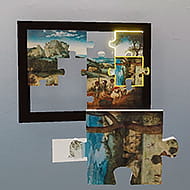

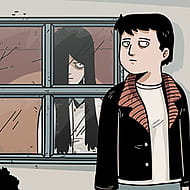






In Window Seat you start as a Scrubber, one of the city’s window cleaners, suspended outside a towering office building in a world choked by the Acrid Fog. Your job is to keep the glass of the elite spotless and your nose out of their business, which sounds simple until the other side of the glass starts showing you things you were never meant to see.
| Genre | First-person noir detective with window cleaning |
| Setting | Grime-dark future city under the Acrid Fog |
| Role | Scrubber |
| Core loop | Clean windows, observe rooms, deduce the murder |
| Mode | Single-player |
| Content note | Depicts the aftermath of a murder scene |
Life as a Scrubber in Window Seat
The game casts you as a worker whose entire purpose is to keep the glass of the elite spotless. The fantasy is not about power. You hang outside the building, barely noticed, while the people inside carry on as if you were part of the furniture. That invisibility is the engine of the whole story.
The rule you are given is simple: do not get involved. Everything the game builds works against that rule, because a clean window is also a clear view, and a clear view lets you see more than a Scrubber should. The tension is not about danger in the usual sense but about how long you can look away.
Sloane Industries sits in the background as the power you are warned to avoid. Noir fans will recognize the shape of a faceless company that owns the city, and the game leans into that mood with grime, fog, and the quiet sense that someone is always watching the watcher.
Cleaning Glass to See Through It
The core loop pairs chores with clues. You clean windows, and as the glass clears you see into the rooms behind it, so the cleaning itself becomes the way information reaches you. Early in the game it feels like a calm, almost soothing task, until you start noticing what sits behind the grime.
That is why the tags read like a mix of detective, cleaning, hidden object, and puzzle. Hidden-object fans will enjoy scanning each pane for small details, and the game treats those details as evidence rather than decoration.
A few things are worth watching for each time you clean a pane:
- Who is in the room and what they are doing
- Objects that look out of place
- Details that do not match what you saw in other rooms
The Acrid Fog and the City Around the Glass
The setting does a lot of the work. The Acrid Fog chokes the streets, clings to the walls, and stains every window, so clean glass becomes a status symbol and Scrubbers become the people who maintain it. It is an unusually physical way to tell a story about class: the dirt is literal, and the elite’s view is paid for by people hanging outside it.
The tone is grim rather than gory. The store page notes that the game depicts the aftermath of a murder scene, so you see consequences rather than violence, and that restraint suits a detective story where the question is who did it, not how it looked.
The alternate-history and capitalism tags make sense in this context. The world feels like ours bent out of shape by a company with too much power, and the fog is the visible cost of that power. It gives the game its look and its argument at the same time.
Reading Rooms, Suspects, and Time
Window Seat adds a clock to the detective work. The demo covers two floors across about seven minutes of in-game time, and that number says a lot about how the game thinks: you cannot see everything at once, so you choose where to look and when.
Time management and time travel both appear among the store tags, which leaves players wondering how time shapes the investigation. Whatever the exact rules turn out to be, the full game promises many more floors, a wide range of characters, and a complex restructured mystery, so the scope clearly grows well beyond the demo.
Players who enjoy logic puzzles will want to keep their own notes. A murder mystery is only satisfying when your conclusion follows from what you saw, and a game built around deduction depends on you connecting observations across floors instead of waiting for a cutscene to explain it.
Where Window Seat Divides Players
Not everyone will love the premise. A job that asks you to clean and watch can sound slow, and players who want constant action may find the pace deliberate. That is a fair complaint, and it is also the trade the game makes in exchange for atmosphere.
Another point of debate is how much the demo can show. Two floors is a small slice for a game promising many more, and some players will want to see how the mystery scales before deciding how much to trust it. That caution is reasonable for any detective story, where the ending has to justify the clues.
The upside is that the demo is focused. It gives a clear sample of cleaning, observing, and deducing without overstaying its welcome, and for a mystery that is exactly the kind of first impression that earns patience.
Questions Players Ask About Window Seat
What do you actually do in Window Seat?
You play a Scrubber who cleans windows on a tall office building, and the act of cleaning reveals what is happening inside. From there you use logical deduction to work out a murder while avoiding the attention of Sloane Industries.
How long is the Window Seat demo?
The demo is a sample scenario covering two floors and around seven minutes of in-game time. It is meant to show the core mechanics of cleaning, observing, and deducing rather than the full mystery.
Does Window Seat show graphic violence?
The store page says the game depicts the aftermath of a murder scene. You investigate what remains rather than watching the act, so the tone is grim and noir rather than action-driven, but anyone who prefers to avoid murder themes should read that content note first.
Window Seat is built for players who like to look closely before they decide anything. Pick up the cleaning job, keep an eye on the Acrid Fog and the warning about Sloane Industries, and treat every clean pane as a clue, because in this city a spotless window and a clear conscience are not the same thing.