









Goodly Trials


You open the Shop with a freshly chosen leader and a handful of coins, and the rival across the table bids on the same squire you wanted. That small loss shows what Goodly Trials expects from you: hire a peculiar company, arm them smartly, line them up, and trust your leader to survive the journey home. The game blends roguelite structure, turn-based strategy, and auto battler habits into a loop that reads easily and punishes lazy planning.
| Genre | Roguelite turn-based strategy with auto battler elements |
| Modes | Single-player journey, real-time or async multiplayer, ranked ladder |
| Run length | Twelve weeks in a single-player journey |
| Playable factions | Three, including the Bone Host and the Below Born |
The Shop, Equip, Set Formation, Battle Loop in Goodly Trials
Every run follows the same rhythm, and the game states it openly. You visit the Shop, outfit your units, set the formation, fight, and return to the Shop with whatever the battle left you. A single-player journey lasts twelve weeks, so you get a fixed number of passes through that loop to turn a rough band of hires into a company that can survive the trip home. Early in the run the fights are small skirmishes. By the later weeks they become full formations where range, flanking, adjacency, and the shape of the enemy line all matter.
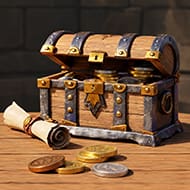
- Shop: hire knights, sell-swords, merchants, and wizards, and bargain for gear.
- Equip: decide which unit carries which item, since the same piece of gear does very different work in different hands.
- Set Formation: arrange the line so range, flanking, and adjacency work for you.
- Battle: watch the company fight, then take the results back to the Shop.
Beginners usually pour all their attention into the Shop and treat Set Formation as a formality. That is backwards. A strong roster in a careless line loses to a modest roster arranged around the shape of the enemy company, and you feel that gap hardest once the skirmishes grow into full formations.
Choosing a Leader and Building a Company Around Them
The run begins by picking a leader, and the whole journey is framed around that choice. Your leader is the one you trust to survive, so every hire, item, and formation decision either protects them or exploits what they do best. Picking a leader by name recognition or art alone is a common first mistake. Look at what the leader asks of the rest of the company instead.
New leaders and gear unlock by attempting harder trials, and the game offers three difficulties in single-player. Roguelite players who enjoy long unlock chains will find a lot to chase here, because beating bosses also opens ranked play, extra units, and new factions. Once your first boss falls, the shape of your runs changes, because the roster you can draw from gets wider.
The honest catch is that the early runs can feel narrow. With only a few leaders and a smaller pool of units available at the start, you will see the same hires more often than you would like, and the variety that makes the game shine arrives gradually.
Bone Host, Below Born and the Factions of Goodly Trials
The game ships with three distinct playable factions, and a fourth is planned before the full launch. The Bone Host and the treasure-obsessed Below Born are the two the game talks about most, and they pull your company in different directions. With more than 60 playable units across the roster, each faction offers a different answer to the same question of what your line should look like.
Tabletop-minded players will feel at home here. The factions read like army lists, where you pick a theme and then hunt for the odd unit or item that makes the theme work. Switching factions mid-stream is rarely a good idea, because a Shop full of mismatched hires gives you a company that does a little of everything and nothing well.
Balance is the divisive part. The roster is large, the stats interact in dense ways, and balance patches arrive roughly weekly, so a combination that dominated one week can be weaker the next. Players who like a settled meta may find that tiring, while players who enjoy the experiment treat it as part of the fun.
Rolled Traits and the Bargains That Decide a Run
Units and gear carry innate attributes plus rolled traits, and no two bargains are quite alike. Two hires with the same name can offer very different value, which is why reading the trait line matters more than reading the headline stat. An otherwise ordinary hire can become the hinge the whole company turns on, and spotting that hire is the skill that separates steady runs from lucky ones.
Players who come from deck builders often get this wrong at first. They buy the highest raw numbers and ignore how a trait fits the line, then wonder why the company falls apart on contact. The better habit is to ask what a hire does for the unit standing next to them, since adjacency is one of the things the game rewards.
Money pressure shapes every choice here. You never have enough coin to buy everything you like, so each bargain is also a decision to skip something else, and a few bad trades in the early weeks can show up as a lost battle much later.
Multiplayer Tables, Bidding Wars and the Ranked Ladder
In multiplayer, two to eight players join a tournament that can run in real time or asynchronously. Everyone shops in public and bids against the table for the same inventory, so your plan changes the moment a rival grabs the item you were saving for. You arrange your strategy in peace, then meet each rival in a league. Empty seats can be filled with AI armies, and you can wager on featured matches.
Ranked works differently. Your army faces companies built by ruthless AI and eventually other players, and a rating follows every journey. Competitive players who like to climb will find the ladder gives rare rewards for winning. Around 30 hours of unlockable items, characters, and cosmetics sit behind the progression system, which gives even casual players a reason to keep going.
The bidding is also where friendships get tested, because the game remembers who raised the price you paid for your squire. It is a small detail, but it turns shopping into the most social part of a multiplayer session.
Questions Players Ask Before Their First Trial in Goodly Trials
How long does a single run in Goodly Trials last?
A single-player journey runs for twelve weeks, and every week brings another trip through the Shop, Equip, Set Formation, and Battle loop. The length stays the same across the three difficulties, but harder trials unlock new leaders and gear, so replaying at a higher difficulty is how the roster opens up.
Is the game single-player or multiplayer?
Both are fully playable. You can run a solo journey with your chosen leader, join a tournament of two to eight players, or climb the ranked ladder against AI companies and other players. A larger story-driven single-player campaign is planned for after the full launch.
Which factions can you play?
Three factions are playable today, including the Bone Host and the Below Born, and a fourth is in development. Each one comes with its own units and items, so changing faction changes how you hire, equip, and arrange your line.
Goodly Trials rewards players who think of a run as twelve weeks of small bargains rather than one big plan. Whether you are protecting your leader through a solo journey, outbidding rivals for a squire at a multiplayer table, or arranging a line of Bone Host units for the next ranked match, every choice comes back to the same question of what your company can survive.