













Click Clock






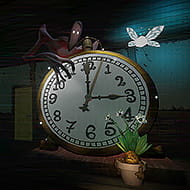
You click the clock and a small drop of time lands in your hands, then you click again, and again, because the number is climbing just fast enough to keep you going. That tiny loop is how Click Clock pulls you in, and within a few minutes you are standing in a quiet first-person room wondering why a cozy incremental idler feels so quietly wrong.
| Genre | Incremental idler with a surreal, psychological horror atmosphere |
| Perspective | First-person 3D space you can explore |
| Mode | Single-player |
| Resources | Time, blood and skulls |
| Progression | Time makers, blood sources, skull talents, Ascend and Reincarnate |
Clicking the Clock and Making Time in Click Clock
The core of the game fits in one sentence: you click the clock to produce time. Early in the game that is your only verb, and every click feels a little heavier than it should because the room around you is so still. Once enough time piles up you unlock your first time makers, which take over the clicking and keep producing time while you look around. From there the loop follows the idler rhythm that fans of the genre know by heart, where you spend what you earn on more makers and watch the numbers stack. What changes the mood is that the clock is a physical object in a 3D space, not a button on a flat menu.
Time makers carry the whole first stretch of play. Each new maker you unlock changes how quickly time arrives, so you end up glancing at the clock between purchases the way you would check a pot on the stove. Idler fans who grew up on number-go-up games tend to settle in here immediately, because click, buy and wait is exactly the rhythm they came for.
Plain time stops being enough almost as soon as the makers start paying off. The game quietly tells you that something else is required, and the thing it asks for is not coins or gold. That pivot is the first moment players remember, because the cheerful ticking suddenly has a price attached.
Blood, Skulls and the Ascend Loop in Click Clock
Blood is the currency time demands, and the game says so almost word for word. You acquire blood sources, then use blood to boost your time makers, which multiplies how much time each one produces. A third resource, skulls, arrives as you accumulate time, and skulls feed the permanent skull talents. Three resources, time, blood and skulls, sit in a chain where each link unlocks the next. The chain is easy to read at a glance, yet it takes a few sessions before you feel which link is actually slowing you down.
Then comes the prestige step that idler players will recognize. You Ascend to ignite your skull talents, then Reincarnate to restart stronger than before, with the talents staying permanently in place. The first Reincarnate is where opinions split, because wiping your time makers hurts even when you know the talents survive. Completionists who like tracking every permanent unlock will enjoy how each reset leaves a mark, while others may find the loop asks for a lot of patience.
Once skull talents start stacking, the opening minutes of each run get shorter, because the game is designed to hand you back some of what the reset took. That is the quiet reward of the whole system, and it is why many idler fans accept the reset with a shrug instead of a groan. Still, the honest truth is that the first reset is a leap of faith.
What Beginners Get Wrong Before Their First Reincarnate
Newcomers often treat the clock as a pure clicker and ignore the room entirely. The store page promises that you can explore your space and time to find clues, and skipping that part means missing half of what the game is about. It is easy to fall into tunnel vision when a number is rising on screen. Looking away from the clock for a minute costs you very little, since your time makers keep working.
The second common slip is rushing. Players see Ascend become available and hit it immediately, then arrive after the Reincarnate with talents they chose without reading. Blood gets the same treatment, because it is tempting to sit on it instead of pushing it into your time makers. By your second or third run these habits usually fade, but the first run is where they cost the most.
Three habits are worth dropping early:
- Clicking by hand long after time makers can carry the load
- Treating blood as an optional extra instead of the fuel behind every boost
- Ascending the moment it is possible without checking which skull talents are on offer
None of these will break a run, but they stretch the early hours and make the first Reincarnate feel harsher than it needs to be. The cure is mostly patience and paying attention to what the game puts in front of you. Rushing is the real enemy in an idler built around a ticking clock.
Clues in the Room and the Mystery Behind the Clock
The store pitch teases a mystery with a line that stumbles mid-thought, asking who is there and then correcting itself to ask what. That small slip sets the tone: this is an idler that wants you to feel observed. Tags like psychological horror and surreal sit next to relaxing and casual, and that contrast is exactly what makes Click Clock hard to classify. The steady ticking that the whole pitch leans on does a lot of that work on its own.
Exploration is the second axis of the game. You look around your space, find clues, and slowly uncover what this world is. Multiple endings are listed among its tags, so what you find may matter as much as raw production. Players who enjoy atmospheric puzzles will probably get more from this side than from the numbers.
The honest caveat is pacing. The clues interrupt the grind, and the dread never fully takes over the clicking, so the mood can feel split between two moods. Which half you enjoy more depends on what you expected when you walked in.
Click Clock Questions Players Ask Before Starting
How does Ascend work in Click Clock?
Skulls arrive as you accumulate time, and they are the key to Ascending. When you Ascend, your skulls ignite permanent skull talents that survive every reset. After that you Reincarnate, which sends you back to the start stronger than before.
Is Click Clock actually scary?
The tags point to psychological horror and surreal atmosphere, while the same list also includes relaxing and casual. Expect unease built from the ticking clock, the quiet room and the unexplained clues. A demo is available on Steam if you want to test your tolerance.
Does Click Clock have an ending?
Multiple endings are listed among its tags, and the store pitch promises you will uncover the mysteries of this world as you make progress. That means your clue hunting in the room feeds the story alongside your time makers and blood sources. The details are best discovered by playing rather than being spoiled.
Click Clock rewards the player who keeps one eye on the numbers and the other on the room. Every Reincarnate sends you back to the same quiet clock, but the skull talents you ignited make the return feel like progress rather than punishment. If you like idlers that give you a reason to look up from the screen, that first click is worth taking.