
















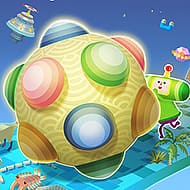
Once Upon A KATAMARI



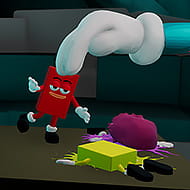
You push your katamari across a Jurassic Period clearing, scoop up a trail of small clutter, then clip a dinosaur that is far too big for you. Pieces fly off, your size drops, and the stage feels smaller than it did ten seconds ago. Once Upon A KATAMARI is built around that loop of greed, growth and embarrassment, and it rewards players who know when to grab and when to back away.
| Genre | Puzzle action |
| Playable characters | The Prince and 68 cousins |
| Modes | Single-player stages and four-player KatamariBall |
| Settings | The Jurassic Period, the Ice Age, historic Japan and more |
Rolling Through Time After the King of All Cosmos Breaks the Sky
The setup is classic Katamari nonsense. The King of All Cosmos fiddles with a scroll, wipes out the Earth and the stars, and expects The Prince to repair the night sky one rolled-up object at a time. Instead of staying in one era, the game sends the katamari through the Jurassic Period, the Ice Age, historic Japan and more, so the same rolling idea keeps landing in new surroundings.
Every stage runs on scale. You begin by sweeping up small clutter, and as the katamari grows, the things worth chasing change with it. Wheels of cheese, cacti, mummies and philosophers all become targets once your size allows it, and the moment something that bounced you away a minute ago suddenly sticks to the ball is the best feeling in the series.
That threshold moment repeats across a stage, and it never really gets old. Each time the katamari passes a size line, the whole space reorganizes itself around you.
Where Beginners Lose Size
Early in the game, most players make the same mistake: they steer straight at the biggest object in view. The result is a bounce, a spray of lost pieces and a katamari that has to rebuild its size from scratch. Circling a target and sweeping up smaller objects first works far better than ramming it, and the patience pays off quickly.
Corners are the second trap. A katamari wedged against a wall, with half its nearby pickups too large to attach, wastes time you rarely have to spare. Backing out early and picking a cleaner line through open space is a habit worth building before you reach the larger stages.
The steering is the divisive part. It has always split the Katamari crowd: some call it the soul of the series, others fight it on every tight turn. Completionists who want to clear a stage of every last object tend to settle in fastest, while players used to standard walk-and-camera controls need a longer adjustment.
The Magnet and Other Changes to Rolling in Once Upon A KATAMARI
The magnet is the new tool that players talk about most. It pulls nearby objects toward the katamari, which means a tight cluster of small items no longer demands precise steering. In a crowded stage, that turns a messy scramble into a smooth sweep, and it changes how you plan a route before you even start rolling.
Placement matters more than raw size here. Using the magnet where objects are dense gets the most out of it, so the smart habit is to read the stage first and find the busiest corner. Players who like routing a stage like a puzzle will enjoy working out where the densest cluster sits, while players who just want to roll and laugh can let the magnet do the tidying.
The new soundtrack deserves a mention too. Its bouncy tempo matches The Prince’s running animation, and a stage feels better with the sound turned up.
Cousins, Colors and Faces in Once Upon A KATAMARI
The Prince is no longer the only option. The roster includes 68 cousins and kin, and each one gives you a different character to follow around the stage. For a series built on odd family members, that roster is half the charm.
Customization goes a step further and lets you build an original cousin from scratch. The options you can change include:
- Face
- Colors
- Body
- Name
Those choices matter most in multiplayer, where your cousin is the first thing rivals see. A recognizable color scheme and a name you picked yourself make a match feel personal before the first object is even rolled.
KatamariBall Against Three Rivals
KatamariBall is the four-player mode, described as the galactic sport of choice across the Cosmos. With four cousins on the field, every pile of objects has three rivals competing for it. The skills from the stages carry over directly: size management, clean lines and knowing which objects to leave alone.
Matches against players around the world are one way in. The other is offline play against CPU opponents, which is the sensible place to sharpen your steering before facing anyone who has put real hours into the stages.
For solo players, that offline option is a genuine point in the mode’s favor, because a versus mode without a practice space can feel unforgiving. Whether the pace of a match suits you is a matter of taste, and the CPU opponents are the easiest way to find out.
Questions Players Ask Before Rolling
- How do I grow the katamari quickly? Start with small clutter, then step up to larger objects only when they stick instead of bouncing you away. The magnet helps in dense areas, and avoiding big collisions keeps the size you have already built.
- How many cousins can I play as? You can play as The Prince or choose from 68 cousins and kin. On top of that, you can build an original cousin by changing the face, colors, body and name.
- Can I play KatamariBall without other people? Yes. KatamariBall is a four-player mode, and offline matches against CPU opponents let you practice before facing real players. That makes it a decent place to learn how the stages translate into versus play.
Once Upon A KATAMARI works best when you remember what the King of All Cosmos actually asked for: stars, rebuilt from the things you roll up. Whether you are sweeping a Jurassic Period clearing with the magnet or settling a KatamariBall match with a cousin of your own design, the size of your katamari tells the whole story.