
















Mr Magpie’s Harmless Card Game


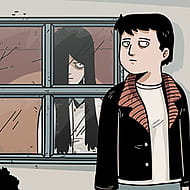



What do you do when a cash card is waiting in front of you, a hint card suggests a JERRY could be sitting right beside it, and the puppet across the table keeps smiling like everything is fine? Mr Magpie’s Harmless Card Game is built around that single moment of doubt, and it asks you to repeat it until you either climb the corporate ladder or get terminated.
| Genre | Surreal corporate horror deckbuilder |
| Players | Single-player |
| Core loop | Flip cards for cash and multipliers while avoiding JERRY |
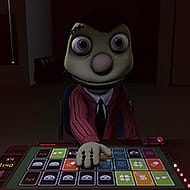
| Host | Mr Magpie, a deranged puppet |
| Progression | Shop purchases, deck cards, and global Perks |
Reading the Board in Mr Magpie’s Harmless Card Game
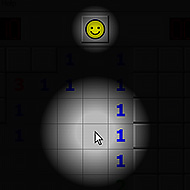
Each round lays out a grid of face-down cards. Flipping them pays out cash and multipliers, hint cards narrow down where the JERRY cards are hiding, and a single wrong flip can end the run. The easiest comparison is Minesweeper with a shareholder meeting attached, and anyone who has cleared a grid by deduction will feel at home within a few rounds.
- Cash cards pay out money when you flip them.
- Multiplier cards raise what your cash is worth.
- Hint cards give clues about where JERRY is hiding.
- Reactivators trigger cards a second time.
- JERRY cards end your run.
Beginners tend to chase the biggest payout first and ignore the hints, which is the fastest route to meeting JERRY. The better habit is to read every hint before touching a face-down card, then flip the safest card instead of the most tempting one. That answers the question most new players ask: you avoid JERRY by deducing, not by guessing.
Runs are short, and every flip is a calculated gamble. That speed gives the game its pull toward one more run, because a failed attempt takes minutes rather than an hour to shake off.
Knowing When to Cash Out
Every round is a quota problem as much as a puzzle. You need to earn enough before time runs out, but each extra flip risks a JERRY, so the real skill is deciding when you have taken enough. Poor decisions end in a workplace incident, as the game puts it, and the only way to avoid one is a steady routine.
- Read every hint on the board before touching a face-down card.
- Flip the card the hints suggest is safest, not the one that pays most.
- Compare your cash and multiplier against the cards still hidden.
- Decide whether to bank the round or risk one more flip.
Experienced players treat the multiplier as the real target. Cash is useful, but a high multiplier turns the same cards into far larger payouts, so players who like careful math will lean toward finding multiplier cards early and leaving plain cash for later.
Not every board is solvable. When the hints do not narrow things down, you face a forced guess, the kind Minesweeper players call a 50/50, and that is where risk-takers and cautious players split. Some will bank the round immediately, while others will gamble because the next card might finish the quota.
Perks, Cards, and Irresponsible Combos
Between rounds you spend your earnings in the supply closet, adding powerful cards to your deck and unlocking global Perks that change how the whole run behaves. Perks are where the game gets inventive. In early tests, Sticky Pills flipped adjacent multiplier cards, Whisper Network opened a card next to exactly one JERRY at the start of a round, and Burnout granted extra multiplier whenever a JERRY was flipped.
In those same tests, perks cost $5 for common, $30 for uncommon, and $99 for rare, and they activated from left to right, so the order you placed them in mattered. Stacking perks that feed the same card type is the usual path to a big run, for example pairing Sticky Pills with King of Pills so a single multiplier flip cascades through the board. Specific numbers may change as the game is tuned.
Multiple character classes change the starting point, so a deck that works for one class can fall flat for another. Players who love synergy hunting will find the supply closet is the real puzzle, while those who prefer simple plans may find the sheer number of Perks overwhelming at first.
Why Mr Magpie’s Harmless Card Game Punishes Greed
The setting is a corporate nightmare run by a smiling puppet host, and the goal is to climb the ladder one promotion at a time. Early tests tied winning to career progress, with promotions that could grant extra perk slots, and a win streak that ended with reaching the weekend. The pressure grows because each win makes the next round more painful to lose.
Between runs you can leave the card table and explore the workplace, picking up fragments of the company’s history and working out why Mr Magpie cares so much about the outcome. Those side trips give the dread somewhere to live when the cards are away.
Horror players hoping for Inscryption-style unease will find a similar mix of card mechanics and discomfort, though the tone here leans darkly funny rather than gloomy. Reviewers have pointed to that comparison, and the surreal office décor keeps the jokes close to the danger.
Cryptic Systems and the Luck Debate
The biggest complaint in early feedback was clarity. The developers admitted that compressed trigger-and-effect wording on perks confused players, and they moved toward plainer descriptions while keeping the mystery of discovering how things interact. Newcomers should still expect a few runs of puzzling over what a Perk actually does.
Luck is the other argument. Because boards are random, some players feel a run is decided before the first flip, while others argue that deduction and deck choices smooth out most bad luck. Anyone who has watched a promising run end on an unlucky 50/50 will understand both sides.
One small detail captures the tone: an early patch slowed card flips and blocked input during animations because players kept dying by clicking a JERRY several times at once. It is a reminder that the game treats death as casual office business, and that the gap between a clever run and a ruined one can be a single careless click.
Mr Magpie’s Harmless Card Game gives you a grid of face-down cards, a supply closet full of Perks, and a smiling puppet who insists everything is under control. The pull comes from reading the hints, trusting your multiplier plan, and knowing exactly when to stop before a JERRY ends the shift.