















Finals Week






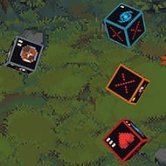





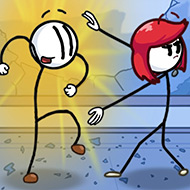
What happens when you whisper an answer a little too loudly and the professor is standing two desks away? In Finals Week, the professor throws erasers with worrying accuracy, and getting caught escalates into gags, ropes, and eventually a Cone of Shame, all while you still have to finish the exam. It is a co-op cheating comedy where communication is the weapon and the whole class is your accomplice.
| Genre | Co-op cheating comedy |
| Platform | Windows PC |
| Players | 1 to 4 |
| Structure | 12 exams with a hallway hub between them |
Proximity Voice Chat as the Core of Finals Week
Everything runs on proximity voice chat. Voice volume fades with in-game distance, so a whisper to the desk beside you never reaches the back row, while a conversation too loud for the moment carries straight to the professor. The game turns talking into a risk you manage, not a background feature.
Beginners get this wrong in the first exam by treating voice like a normal call. They shout answers across the room, hear an eraser fly, and wonder why the plan collapsed. Quiet, short, and close beats loud, long, and far every time.
Friend groups who already love proximity chat from other co-op games will recognize the comedy here: the plan that was too loud, the answer that arrived too late, the whisper the professor may or may not have caught. Those overheard moments are what groups retell after the session ends.
Cheating Channels and Their Risks
Voice is only one tool, and every channel trades range against how easily the professor can detect it.
- Walkie-talkies for long range, using a device the professor might notice
- Cellphone texts that are silent but visible on screen
- Paper notes and throwable objects for physical passing
- Binoculars for reading answers from a distance without speaking
- A pen for writing answers on a classmate’s face
- A tranquilizer blowgun pen for answer sources that refuse to share
The pen is the detail everyone remembers. Writing an answer on a classmate’s face works until the wrong person gets it, because the right piece of information in the hands of a chaotic teammate produces very different outcomes.
Choosing a channel under pressure is the real skill. Walkie-talkies skip proximity entirely, but once the professor patrols nearby, a text or a paper note may be the quieter option. Groups that rotate channels as the patrol moves tend to last longest.
Twelve Exams, Fail-Forward Punishments, and the Hallway Hub
A full run covers 12 exams, and each one raises the difficulty as the professor grows more suspicious and punishments get sillier. Penalties escalate from a gag to being tied up and finally to the Cone of Shame, so by the later exams one careless whisper can cost the whole group.
Nobody is eliminated. The game uses fail-forward design, so caught students stay in the exam in a handicapped state, which keeps the group working even after the first mistake.
Between exams the group returns to a hallway hub, where you can shoot hoops, plan the next test, and unlock outfits, hairstyles, and colors by passing exams. The honest caveat is that a solo run is possible, but the multi-channel tools are clearly built for groups, so playing alone feels like a quieter, different experience of the same exams.
Questions About Finals Week Before the Bell
- How many players can join Finals Week? One to four players can take part, and co-op is the intended way to play. A solo student can still attempt all 12 exams alone. Even so, proximity voice, walkie-talkies, and notes are designed with groups in mind.
- What happens when the professor catches you? Getting caught triggers escalating restraints that start with a gag and move on to ropes and the Cone of Shame. You are never removed from the exam, because the fail-forward design keeps caught students in the match. That means you keep working with whichever tools still function.
- Which cheating channel is safest? None is safe everywhere. A whisper stays inside a short range, a walkie-talkie is a visible device, and cellphone texts show on screen, so the best choice depends on where the professor is patrolling.
Finals Week works because every channel carries a cost: the whisper that reaches the professor, the walkie-talkie that gets spotted, the pen that lands on the wrong face. Plan your route through all 12 exams like a student who studied nothing, and the Cone of Shame becomes a story instead of a defeat.