




















Mops & Mobs: A Sweeping Dungeon Adventure








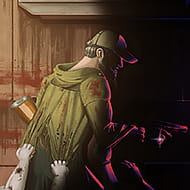




What if entering a dungeon meant taking the janitor’s job instead of raiding the treasure room? Mops & Mobs: A Sweeping Dungeon Adventure turns the familiar labyrinth into a workplace where you clean rooms, help troubled monsters, decorate living spaces, investigate a forgotten conflict, and settle some disputes with collectible cards. The central loop mixes first-person dungeon exploration with dialogue, small jobs, puzzles, and turn-based card battles. The joke is that the dungeon is your workplace, but the characters and their problems are treated with surprising sincerity.
| Genre | Dungeon adventure with exploration, story, and card combat |
| Player role | Dungeon janitor |
| Core activities | Cleaning, decorating, investigation, puzzles, dialogue, card battles |
| Known locations | Kitchen, library, graveyard, hidden corridors, fiery forge |
Working the Dungeon in Mops & Mobs
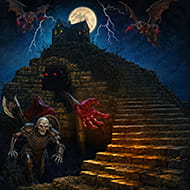
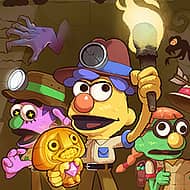
The dungeon is laid out as a multi-level workplace rather than a sequence of rooms filled only with combat. You move between places such as the greasy kitchen, ancient library, gold hoard, spooky graveyard, and fiery forge, meeting residents whose lives have become tangled with the dungeon’s new management. The lich lady, the gelatinous cube, the prison guard, and the bridge troll each have their own concerns. Talking to them is not filler; their requests connect the social side of the story to practical jobs around the labyrinth.
Cleaning is a real part of progression. Dirt heaps can contain critters and useful resources, and clearing them helps make rooms more livable. Decoration tasks ask you to pay attention to each monster’s style rather than placing objects at random. Players who enjoy cozy management loops will likely appreciate the small satisfaction of restoring a room, while players looking for uninterrupted combat may find the chores deliberately slow the pace.
Early in the game, the first level introduces the main systems together: dialogue, card-based combat, room decoration, puzzle-solving, and detective-style investigation. That breadth is useful, but it also means the game asks you to switch mental gears often. A conversation can point toward a room task, while an apparently ordinary object may later matter as evidence.
Monster Relationships and Room Decoration
Each resident gives the dungeon its own personality. The gelatinous cube’s existential crisis is very different from the prison guard’s wish for immortality, and the bridge troll has been separated from the purpose that once defined him. Learning what each character wants helps explain why decoration and assistance are tied to relationships. The dungeon master may be in charge, but the residents are the ones who make the place feel lived in.
When choosing decorations, think about the monster who will use the room. The point is not simply to make every space look expensive or tidy; it is to match the resident’s preferences and improve the atmosphere. Returning to a room after helping someone can also make the dungeon feel less like a static maze and more like a community with changing needs. That softer progression is a deliberate contrast with the usual dungeon-crawler power fantasy.
Some players will enjoy the character-focused errands more than the combat, while others may see repeated cleaning as a distraction from the mystery. Neither response is surprising. The strongest rhythm comes from alternating between a short practical task and a story conversation that gives the next visit a reason.
Card Battles and Detective Work
Combat uses collectible cards, and even unlikely opponents such as rats and dirt heaps can take part. Helping monsters can reward special cards, giving the social quests a direct effect on your deck. Building a useful collection is therefore connected to exploration and conversation, not only to winning fights. Before a battle, consider whether the cards you have support a steady plan or a riskier burst of damage.
Investigation adds another layer. The dungeon master denies that anything is wrong, but clues point toward a conspiracy and a forgotten war. You are expected to interrogate characters, find evidence, solve puzzles, combine clues, and decipher hidden symbols. A player who likes detective games should examine rooms carefully and revisit conversations when new information changes what an earlier detail might mean.
A practical checklist for a thorough sweep:
- Speak with residents and note requests that are not yet resolved.
- Clear dirt heaps and check whether they yield useful resources.
- Look for evidence and symbols while exploring each room.
- Use monster rewards to expand the card collection before tougher fights.
Questions About Mops & Mobs: A Sweeping Dungeon Adventure
What do you do as the dungeon janitor?
You clean rooms, help residents such as the lich lady and bridge troll, collect resources, decorate spaces, and support the dungeon master. These tasks also lead into the wider mystery, so ordinary maintenance can become part of the investigation.
How does card combat connect to quests?
Helping monsters can earn special cards that expand your deck. That means dialogue and side tasks can improve your options in battles, including encounters involving rats, adventurers, and dirt heaps.
What is the main mystery in the dungeon?
The story hints at a conspiracy and a forgotten war that the dungeon master does not openly acknowledge. Progress depends on questioning characters, gathering evidence, solving puzzles, combining clues, and deciphering hidden symbols rather than relying on combat alone.
Mops & Mobs: A Sweeping Dungeon Adventure stands out because the lich lady, gelatinous cube, and bridge troll are not just obstacles between treasure rooms; they are coworkers whose needs shape the route through the labyrinth. The blend of cleaning, decoration, card battles, and detective work may feel uneven to players who want one uninterrupted genre, but that unusual mix is also the game’s defining charm.