





















7 Days To Think About It






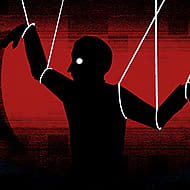



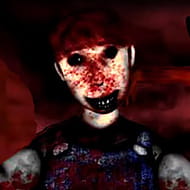


You stand in your bedroom doorway on the second day, certain something is off, and it takes almost a full minute of scanning the same four walls before you spot it — a lamp cord that wasn’t tangled like that yesterday. That first catch is what 7 Days To Think About It is built around: not jump scares, but the slow dread of realizing your own home is quietly rearranging itself while you decide what to do about a text from your friends.
| Genre | Psychological Horror, Spot-the-Difference |
| Platform | PC (Windows, Mac, Linux) |
| Perspective | First-person, mixed 3D environments and 2D imagery |
| Core Loop | Search each day for what’s changed at home, uncover the story, reach one of several endings |
The Premise Behind 7 Days To Think About It
The setup is deliberately small. After years of studying and working without a break, the player character is stuck at home, unsure whether to take a job or chase a personal project, when a notification arrives — friends inviting them out that night. Instead of answering right away, the player gets seven in-game days to decide, and each of those days is spent walking through the same home noticing what’s different.
What makes this premise work in 7 Days To Think About It is how ordinary the setting stays. There’s no obvious threat stalking the halls, no combat, nothing chasing the player between rooms. The horror comes entirely from the accumulation of small wrongness — objects shifted, shadows sitting at angles that don’t match the day before, details that shouldn’t have moved on their own.
Community discussion around the game leans heavily on the term “anomaly,” borrowed from the wider spot-the-difference horror scene, since that’s essentially the unit of gameplay here: one anomaly found per sweep of a room, sometimes obvious, sometimes buried in a detail most players walk past twice.
Reading the Home Across Seven Days
Each day starts the player back in the same rooms, and the challenge is memory as much as observation. By the time a player reaches day four or five, the home has accumulated enough small shifts that keeping track of what’s “supposed” to be there gets genuinely difficult, which is exactly the tension the format is chasing.
Beginners tend to sweep rooms too quickly, checking only the most obvious surfaces — a table, a doorway — while missing the kind of change that only shows up in peripheral detail, like a photo frame’s angle or a shifted curtain. That habit costs time on later days, when anomalies start hiding in spots a player already assumes are safe.
Slower, methodical players tend to do better here than players used to faster horror pacing, since 7 Days To Think About It rewards re-checking a room rather than moving forward on instinct. Players chasing every ending in one sitting also learn quickly that skipping a day’s sweep to save time almost always costs them later.
3D Rooms and 2D Images in 7 Days To Think About It
One structural choice players bring up often is the mix of full 3D environments with flat 2D imagery layered into scenes — photographs, screens, printed material — which gives certain anomalies a different texture than the space around them. A 2D insert is a static image embedded into an otherwise navigable 3D room, and spotting whether one has changed requires a different kind of attention than scanning a normal object.
This blending is one of the more divisive design choices in the wider community: some players find it adds a layer of unease, since flat images can hide changes 3D geometry can’t; others feel it occasionally breaks immersion by making certain rooms feel like collages rather than lived-in spaces. Both reactions show up regularly in discussion threads.
Early in the game, before the player has learned to expect 2D inserts specifically, this mix is what catches most people off guard the first time an anomaly turns out to be a changed detail inside a photograph rather than a physical object.
Multiple Endings and the Choice at the Center
Everything the player notices across the seven days feeds into a single underlying decision: go out with friends, or stay home. That choice, and the state of the home leading up to it, determines which of several endings the player reaches, and the game doesn’t telegraph which path is “correct.” Some endings read as hopeful, others considerably less so, and the community disagreement over which ending counts as the “true” one is one of the more active debates around the game.
What happens if a specific anomaly gets missed entirely on a given day is one of the questions new players ask most — the short answer is that missing one doesn’t lock the player out of continuing, though it can mean an ending’s context lands differently once the full picture becomes clear at the end of the seven days.
Players also ask whether the choice to go out or stay in needs to be made early — it doesn’t. The game holds that decision open until the final day, letting the accumulated anomalies of the whole week inform it rather than forcing a snap judgment on day one.
7 Days To Think About It gets more out of a tangled lamp cord and a shifted photo frame than most horror games manage with a hallway full of jump scares, and that patience — asking a player to actually know a space before it tells them anything is wrong — is what sticks after the seventh day ends.