














Sintopia




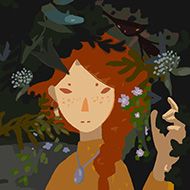

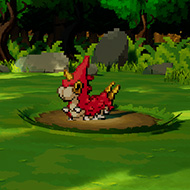


Brainburster, Sintopia’s stand-in for Sloth, does not lounge around Hell doing nothing. It sits in a corner doomscrolling on a smartphone, refusing to work unless something forces it to look up. That single detail tells you most of what you need to know about this game’s sense of humor, and about how much busywork you are about to sign up for managing it.
| Genre | God Game, Management Simulation |
| Platform | Browser |
Sintopia’s Two Worlds, One Bureaucracy
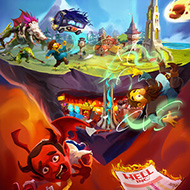
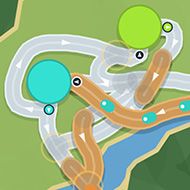
Sintopia splits its world into Hell and the Overworld, and running one properly means constantly thinking about the other. Souls arrive in Hell already shaped by what they did as Humus, the living humans still walking around up above, and how much Sin they carry when they die depends on choices you make from the Overworld side of the game.
New players tend to focus entirely on Hell at first, since that is where the actual management systems live, and only realize much later how directly their Overworld spellcasting affects the soul queues they are struggling to process downstairs.
Imployees Are the Whole Operation
Your workforce in Sintopia is made up of Imployees, and nothing about Hell functions without enough of them doing their jobs. Overbuilding facilities before you have hired enough Imployees to staff them is the single most common early mistake, and it is an easy trap to fall into because new buildings feel like progress even when they are actively making your soul-processing pipeline worse.
Fear props and Motivation props let you shape how Imployees behave near their workplaces and along their paths, and using them well is often more effective than simply hiring more staff.
Casting Spells on the Humus Above
The Overworld half of Sintopia lets you cast spells on Humus to nudge their Sin levels up or down before they ever reach Hell. This is where the game’s core fantasy of being a manipulative, chaos-loving demon lord is supposed to shine, and it is also where a lot of critical reviews have pushed back, arguing the manipulation options feel underwhelming compared to how central they are to the game’s premise.
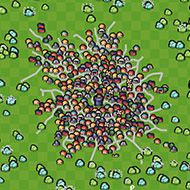
Once a batch of Humus dies with high Sin levels, the resulting soul rush downstairs can overwhelm an Imployee roster that was running fine a moment earlier — a direct, sometimes brutal, link between your Overworld decisions and your Hell-management workload.
The Seven Sins, Reimagined
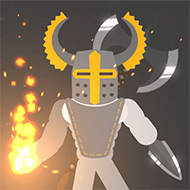
Each deadly sin in Sintopia gets its own named demon rather than a generic icon. Sloth is Brainburster, glued to its phone. Wrath is Balrog, a fiery axe-wielder wearing a “noob killer” shirt and swinging a keyboard-themed weapon — a direct jab at competitive gamer rage. Pride is Dark Seraph, Envy is Blind Seer, Lust is Succubus, Greed is Leprechaun, and Gluttony is Maw Tyrant.
These aren’t just cosmetic reskins. Each demon’s presence shapes which Fear and Motivation props are worth placing nearby, since their behavior patterns differ enough that a layout built around Balrog’s aggression will not necessarily work near Brainburster’s passive doomscrolling.
Chasing the Resurrection Gate
The long-term throughline of Sintopia is building toward a functioning Resurrection gate — effectively turning your operation into a profitable business built on sending souls back up rather than just processing them endlessly. Reaching that point requires stable soul throughput over a long stretch of play, not a single clever building layout.
Players chasing this goal quickly learn that aesthetic, symmetrical base layouts often lose to uglier, functionally efficient ones. Prioritizing pathing and routing over visual polish is a lesson almost everyone learns the hard way.
Where New Players Get Stuck
Research bottlenecks, sudden Imployee strikes, and constant upkeep costs are the three complaints that show up again and again in Sintopia reviews. None of them are unfair on their own, but stacked together during a rough stretch, they can stall a save file that felt stable just an hour earlier.
- Understaffing. Buildings without enough Imployees create backlogs that snowball fast.
- Ignoring the Overworld. ignoring Humus and their Sin levels means unpredictable soul spikes with no warning.
- Chasing symmetry. pretty layouts that ignore routing efficiency tend to collapse under real load.
Why Sintopia Reviews Are So Split
Sintopia is genuinely divisive among players who have finished a full playthrough. Some love the chaotic, Bullfrog-style god-game fantasy of running Hell like a mischievous overlord; others find the rigid management systems punishing in a way that fights against that fantasy, since losing control of your Imployees is mechanically costly rather than fun.
That tension — a game about embracing chaos that mechanically punishes any loss of control — is the single most repeated observation in critical writeups about Sintopia, and it is worth going in aware of that contradiction.
Sintopia: What New Players Want to Know
What is the best way to start as a beginner in Sintopia?
Hire enough Imployees before expanding your building count, and check your Overworld spell choices regularly so Sin spikes among the Humus do not overwhelm your soul queues without warning.
Is the Overworld half of Sintopia worth engaging with seriously?
It directly affects how many souls arrive and how corrupted they are, so ignoring it is a mistake even though several reviewers feel its manipulation mechanics could go further.
Which demon should new players learn to manage first?
Brainburster and Balrog tend to appear earliest and have the most distinct behavior patterns, making them a good baseline for learning how Fear and Motivation props actually work.
Sintopia asks you to be a competent manager and a chaotic demon lord at the same time, and it rarely lets you fully succeed at both in the same session. That friction is exactly why Brainburster is still doomscrolling in the corner while the rest of Hell tries to keep up around it.