












Monster Nomster
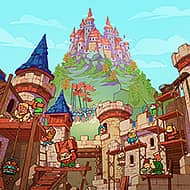




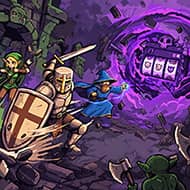



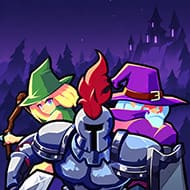

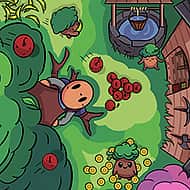
You are a small koblin servant with draconic power, alone in a dungeon full of creatures that want to eat you — and Monster Nomster asks you to eat them first. That inversion sits at the center of everything the game does: rather than fighting enemies to death with conventional weapons, you swallow them whole to regain health, gain experience, and progress through procedurally generated encounter rooms toward the exit portal of each zone. The act of consuming is not a bonus action or a minigame. In Monster Nomster, nomming is the win condition, the healing system, and the core loop all at once.
| Genre | Vore-Like Action Shooter / Roguelike |
| Platform | PC (Windows, Android) |
| Status | Version 1.0 — full release |
| Zones | 3 (Underground, Fungal Forest, Cosmic Cavern) |
| Playable character | Kram |
| Difficulty modes | Easy, Medium, Hard |
What Kram Is and Why the Setup Matters
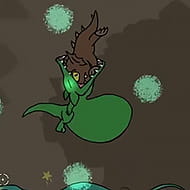
Kram is the koblin you control throughout Monster Nomster — a compact, hand-drawn creature with draconic heritage tied to the Mistress, a dragon guardian who has been captured somewhere beyond the Underground. The stated goal of rescuing her gives the runs a loose narrative thread, but the real driver is the procedurally generated rooms between you and the next zone portal. Each room rolls a fresh configuration of enemies, hazards, and occasional visitor encounters, so no two runs feel identical in structure, though the pressure stays consistent: clear every room, find the exit arrow, and try not to get swallowed yourself.
Early rooms in Zone 1 are small and hostile. Two or three enemies move quickly enough to corner Kram if you panic and run in straight lines. The correct play is to keep moving in wide arcs, fire your breath weapon to weaken targets, and close in to swallow once an enemy’s health is reduced. That rhythm — soften, swallow, heal — is what Monster Nomster rewards once players understand it. Many newcomers treat swallowing as something to do after a fight rather than during it, which costs them the primary healing method at the worst possible moment.
Visitors in Monster Nomster are NPCs who appear between combat rooms and offer choices: let yourself be eaten for a reward, eat them for a different benefit, or engage with whatever they bring. Tezzie, Oenla, and Peliptor are among the recurring visitor characters, each with distinct boons and personality. Tezzie — an orange lizard whose digestion animations and interactions are among the most developed in the game — also connects to Kram’s lore through her blood relation to the Mistress.
Breath Weapons, Perks, and the Perk Pool in Monster Nomster
Kram’s ranged attack comes from a rotating selection of breath weapons. Water Whelm and Vile Venom were both added in the Fungal Forest update alongside the original starting options. The community’s longstanding hot take is that the Mist Ball is the strongest weapon in the game — it fires and persists without additional input, and a single shot can eliminate five or six enemies caught in its path. Players who discover Mist Ball early often stop experimenting, which is a mistake because certain perk combinations scale more dramatically with other weapon types.
Perks accumulate through level-ups and visitor rewards, drawn from a randomized pool. The Fungal Forest update added 11 new perks ranging from Beetle Buffet to Spectral Claw, plus 6 powerful boss perks awarded for defeating zone bosses. Reaching and defeating the Zone 1 boss before moving on is one of the most impactful decisions you can make in a run, because boss perks sit in a separate tier above the regular pool and can fundamentally shift how Kram plays in Zone 2 and beyond.
Hard mode changes the perk calculus significantly. In the regular version, every successful digestion restores health, making aggression feel safe. Hard mode removes healing from normal digestions entirely, leaving health restoration only from specific perks or boss-perk combinations. This shifts Monster Nomster from a game where going on the offensive feels natural to one where every engagement carries real attrition risk — where the phrase “go for the boss perk” becomes less of a tip and more of a survival requirement.
Zone 2 and the Fungal Forest — What Changes
The Fungal Forest brings six new enemy types and one major boss. Enemies here move differently than Zone 1 encounters: the forest variants have more unpredictable approach angles, and several fire projectiles that arc rather than travel in straight lines. By the time you reach Fungal Forest rooms, your perk stack should be developed enough to handle two or three simultaneous enemies, but players who rushed Zone 1 without building effectively will feel the gap immediately. The Lunchbox and Reusable Bomb artifacts were also introduced alongside this content, each affecting resource economy and room-clearing options that breath weapons alone cannot match.
Zone 3, the Cosmic Cavern, rounds out the full 1.0 release and leads to the final confrontation with the captor of the Mistress. Three separate endings are available depending on visitor encounter choices made across all three zones. Getting anything beyond the first ending requires paying close attention to decisions you might have dismissed as cosmetic. Completionist players who want all three endings will need multiple runs, but those runs accumulate perk knowledge and movement habits that make later attempts feel faster and more deliberate.
The Dice and Dinner Gambling System
Every question-mark encounter on the zone map was replaced in update 0.65 with a poker dice game against one of four special visitors, where the outcome determines who eats whom. The rules differ slightly from standard poker dice — a straight outranks a full house because straights are statistically harder to roll with dice — and tied hands go to the total sum of all dice rather than just the matching pair. Losing is not catastrophic because even the loser receives a small money or resource reward. Winning, however, unlocks perks and animations tied specifically to these gambling visitor characters.
One critique that surfaces periodically is that save persistence remains less reliable than it should be. Players who exit mid-run or encounter a crash report that save files sometimes fail to load, forcing a fresh start regardless of progress. For completionist players trying to unlock specific endings or accumulate all CGs from the Gallery of Gulps, this remains a frustrating variable in an otherwise tightly designed system.
Common Questions About Monster Nomster
How do Hard mode endings work differently from Medium?
Hard mode removes health restoration from normal digestions, changing the risk profile of every combat encounter. In Medium, swallowing an enemy mid-fight is a safe, rewarding play. In Hard, you only recover health from specific digestion-linked perks, which means perk selection during level-ups has to prioritize survivability in a way Medium does not require. The three endings remain accessible on Hard, and the visitor choices that gate each one stay the same regardless of difficulty.
Is the Mist Ball really unbalanced, and should you use it?
The Mist Ball’s fire-and-forget behavior keeps hitting enemies after you’ve moved, which is unusual among breath weapons and explains why players consistently rate it the strongest option. That said, certain boss perks from Zone 1 scale specifically with Vile Venom and Water Whelm, so defaulting to Mist Ball can mean entering Zone 2 without optimal boss-perk synergy. The weapon is worth using when you need to survive a difficult room, but building a run entirely around it often limits late-game perk efficiency.
How do you get all three endings in Monster Nomster?
The three endings are gated by cumulative visitor choices across all three zones, not by a single late-game decision. Players who receive only the first ending usually made passive choices with Tezzie, Oenla, and Peliptor without realizing those interactions had branching weight. Ending 2 and Ending 3 require specific patterns of visitor choices, some of which appear only under conditions set by earlier interactions in the same run. At least three deliberate playthroughs with varied choices is the most reliable path to seeing all outcomes.
Monster Nomster is an unusual thing to encounter in the roguelike space — a game where the act of eating is the primary verb, and where Kram’s survival depends not on avoiding enemies but on swallowing them at the right moment. The Fungal Forest and Cosmic Cavern zones, the Dice and Dinner gambling system, and the visitor hierarchy built around Tezzie, Oenla, and Peliptor give the game far more structural depth than its origins suggest. The full 1.0 release is the version that finally delivers on everything the early Underground zone had been promising.