







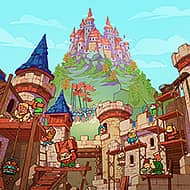
Gridlords



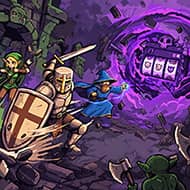



You place your last building, start the fight, and watch your army march against a castle another player designed earlier, with no way to give a single order once the clash begins. That is Gridlords: an asynchronous PvP autobattler in a fantasy pixel-art world, where the strategy is finished before the first unit moves. The skill is entirely in what you build and how you combine it.
| Genre | Strategy auto-battler with castle building |
| Battles | Asynchronous PvP, decided by the auto-battler |
| Core Choices | Race, hero, buildings and units |
| Art Style | Fantasy pixel art |
| Playable Now | One fully playable race in Early Access |
| Platform | Windows PC |
Placing Your First Buildings Inside a Gridlords Castle
Your castle is the heart of your strategy. You place buildings, unlock powerful units and upgrade your fortress, and every choice shapes what your army can do once the battle starts. The goal is to combine unit types and experiment with synergies so the castle’s strengths shine and its weaknesses stay small.
Before you press start, a few checks are worth making:
- Look at what each building unlocks, not only what it costs.
- Check whether your layout leaves an obvious weak side that a rival could exploit.
- Make sure your units support each other instead of working as separate pieces.
New players often fill the space with whatever looks strongest and hope for the best. A castle that feels powerful in isolation can fall apart against a rival with a tighter plan, so the first real lesson of the game is that layout matters more than any single unit.
Choosing a Race and a Hero That Match Your Style
You pick a race and a powerful hero to define your strategy. Each hero brings unique abilities and a personal philosophy, which shapes how your army fights and survives. The big question is whether you charge in with relentless aggression or stand firm behind impenetrable defenses.
In Early Access only one race is fully playable, so the choice is narrower than the final game promises. More races and a broader roster of heroes are planned, which means the early meta is built on a smaller set of options than it will be later.
Aggressive players will gravitate toward heroes that reward early pressure, while patient builders prefer a hero that makes a fortress hard to crack. Neither path is automatically better, and the best choice often depends on the type of rivals you keep meeting.
Synergies: Why Layout Beats Raw Unit Count
Synergies are the beating heart of the strategy. Combining unit types and abilities creates combos that are stronger than the sum of their parts, and discovering a good one feels like cracking a puzzle. The game’s own pitch calls these deep synergies, and they are what separates a casual castle from a skilled one.
The best moment in the game comes when a combination you planned carefully wins a fight you expected to lose. Because you cannot intervene once the battle starts, all the credit and all the blame land on your building choices.
Tinkerers who love inventory and management systems will enjoy testing small changes between fights. Players who prefer quick results may find the planning phase slower than they expected, since the game is a thinking exercise as much as a battle.
Asynchronous Battles and Letting the Auto-Battler Decide
Battles are asynchronous, meaning you test your strategy against players from around the world without waiting for anyone live. You deploy your forces and the auto-battler system determines the victor, so skillful planning wins the day. There are no reflex checks and no desperate last-second commands.
Right now the game offers casual matchmaking, and a ranked ladder is planned for the full version. That means the current competitive scene is more about learning and experimenting than climbing a strict leaderboard.
The format suits busy players because a fight does not need a scheduled opponent. You build, you submit, you watch, and you adjust, which is a rhythm that fits short sessions as well as long ones.
Defense, Offense and the Playtest Balance Debates
Every castle has to decide how much to invest in attacking and how much in staying standing. Heroes push you toward one style or the other, and buildings such as Barricades exist to slow rivals down. A castle that only attacks can be punished by a tough defense, and a castle that only defends may never break through.
Playtest feedback shows that balance is a live conversation. Some players argued that Mortars overshadowed the alternatives and that the first wave felt imbalanced, which is a reminder that an auto-battler lives or dies by how fair its options are. Treat early impressions as a snapshot and not a verdict.
The healthy takeaway is to test several builds instead of repeating one. A strategy that dominates one week can fade the next as the community adapts and updates arrive.
Early Access Limits and What Comes Next for Gridlords
The core loop is working, with one fully playable race, casual asynchronous matchmaking and artwork with minimal placeholders. That is a solid base, but it is still a base. Early Access exists to tune the building phase, unit synergies and matchmaking with real players.
Plans for the full version include more races, a broader hero roster, a ranked ladder and additional building types. Reviews so far lean positive, though the smaller selection of content is the most obvious complaint a newcomer might feel.
If you enjoy shaping a strategy before it plays out, the current version is a good way to see where the game is heading. If you want a huge variety of races and heroes on day one, waiting for more content is a reasonable choice.
Questions Players Ask About Gridlords Before Building a First Castle
- Is Gridlords single-player or multiplayer? It is built around asynchronous PvP, so your castle and army face other players’ castles without a live match. You still plan and deploy yourself, but the auto-battler resolves the fight, which makes the game feel competitive without needing a partner at the same moment.
- How many races can you play? Only one race is fully playable in Early Access, with more planned for the full version. Your hero choice still shapes whether you play aggressively or defensively, so the first race can already feel different from run to run.
- Do you control units during a battle? No. Once you deploy your forces, the auto-battler decides the result, and skillful planning is what wins. That is why your buildings, synergies and choice of hero matter more than any in-fight reaction.
Gridlords rewards players who treat their castle as a puzzle: pick a hero whose philosophy fits your plan, place Barricades and units with purpose, and expect rivals to punish any lazy layout. Once your army marches out, the only thing left to defend is the strategy you built.