















Channel 453
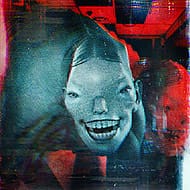

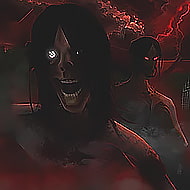
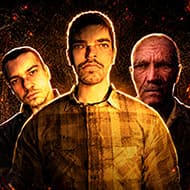
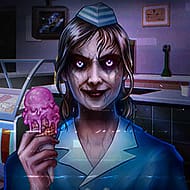

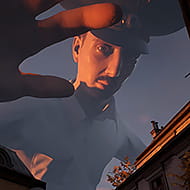


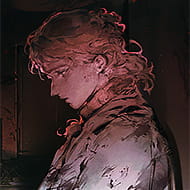
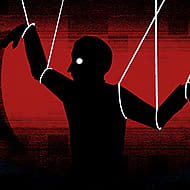


Channel 453 looks like a cozy little romance about a mysterious man who talks to you through your television — but it plays like a slow psychological unraveling that keeps asking whether the kindness on screen is really kindness at all. Tune into the titular channel after moving into a new home and you’ll meet Liotte, a figure who can somehow see and hear you from inside the broadcast, and who behaves as though he’s been waiting specifically for you to arrive.
| Genre | Psychological Horror Otome / Visual Novel |
| Platforms | Windows, macOS, Linux |
| Endings | 3 |
| Playtime | 60–90 minutes per full run |
Liotte and the Rules of a One-Sided Broadcast
The core mechanic in Channel 453 is deceptively simple: you talk to Liotte, he talks back, and the game slowly erodes the boundary between “watching a channel” and “being watched by one.” That meta-narrative twist — where Liotte openly acknowledges your presence as a real, physical player rather than a scripted audience surrogate — is the detail almost every review circles back to.
Beginners tend to treat early conversations as low-stakes flavor text before the “real” horror starts, and that’s a mistake the game punishes quietly. Small dialogue choices in the opening act accumulate the same way they do across otome-adjacent visual novels generally, and by the time glitch effects start interrupting scenes, your standing with Liotte has usually already been shaped more than it appears.
Community vocabulary around this game leans on the word “looping” constantly — repeating earlier scenes deliberately to test different responses, since the game doesn’t always make clear which choices matter until several minutes after you’ve made them.
The Looping Mechanic Behind Channel 453’s Three Endings
Channel 453 ships with three endings, and getting anything beyond the default outcome requires understanding how looping actually works. Rather than a single linear playthrough determining your fate, later chapters expect you to revisit earlier decision points with new information, adjusting your responses based on what you’ve since learned about Liotte.
Players consistently describe the two bad endings as reachable almost by accident on a first run, since a natural instinct to trust Liotte early tends to lock in the more unsettling outcomes rather than the good ending. The third, better ending demands a colder, more skeptical approach across repeated loops — making fewer of the reflexively warm choices and instead pushing back on Liotte’s claims.
What surprises a lot of players is how little the surface content changes between the bad and good endings — the difference lives almost entirely in tone and in a handful of late-game lines rather than in dramatically different scenes, which some find an elegant, minimalist approach to branching and others find genuinely underwhelming for the replay effort involved.
Glitches, Jump Scares, and What They’re Hiding
Channel 453 uses its glitch effects deliberately rather than as pure jump-scare punctuation. Screen distortions tend to intensify around moments where Liotte’s claims about himself start contradicting earlier statements, and attentive players treat glitch intensity as an informal signal that something in the current scene isn’t what it appears to be.
The paid full version expands on a plot thread the community refers to simply as the Hidden Character’s secret — content the developer has stated was deliberately withheld from the free release specifically because it clarifies details the story is meant to leave ambiguous for most players. That choice is one of the more debated aspects of the game; some players feel it’s a fair way to reward support, others feel it splits the narrative in a way that leaves free-version players with a genuinely incomplete picture.
By the time the story reaches its final act, the line between Liotte being a victim of his own circumstances and Liotte being the source of the danger becomes the game’s central, unresolved tension — and Channel 453 is intentionally light on giving you a clean answer either way.
Where First Playthroughs Tend to Go Wrong
The single most common complaint in comment sections isn’t difficulty — it’s clarity. Several players report finishing an ending and feeling like they’d missed context that was never clearly delivered, particularly around who or what Liotte actually is beyond the television. This is a fair criticism the game more or less earns; how do I get the good ending in Channel 453 is one of the most repeated questions across itch.io comments and Discord threads precisely because the game doesn’t telegraph its branching logic clearly.
The honest answer players have converged on: favor skepticism and distance over affection in your responses, especially once glitch effects become frequent, and be willing to loop back through earlier scenes rather than pushing forward once something starts to feel wrong.
Who is Liotte in Channel 453 is the second most common search, and the game deliberately resists giving a full answer until very late — treating that ambiguity as the entire point rather than a gap to be filled in quickly.
Channel 453 succeeds by making its horror feel intimate rather than spectacular, letting a television screen and a character named Liotte carry the entire weight of the story’s tension. Whether you land on one of its two harsher endings or work your way toward the good one, the game makes sure you leave uncertain whether Liotte was ever really trying to help you at all.