























Dead Stop – No Vacancy













What actually waits behind the doors of a motel with no other guests and no vacancy sign that never turns off? That’s the question hanging over Dead Stop – No Vacancy from the moment reporter Nancy pulls into the gravel lot, and the game spends its entire runtime answering it through exploration rather than exposition.
| Genre | First-Person Horror / Investigation |
| Protagonist | Nancy |
| Setting | Paradise Motel, near Crestfall |
| Structure | Short, standalone first episode |
Nancy’s Wrong Turn Into Crestfall
Nancy isn’t a paranormal investigator or a final girl by trade, she’s a hard-edged reporter chasing a story about an arson case that smells like insurance fraud in the nowhere town of Crestfall. That mundane setup matters, because it means the game never has to justify why its protagonist is equipped to handle what she finds. She’s stranded because of a wrong turn and a dead GPS signal, not because the plot needed her somewhere specific.
This grounded starting point is part of why Dead Stop – No Vacancy reads more like a slasher throwback than a supernatural epic. The horror escalates gradually, and Nancy’s ordinary competence, rather than any special skill, is what carries the game.
Checking Into the Paradise Motel
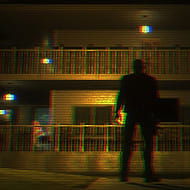
The Paradise Motel is where the entire game takes place, and it’s built like a real, if slightly wrong, roadside stop rather than a stylized haunted house. Rooms have numbers, the office has a front desk, and the geography stays consistent enough that returning players can navigate it from memory by their second run. That consistency is deliberate, since so much of what the game asks you to do depends on remembering where a specific detail was noticed earlier.
Players coming from bigger-budget horror games sometimes expect more real estate to explore, but the motel’s compact footprint is closer to the point than a limitation.
Reading the Rooms in Dead Stop – No Vacancy
Nearly every clue in Dead Stop – No Vacancy is delivered through what the room itself tells you rather than through dialogue or journal dumps. A disturbed bed, a missing key on a board that should be full, a door propped in a way that makes no sense for a working motel, all of it accumulates into a picture of what happened here before Nancy checked in. Players who enjoy piecing together a narrative from scattered physical clues tend to get the most out of this structure, since the game rarely spells anything out directly.
Environmental storytelling is the term the horror community uses for exactly this approach, where the space you’re walking through carries the plot instead of a character explaining it to you, and Dead Stop – No Vacancy leans on it almost exclusively.
By the time you’ve worked through the first few rooms, you start noticing details you missed on your initial pass, which is part of why some players replay sections rather than pushing straight through.
The Presence Stalking the Corridors
Once the game’s threat actually shows up, it moves through the motel’s corridors with a spider-like, low-to-the-ground gait that players describe as one of the more unsettling silhouettes in recent retro horror. Its presence changes how you approach later rooms, since simply walking in and reading every clue at your own pace stops being an option.
Some players found this stealth-driven section frustrating rather than tense, particularly when the presence seems to camp near an objective players need to reach. That criticism shows up often enough in discussions of the game that it’s worth setting expectations before you arrive there: the shift from investigation to evasion is real, and not everyone finds it as compelling as the puzzle-driven opening.
Environmental Puzzles and the Motel’s Buried History
The puzzles scattered through the Paradise Motel are built around its dark history rather than arbitrary lock-and-key logic, which keeps them feeling connected to the story instead of bolted onto it. Solving one typically requires cross-referencing a detail from one room against an object in another, so backtracking through the motel becomes a natural part of solving rather than a chore layered on top.
Once you understand what actually happened at the Paradise Motel, several earlier details reframe themselves, and that reveal is one of the moments players specifically point to when recommending the game.
Completionist players who track down every clue before advancing tend to have the fullest picture of Crestfall’s backstory by the credits, while players focused purely on escaping the motel can still finish, just with more gaps in what they understood.
Retro Visuals and Late-90s Horror Influences
Dead Stop – No Vacancy uses PS1-era visual texture deliberately, not as a budget shortcut but as an atmosphere choice tied to the horror games it’s drawing from. The low-poly geometry and grainy lighting recall a specific era of survival horror, and players who grew up on that generation tend to recognize the influence within the first few minutes inside the motel office.
The retro presentation also does functional work, since limited visibility down the motel’s hallways is part of what makes the stalking presence effective once it appears.
How Long a Full Playthrough Actually Takes
A full run through Dead Stop – No Vacancy generally takes players somewhere around ninety minutes, which places it firmly in the “short and complete” category the game advertises rather than positioning it as a full-length campaign. Players who want to see everything, including optional environmental details, will run closer to the top of that window, while players focused on escaping will land under it.
Where Dead Stop – No Vacancy Struggles
The game isn’t without rough edges. A number of players have run into bugs during the stealth-heavy section, and some feel the premise of a journalist uncovering a motel’s cult-adjacent history deserved more depth than a short first episode can deliver. That’s a fair critique, and it’s one the anthology format seems built to eventually address rather than dismiss, since No Vacancy is explicitly positioned as the opening chapter rather than the whole story.
What Comes After No Vacancy in the Dead Stop Anthology
No Vacancy is the first entry in a planned anthology of short, standalone horror stories, each tied to a different unsettling location rather than a continuing single narrative. That structure means Nancy’s story at the Paradise Motel is meant to stand on its own, closed off rather than left dangling for a sequel, even as later entries expand the anthology elsewhere.
Players wondering whether Dead Stop – No Vacancy leans harder into puzzles or scares will find it sits closer to investigation-driven tension for most of its runtime, with the stalking presence arriving to sharpen that tension rather than replace it entirely.
Dead Stop – No Vacancy earns its short runtime by never overstaying its welcome at the Paradise Motel, wrapping Nancy’s night into a complete, self-contained story rather than padding it out. Between the room-by-room clue reading and the moment that presence first appears in the hallway, it’s a tight demonstration of what environmental horror can do when it trusts players to piece things together themselves.