





















Mole Horror













In Mole Horror you start as the Navigator aboard a failing drilling vessel with no crew, no map forward, and a Signal that won’t stop calling from somewhere below — everything from there is you deciding whether to keep descending.
Descending as the Navigator
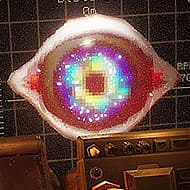
Mole Horror strips away the usual horror-game scaffolding. There’s no HUD, no menu system hovering at the edge of the screen, and no tutorial walking you through what each dial does. You learn the vessel by touching it — turning valves, resetting power terminals, and navigating ventilation shafts with only the machine’s own feedback to guide you. That diegetic approach is the game’s signature, and it’s also the biggest adjustment for players coming from more conventional horror titles.
Early sessions of Mole Horror are as much about learning the vessel’s systems as they are about surviving whatever the Signal represents. Fumbling with an unfamiliar terminal while something worsens elsewhere in the vessel is a deliberate source of tension, not a design oversight.
The game runs roughly half an hour per session, which keeps its systems dense without letting them sprawl into something unmanageable for a first-time player.
Systems Management Under Pressure
- Power terminals that need resetting as they fail
- Ventilation shafts requiring physical navigation, not menu travel
- Dials and valves with no on-screen labeling
What beginners get wrong most often is treating these systems as background flavor rather than genuine survival mechanics. The vessel’s failures compound — ignore a struggling terminal too long and the consequences ripple into other systems, turning a manageable problem into a cascading one.
Speedrun-minded players who try to rush past the vessel’s systems toward story beats tend to get punished hardest, since Mole Horror expects methodical handling rather than momentum.
Memory Fragments and the Missing Crew
Fragments of the Navigator’s own memory surface as the descent continues, and piecing together what happened to the missing crew is where Mole Horror’s narrative half lives. These fragments aren’t optional lore dumps — they inform choices later in the descent, and the game doesn’t let you avoid confronting what they reveal.
The Signal as a Narrative Engine
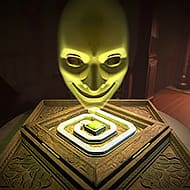
The Signal itself functions less like a location marker and more like a constant psychological pull, and by the time you’re several systems deep into the vessel, the line between mechanical failure and the Signal’s influence starts to blur on purpose.
Sanity, Depth, and Escalating Themes
Themes of religion, guilt, and madness escalate the deeper the vessel goes, and Mole Horror uses its diegetic puzzles to reinforce that escalation rather than pausing for cutscenes to explain it. A puzzle that felt straightforward in the vessel’s upper levels can feel disorienting by the time you’re navigating the same type of system further down, purely because the game has stopped giving you clean feedback on whether you’re doing it right.
Players drawn to claustrophobic, systems-driven horror in the tradition of similar tactile sims tend to get the most out of Mole Horror’s approach, while players expecting a more traditional chase-and-hide structure sometimes find the pacing slower than anticipated — a fair critique the game doesn’t really try to avoid.
Handling the Vessel’s Failing Systems
A steady approach — checking terminals on a rotation rather than reacting only when something visibly fails — keeps the descent manageable longer than waiting for problems to announce themselves.
Reading Environmental Feedback
What the Ending Asks of You
Frequently Asked Questions
Do you need to fully repair the vessel in Mole Horror?
Full repair isn’t the framing — you’re managing failure, not eliminating it, and the vessel’s systems are built to keep degrading no matter how attentive you are, which is part of the horror rather than a flaw to solve around.
What is the Signal in Mole Horror?
The Signal is the pull drawing the Navigator deeper, and its exact nature stays deliberately ambiguous through most of the descent, tying directly into the surfacing memory fragments rather than being explained outright.
Is Mole Horror difficult for players new to diegetic horror games?
It has a real learning curve since nothing is labeled on-screen, but the vessel’s systems are consistent once learned, and most of the difficulty comes from unfamiliarity rather than punishing design.
Mole Horror doesn’t hand you a map, a HUD, or an easy explanation for the Signal — it hands you a failing vessel and expects you to learn it the hard way, same as the Navigator does. Whether the descent breaks you before you reach the bottom is less about reflexes and more about how well you’ve read the vessel’s warnings along the way.