



















VHOLUME




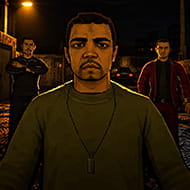
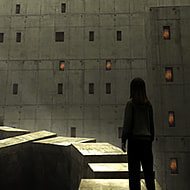
You’re mid-slide across a rain-slicked rooftop when the momentum runs out a half-second early, and the gap you were sure you’d clear swallows your run instead. That’s a normal Tuesday in VHOLUME, a first-person parkour game where the real opponent isn’t an enemy but a queue you can never quite reach the front of. You play Robert, a resident of the derelict capital of Afro-Eurasia, whose family has had their ration tickets revoked by an all-controlling bureaucracy called the Ministry. What should be a five-minute errand turns into a citywide odyssey through brutalist concrete, government waiting rooms, and rooftops that were clearly never meant to be crossed on foot.
| Genre | First-person parkour / movement platformer |
| Setting | Derelict capital of Afro-Eurasia, ruled by the Ministry |
| Playable character | Robert |
| Core actions | Run, jump, climb, slide, wall-run |
| Multiplayer | Local co-op, online PvP, asynchronous ghost racing |
| User reviews | Overwhelmingly Positive, 97% of over 1,500 reviews |
Robert’s Route Through the Ministry’s City
The story frame in VHOLUME is deliberately mundane, and that’s what makes it work. Robert isn’t chasing a villain or fleeing a monster; he’s trying to get a piece of paper stamped, and the city itself is the obstacle course standing between him and that stamp. Every district you pass through, from cramped apartment blocks to looming administrative facilities, is built around the idea that bureaucracy has physically warped the geography of the place. Corridors loop back on themselves, checkpoints sit at the top of unreachable-looking ledges, and rooftops become the only sane way to skip a line that would otherwise take the rest of your afternoon.
What’s easy to miss on a first run is how much environmental storytelling is packed into spaces you’re only meant to be sprinting through. Slow down for a second in one of the residential zones and you’ll notice small character interactions and background details that most players blow past on their first attempt. It’s a quiet contrast: a game about constant forward motion that still rewards the rare moment you choose to stop.
Some players find the pacing of these early administrative sections a little slow before the movement systems really open up. That’s a fair criticism, and it’s one you’ll see repeated in community discussions — the first hour asks for patience before the traversal starts to click.
Momentum, Slides, and Wall-Running
The core loop is built entirely around Robert’s movement kit: running speed carries into jumps, jumps chain into wall-runs, and a well-timed slide can convert a dead stop into forward momentum again. None of it is flashy on paper, but the way these systems interact is where the game earns its identity. A clumsy route through a level might take you two minutes; a route that respects momentum, using the environment’s angles and ledges properly, can cut that same distance dramatically.
Beginners consistently make the same mistake: treating every gap as a jump problem instead of a momentum problem. VHOLUME punishes stop-and-start movement far more than it punishes a slightly risky line taken at speed. Once you internalize that sliding into a jump preserves more velocity than jumping from a standstill, whole sections that felt impossible start to open up.
- Speedrunners chain wall-runs to skip entire staircases the level was ostensibly designed around.
- Explorers slow down deliberately to find the small narrative beats hidden off the critical path.
- Co-op players split up to compare routes through the same level and argue about which one is actually faster.
Where VHOLUME Beginners Lose Time
Early in the game, most lost time comes from over-committing to a jump instead of trusting a slide-cancel to reposition. The second common failure point shows up once levels start layering vertical and horizontal routes on top of each other — players fixate on the obvious path up when a lateral wall-run around the obstacle is actually faster. By the time you reach the more labyrinthine mid-game districts, the intended route is rarely the fastest one, and that’s very much by design.
There’s also a difficulty curve tied to route memorization. A level that feels chaotic on your first blind run becomes almost rhythmic on your fifth, once you know which ledges hold weight and which ones are decorative. That gap between a first-time player and someone who has run a level a dozen times is enormous, and it’s part of why VHOLUME has built a small but dedicated speedrunning following.
Ghost Runs and the Multiplayer Layer
Outside the main solo campaign, the game supports asynchronous multiplayer through ghost runs — translucent recordings of other players’ attempts racing alongside your own. It’s a low-pressure way to compare routes without needing anyone online at the same time as you. Local co-op and online PvP modes exist too, for players who want a more direct comparison of who can clear a section fastest.
One detail regular players bring up often: the soundtrack leans ambient rather than the high-energy breakbeat style the same developers used in their earlier arena shooter STRAFTAT. It’s a divisive choice — some find it perfectly suited to the melancholy of the setting, others mute it entirely once they’re focused on chasing target times.
Do you need to finish the story before trying B-Sides in VHOLUME?
No. B-Sides in VHOLUME are harder remixes of levels you’ve already cleared, built for players who want tighter routes and stricter timing rather than new narrative content. You can dip into them as soon as a level’s B-Side unlocks, without waiting for Robert’s full questline to wrap up.
How do ghost runs actually work in VHOLUME?
Ghost runs record a full playthrough of a level, including every jump, slide, and wall-run, then let that recording play back transparently in your own run. It’s asynchronous, so you’re never racing someone in real time — it’s closer to a shared time-trial than a live match.
Can you play custom levels through the Workshop?
Yes, Workshop support lets players download and run community-made levels alongside the ones Robert travels through in the main game. It’s become a steady source of new routes once players have exhausted the mastery-driven challenge of the official maps.
Underneath the melancholy setting and the paperwork premise, VHOLUME is really a game about the gap between the obvious path and the fast one, and Robert’s slide-into-wall-run is the clearest expression of that idea in motion. Whether you’re chasing a stamped form or a personal best time through the Ministry’s corridors, the city rewards the same instinct: keep moving, and trust the momentum.