
















Spider-Man Analog Horror

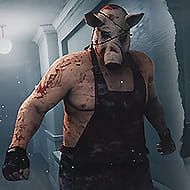


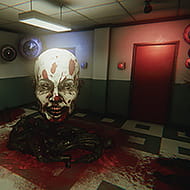
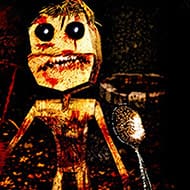
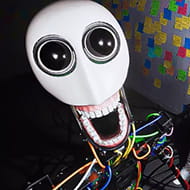
Spider-Man Analog Horror reimagines the Peter Parker origin story as a body-horror nightmare rooted in analog-era aesthetics. The setup is deceptively familiar — an Oscorp field trip in 1963, a radioactive bite, a teenager gaining extraordinary abilities — but the mutation does not stop where it should. Peter Parker does not become a hero here. He becomes something else entirely, and watching that transformation unfold through corrupted VHS footage, clinical containment reports, and increasingly disturbing sighting logs is the central experience Spider-Man Analog Horror delivers.
What Spider-Man Analog Horror Actually Is
The analog horror format presents disturbing content through the visual language of degraded tape footage, official-looking government documents, police archives, and broadcast interruptions. Where most superhero stories impose a moral framework on power, Spider-Man Analog Horror strips that framework out entirely. The bite at Oscorp does not give Peter Parker a sense of responsibility — it rewires him. Within a single day of the incident, Peter hunts down the man responsible for Uncle Ben’s death, not as a moment of tragic vigilantism but as a preview of what his brain chemistry has already become. The mutation that grants him wall-crawling and organic webbing also damages whatever kept him human.
Gwen Stacy — here a scientist rather than a classmate — carries the role of making that argument explicitly. She is the only figure The Spider consistently fails to attack on sight while in containment, which she reads as evidence that some trace of Peter’s feelings for her survives the mutation. Whether that reading is accurate or wishful thinking is one of Spider-Man Analog Horror’s most persistent tensions. The format — corrupted audio, missing footage segments, clinical institutional language — makes certain answers permanently unavailable, and that permanent ambiguity is a deliberate creative choice rather than an oversight.
New viewers sometimes expect an interactive component or jump-scare structure borrowed from traditional horror games. That is a misread of what Spider-Man Analog Horror is doing. The horror here is atmospheric and cumulative, built from small formal details: cassette-label handwriting on titles, the clinical distance of containment logs, and the way Peter’s voice disappears across episodes as the mutation progresses until he communicates in nothing recognizable. Communities drawn to ARG-adjacent media will feel immediately at home.
Peter Parker’s Mutation and the Devolution Timeline
The mutation in Spider-Man Analog Horror follows a specific arc the community calls the devolution timeline. In the earliest documented period, Peter retains most of his human appearance while already demonstrating enhanced strength, wall adhesion, and organic webbing production. He speaks, though rarely. He makes choices, though increasingly violent ones. By the time footage from the containment facility appears, he is harder to recognize: taller, thinner, with four additional spider-limbs emerging from his back and a webbing consistency that has shifted from something vaguely familiar to something distinctly biological and wrong.
What separates Spider-Man Analog Horror from similar productions is that the mutation is never framed as supernatural. Gwen Stacy’s analysis consistently grounds it in biology — altered genetics, observed brain chemistry changes, documented behavioral shifts. This scientific register makes the body horror considerably more unsettling than a straight monster story would be. Watching Peter kill Doc Ock, Kraven the Hunter, and eventually Green Goblin across the timeline carries none of the satisfaction those defeats would hold in a conventional Spider-Man narrative. These are not heroic moments. They are feeding events. The series traces encounters with Rhino, Chameleon, the Vulture, and Wilson Fisk alongside the more recognizable villain roster, each confrontation advancing the mutation timeline further.
By the series’ climax — Peter’s final confrontation with Harry Osborn, who has suited up as the New Goblin — the creature on screen shares almost nothing with the teenager who started the story. That Harry is Peter’s former best friend, and that this fight ends in a burning building, delivers Spider-Man Analog Horror’s emotional gut-punch with the quiet efficiency the format does best.
The Analog Format and Why It Works in Spider-Man Analog Horror
Analog horror carries specific conventions: footage degraded and presented as recovered rather than produced, interrupted by signal loss and timestamp errors at moments of maximum tension. Spider-Man Analog Horror applies this toolkit to a property audiences already know, and that prior knowledge is the source of most of its effect. When a clinical broadcast describes spider-related killings in the Midtown area, the viewer fills in the gap between that language and what it refers to. The horror does not need to show itself because the audience provides it.
One detail that repeat viewers consistently notice: the sound design in Spider-Man Analog Horror uses silence more deliberately than most analog horror productions. Audio cuts happen slightly before footage cuts, leaving a fraction of a second where the image goes quiet before the screen does. It sounds like a technical error the first time. After enough episodes, when it has happened the same way in specific types of scenes, it stops feeling like an error entirely. Communities discussing Spider-Man Analog Horror point to that audio behavior as one of the first things people mention when describing what made them uncomfortable — even before they can articulate why.
Frequently Asked Questions About Spider-Man Analog Horror
Is Spider-Man Analog Horror connected to any official Marvel continuity?
No. Spider-Man Analog Horror has no connection to Marvel Comics or any licensed adaptation. The series uses recognizable names — Peter Parker, Gwen Stacy, Harry Osborn, Doc Ock, the Oscorp setting — as a starting framework and diverges from all established continuity almost immediately. The 1963 setting and the specifics of Peter’s mutation exist only within this production.
Does Spider-Man Analog Horror have an ending?
The documented endpoint is Peter’s confrontation with Harry Osborn after Harry suits up as the New Goblin, concluding in the burning building sequence. The format leaves room for expanded lore entries and additional recovered footage — common tools in analog horror productions that are nominally finished — so the community continues to monitor whether additional material will surface.
What background helps before experiencing Spider-Man Analog Horror?
No prior analog horror experience is required, though familiarity with corrupted-footage conventions and institutional voice will help calibrate expectations. A basic knowledge of the Peter Parker origin story makes the deviations land considerably harder. Understanding that Gwen Stacy, in standard continuity, is a love interest rather than a containment scientist is the specific piece of context that makes her role in Spider-Man Analog Horror most interesting.
Spider-Man Analog Horror earns its place in the genre not by breaking the format’s rules but by choosing its source material deliberately. The familiar beats of the Peter Parker origin — the Oscorp trip, Uncle Ben, the rogues gallery — serve as landmarks that are systematically corrupted. By the time The Spider faces Harry Osborn in that final confrontation, the accumulated weight of watching a person disintegrate in real time makes even the format’s characteristic silence feel louder than it has any right to be.