




















Spiritus Sancti

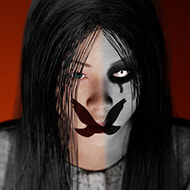
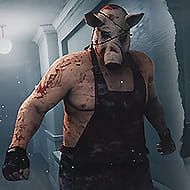


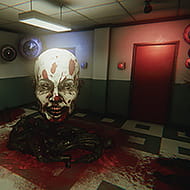


The apartment on Vayra Street does not have a working front door — not in any sense that matters. Every exit loops back inside, and Spiritus Sancti makes that clear almost immediately, which reframes the entire premise: this isn’t a game about escaping a haunted space, it’s about surviving inside one until it lets you go.
| Genre | First-person psychological horror |
| Perspective | First-person, single player |
| Core input | Real-time voice recognition through a microphone |
| Setting | A shifting apartment on Vayra Street |
Speaking Invocations Instead of Pressing Buttons
The central mechanic asks you to speak sacred Latin invocations aloud through your microphone in real time, using your actual voice rather than a controller input to repel and weaken the demon confronting Father Nathaniel. Hesitating mid-invocation lets the darkness surge forward, so timing and delivery both carry mechanical weight, not just atmosphere.
That’s a genuinely unusual demand to put on a player.
Players who normally treat horror games as a passive genre describe the tension of speaking clearly under pressure as more effective than any jump scare the game could script directly, since a voice cracking under stress becomes part of the horror rather than a technical inconvenience. Players chasing a clean, low-damage run in particular have to manage their own breathing and pacing as much as any in-game resource, which is a strange but deliberate kind of pressure for the genre.
Why Repeating the Same Prayer Stops Working in Spiritus Sancti
The demon adapts to repeated invocations, building resistance if you lean on the same prayer too often, which forces players to actually vary their responses rather than spamming one reliable line. Beginners commonly rely on whichever invocation worked first and get punished for it once resistance kicks in.
It’s a small system, but it changes the whole rhythm of an encounter.
By the time the vessel’s condition worsens deeper into the confrontation, players who’ve learned to rotate their invocations are noticeably better positioned than those still repeating their opening move, which is one of the clearer difficulty curves in the current build. Players who enjoy learning enemy patterns in traditional horror games will recognize the shape of this system even though the input method is completely different.
The Apartment That Rearranges Itself Between Glances
Vayra Street’s apartment shifts and warps the moment you look away, closer in spirit to P.T.’s looping corridor than to a traditional haunted house layout. Rooms that felt safe on entry can feel different on a second pass, and the environment’s instability escalates as the confrontation with the demon deepens.
Exploration-minded players tend to map the space mentally on a first attempt, only to have that mental map invalidated once the escalation begins — a moment several players cite as the point the game stops feeling manageable.
Early in the game the apartment mostly plays fair, giving you time to learn its rooms before anything actively works against you; once the entity fully asserts itself, that same layout starts actively contradicting what you remember, which is a deliberate escalation rather than a technical hiccup.
Father Nathaniel’s Investigation and What the Vessel’s Condition Signals
You arrive as Father Nathaniel expecting a routine possession case, and the woman at the center of it — referred to throughout as the vessel — visibly changes as the confrontation escalates, functioning as a running indicator of how the encounter is going rather than a static background character. Her condition worsening is one of the clearest non-verbal signals the game gives you that your current approach isn’t working.
Players investigating the apartment for clues before engaging directly tend to have an easier time than those who rush straight into invocation exchanges.
That’s a small but important distinction: Spiritus Sancti rewards reading the space and the vessel’s state before committing to a specific ritual response, rather than treating every encounter as an identical voice-recognition test.
An Unusual Feature Players Are Still Debating
Spiritus Sancti has drawn attention for an additional feature the game teases as reaching beyond the screen itself, layered on top of the core voice mechanic. Reactions to it are genuinely split: some players find the added layer the most memorable part of the whole game, while others feel a voice-driven horror concept was strong enough on its own without it.
The microphone requirement itself is also a point of friction for some — accent and pronunciation recognition isn’t flawless, and players without a quiet environment to speak in have reported the invocation system misreading their attempts more often than they’d like.
That trade-off is arguably the price of doing something this different from typical horror-game input, and it’s a fair criticism even from players who otherwise like what the game is attempting.
What First-Time Players Notice in the Opening Minutes
New players consistently mention the same detail after their first session: the moment the front door loops back into the apartment instead of leading outside, which is when most people realize Spiritus Sancti isn’t going to play by normal horror-game rules. It’s a quiet, almost mundane moment that lands harder than most jump scares because of how it’s set up.
That single beat tends to recalibrate how carefully people explore everything afterward.
How do you actually use your voice in Spiritus Sancti?
You speak Latin invocations aloud through your microphone in real time to repel, stun, or weaken the demon confronting Father Nathaniel. The game listens continuously during encounters, so timing and clarity both affect the outcome.
Does repeating the same invocation keep working?
No. The demon builds resistance to invocations used too often, so players need to vary their spoken responses as an encounter escalates rather than relying on a single reliable line.
Can you leave the apartment on Vayra Street?
Not through normal means. Every exit loops back inside, and the space itself shifts between glances, making the apartment something to survive rather than escape through conventional navigation.
Spiritus Sancti succeeds specifically because it refuses to let horror stay passive — Father Nathaniel’s survival depends on you actually speaking under pressure, and the moment an invocation you’ve leaned on all encounter suddenly stops working against the vessel’s tormentor is the clearest sign the game is listening as closely as it claims to be.