























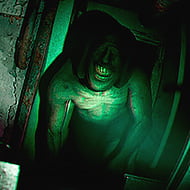
771 Horror

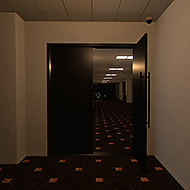






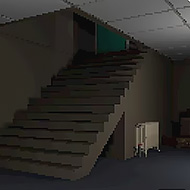





Seven developers built 771 without ever seeing what the other six were doing, each given exactly one day to work on a shared, unannounced project. You can feel that gap between segments almost every time a room changes shape, because nothing about the transitions feels planned — it feels handed off, like a relay race where nobody agreed on the pace beforehand.
| Genre | Psychological Horror, Walking Simulator |
| Perspective | First-person |
| Playtime | Approximately 30 minutes |
| Release | September 14, 2026 |
A Bedroom That Sets the Rules Before Breaking Them
771 opens in a bedroom that could belong to anyone — familiar furniture, a familiar hallway, nothing that signals horror yet. That ordinariness is doing real work, because the game spends its opening minutes letting you trust the space fully before it starts pulling that trust apart, one corridor at a time.
The apartment’s front hallway is the closest thing 771 has to a home base, a space you return to mentally even after the game stops behaving like a single continuous building. Once you leave it, the logic holding the rooms together loosens fast.
First-time players tend to treat the early rooms as a slow warm-up. It’s closer to a promise the game intends to break almost immediately.
One Developer, One Day, No Communication
Each of the seven contributors had a single day and no visibility into what the others had built, and the result plays like an anthology compressed into a half-hour run rather than one cohesive descent. One stretch leans on unsettling sound design and near-silence; another throws sudden visual distortion at you with almost no setup at all.
That structural honesty is unusual for horror games, most of which work hard to disguise their seams. 771 doesn’t bother disguising anything, and depending on the player, that reads as either refreshing or a little lazy.
How the Seven Builds Talk Past Each Other
Because no developer coordinated with the next, tone shifts hard between segments — a slow, dread-driven room can be followed immediately by something loud and abrupt, with no transition softening the jump. Community discussion around the game tends to describe this as the whole point rather than a flaw, even among players who don’t love every individual segment.
Segment whiplash has become the shorthand players use for this effect: the sensation of just settling into one room’s internal logic right as the next room throws it out entirely.
Players chasing a traditional narrative arc are usually the ones most thrown by this. Players treating each room as its own short film tend to get more out of the format.
Reading 771 as an Experiment Instead of a Story
How long is 771 actually worth playing? Around thirty minutes for a full run, which is short enough that most people finish it in one sitting rather than spreading it across multiple sessions — a deliberate choice given the anthology structure underneath it.
Is 771 built around jump scares or slower atmospheric dread? Both show up, but unevenly, since each of the seven developers made independent choices about pacing without any shared brief to follow.
Approaching 771 expecting a single explanation by the end is the most common way to leave disappointed. The game accumulates unease across its seven parts rather than resolving any of it into a tidy answer.
Why the Score on 771 Split Down the Middle
Reception has landed closer to mixed than uniformly positive, and inconsistency between segments is the reason that comes up most often in player discussion. Some rooms land as genuinely unsettling on their own merits; others feel like unfinished sketches sitting right next to stronger work, and the game never smooths that gap over for you.
That unevenness is arguably the most honest thing about 771. It never pretends to be one polished vision, and judging it as though it should be misses what the seven-day experiment was actually built to test.
Replaying 771 for the Parts That Don’t Match
Because each segment stands apart from the others, replaying 771 tends to feel less like retreading old ground and more like revisiting a specific room you remember for its own reasons — the corridor that flickered, the hallway that stretched wrong, the one stretch that barely felt like a horror game at all until it suddenly did.
Players comparing notes across forums often disagree entirely on which segment was the strongest, which says more about how self-contained each piece is than about any shared flaw in the game.
What lingers after finishing 771 isn’t a plot twist, since the game was never built to deliver one. It’s the front hallway of that opening bedroom, revisited in memory, and the unsettling realization that you can’t say exactly when it stopped being a hallway at all.