











COST OF TRUST
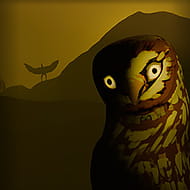


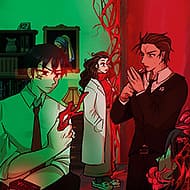




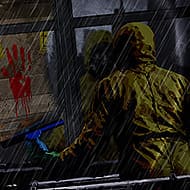
You press A on a trembling voice behind the reinforced glass, the counter ticks down, and a second later you wonder whether the person you just let in ever blinked. That is the shift in Cost of Trust, a tense job-horror simulation where you sit at an isolated checkpoint terminal and decide who is allowed into the safe zone. This text covers how the queue works, how to spot the Faceless, and what keeps players coming back for another shift.
| Genre | Job-horror simulation, survival |
| Perspective | First-person |
| Playthrough | 10 to 20 minutes |
| Decisions | Allow or Reject |
| Look | Retro PSX claymation style |
| Platforms | Browser and Windows |
The Booth, the Terminal and the Queue in Cost of Trust
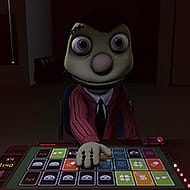
Your job sounds simple: manage the queue, verify the desperate souls waiting outside, and decide who enters the safe zone. Behind the reinforced glass, a counter ticks down while voices beg for shelter in the dark. The interface is a diegetic terminal with minimal on-screen clutter, so you feel like the booth operator rather than a player looking at menus.
The setup is simple on paper. The pressure is what makes it hard.
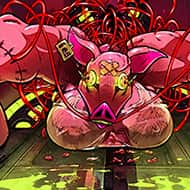
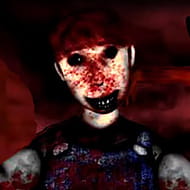
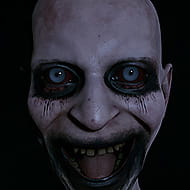
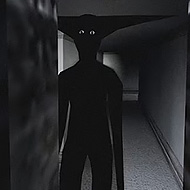
Outside, the Faceless are roaming. They look like us, they mimic human emotions, and they know exactly what words will make you hesitate. That is what makes the horror different from a jump-scare game: your empathy is the weapon being used against you, and the people begging at the glass may be exactly what they seem or exactly what you fear.
Reading the Faceless: Dialogue Tells and Unnatural Details
Every visitor is an anomaly check. You read what they say, look for unnatural details in how they appear, and decide whether you are speaking to a person or a mimic before the timer runs out. The checks are unforgiving, because a Faceless that sounds sympathetic is still a Faceless, and being kind to the wrong visitor has a cost.
By shift 4 the game introduces creatures that do not breathe, so watching shoulders and chests becomes part of the job. Each shift teaches a different kind of anomaly, and updates have fixed a bug that had hidden the shift 4 type, so every anomaly a shift is meant to teach now appears reliably.
The art style helps. The claymation look with retro PSX dithering makes faces feel almost right and slightly wrong, which is exactly the feeling you need when judging a visitor. Horror fans who like careful observation will enjoy this, and players who read dialogue closely will spot tells that quick skimmers miss.
Allow or Reject: Money, Mistakes and Getting Fired
Every correct decision earns money you need to survive, and every mistake pushes you closer to being fired. The practical consequence is simple: if your money drops below zero, you lose. Hesitation also costs you, because the longer you stare at a visitor, the more the shift ticks away, so you need a fast, confident read.
- Mouse for the terminal buttons and interface
- A to allow a visitor in
- R to reject a visitor
- Arrow keys for menu navigation
The A and R shortcuts matter more than they look. Once the queue speeds up, clicking the buttons with the mouse is slower than a quick keypress, and a few lost seconds can be the difference between a clean shift and a firing.
There is a fair complaint here. Some players say the consequences are not laid out clearly, and that taking away money is a thin punishment for letting in a mimic. The developer has said they plan to make the stakes clearer, which is a reasonable response to feedback from a very short game.
Shifts, Escalation and Replay Value in Cost of Trust
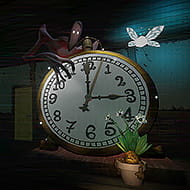
A full playthrough takes about 10 to 20 minutes, which makes a failed shift easy to retry straight away. Visitor queues are randomized, so the order and mix of faces changes from run to run, and pressure escalates as the shifts go on. That keeps the loop fresh even when you already know the rules.
The final night is where everything you learned gets tested at once. By then you know the dialogue tells, the shift 4 anomaly and the rhythm of the queue, and one wrong call can still cost you the run.
Newer updates have added more entities, new faces, deeper lore and additional endings, so a second run can show you things the first did not. If you finish one shift and want to see what else is waiting behind the glass, there is more to find than the opening version suggests.
What Divides Players: Clarity, Consequences and Music
Players often compare the game to checkpoint-inspection puzzles and to That’s Not My Neighbor, and the comparison is fair. The paranoia of judging faces is shared, but here the booth, the terminal and the Faceless give it a distinct identity. People also praise the art style, the premise and the bits of lore told through the visitors.
The criticisms are specific. Some players do not always know why a visitor was wrong and would like a hint on screen, and others want more variety in the music and more creative punishments than losing money.
These are the kind of notes that come with a short, focused project. If you want a long campaign, this is not it, but if you want a compact, tense run with a clear idea, the rough edges are easy to forgive.
Common Questions About Cost of Trust
These are the questions that come up most often before a first shift.
- How long does a playthrough take? A full run takes roughly 10 to 20 minutes, depending on how often you stop to think. Because the visitor queues are randomized, a second attempt is not the same as the first.
- What happens if I let a Faceless into the safe zone? Letting a mimic in costs you money, and if your money drops below zero you lose the run. Correct decisions earn the money you need, so every mistake makes the next one more dangerous.
- How do I tell a Faceless from a real person? Read the dialogue closely, look for unnatural details, and from shift 4 watch for creatures that do not breathe. Decide before the timer runs out, using A to allow or R to reject.
Cost of Trust turns a simple choice into a test of nerve: do you trust the face behind the glass, or do you trust the pattern you spotted a moment ago? Every Allow or Reject press sends someone into the safe zone or back into the dark, and the Faceless are counting on a moment of kindness. If you can handle that pressure for one more shift, the terminal is waiting.