























Omega Flowey Simulator







You don’t get a slow build-up here — Omega Flowey Simulator drops you straight into the chaos of one specific boss fight and expects you to survive it, phase after shifting phase, with nothing else padding out the experience. There’s no exploration, no side content, just Omega Flowey’s escalating assault and whatever pattern recognition you can build fast enough to keep up.
Omega Flowey Simulator Compresses One Boss Fight Into the Whole Game
Most fan projects built around a single boss fight struggle to justify repeated play once the novelty wears off. Omega Flowey Simulator sidesteps that by leaning entirely into the fight’s unpredictability — projectile patterns, transformation timing, and phase order shift enough between attempts that memorizing one clean run doesn’t guarantee the next one goes the same way.
That unpredictability is deliberate. The original encounter was already known for chaotic, rule-breaking attacks, and recreating that feeling meant keeping some genuine randomness rather than scripting a fully predictable sequence players could solve once and repeat forever.
Reading Omega Flowey’s Attack Phases Before They Kill You
Each phase shift changes the rules of engagement, sometimes without much warning. Projectile density ramps up unevenly, and the transformations Omega Flowey cycles through each carry their own attack logic, meaning a dodge pattern that worked one phase can get a player hit outright in the next if they don’t adjust.
Players who treat this like a straightforward bullet-hell misjudge it early. The real skill is recognizing which phase you’re in fast enough to switch strategy, not just reacting to individual projectiles as they appear.
Why Repetition Is the Actual Difficulty Curve Here
Pattern recognition is the term the community uses most, and it fits — there’s no gear progression or stat grinding softening later attempts. Every improvement comes from having seen a specific attack sequence enough times to react on instinct instead of reading it live under pressure.
What Omega Flowey Simulator Keeps From the Original Fight
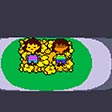
The simplified visuals are an obvious departure from the source material, but the mechanical bones stay close to what made the original encounter memorable — the sense that the fight itself is actively hostile toward the structure of a normal boss battle, throwing out patterns that feel like they’re breaking the game on purpose rather than testing reflexes cleanly.
Is there a way to reduce the projectile chaos?
Not directly — the unpredictability is core to how Omega Flowey Simulator recreates the original fight’s tone, so most of the “solution” is player adaptation rather than a difficulty setting.
Do the transformation phases follow a fixed order?
Largely, though timing and specific attack sequencing within each phase varies enough between attempts that memorized inputs alone won’t carry a player through consistently.
Why does this fight feel harder than a typical Roblox boss battle?
Because it’s built around a single, famously chaotic encounter rather than a standard scaling difficulty curve, so the challenge front-loads immediately instead of easing players in.
Omega Flowey Simulator earns repeat attempts by staying just unpredictable enough that beating it once doesn’t make the next run trivial — Omega Flowey’s phase shifts keep the fight feeling dangerous long after a player has technically learned the pattern.