


















Big Ice














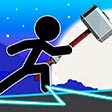
You swing a stone hammer at a wall of ice in Big Ice, watch a chunk break loose, and drag it back to camp on foot because you have not earned a sled yet. That small, slightly absurd trip is the whole loop: chip, haul, melt, upgrade, and go back for a bigger piece.
Chipping Ice and Hauling Pieces in Big Ice
You play a caveman with a hammer and a very big problem: a mountain of ice stands between you and whatever is frozen inside. You start with a stone tool, chip away at the wall and carry the pieces you break off back to camp. Melting that haul at camp releases the flint trapped in the ice, and flint is what drives every upgrade in the game.
Where you strike matters more than how often. Hitting the wall at random produces small chips, while a well-chosen spot brings down larger sections, and holding the right mouse button charges a heavier swing. Newcomers usually swing wildly at first, then slow down once they see how much bigger a clean break is.
Incremental fans who like a clear loop with visible progress will settle in right away, since every trip to camp turns into something you can spend.
Flint, the Tool Bench and the Sled
Flint is spent at the tool bench on stronger equipment and upgrades. Bigger tools break tougher ice, so the bench decides how deep into the frozen mountain you can reach. Early in the game the stone tool is enough, but once the ice gets tougher it stops being enough.
Collecting tools and a sled are the other half of the upgrade path, because they make moving your haul easier. It is easy to underrate hauling until carrying everything by hand starts costing more time than the swinging does.
Players who like optimizing routes will enjoy tuning the walk between the wall and camp. A few habits keep the loop efficient:
- Pick a spot that brings down a large section instead of chipping at the edges.
- Spend flint at the tool bench before it piles up unused.
- Switch tools with the number keys to match the ice in front of you.
Co-op Digging, Controls and the Snowy Valley
The game supports one to four players, so the mountain can be a solo job or a shared project. A session is meant to last roughly 60 to 120 minutes, long enough to feel real progress without turning into a marathon.
With friends, the work can split naturally, with some players striking while others haul and melt. The snowy valley around camp is also worth exploring, since the game encourages you to dig at your own pace.
Incremental games divide players: some love the steady climb, while others find repeated hauling grindy, and that tension is part of this one too. Co-op groups who prefer relaxed teamwork over competition are the natural audience.
The game runs in a desktop browser with keyboard and mouse. You move with WASD, look with the mouse, jump with Space and sprint with Shift. Left click swings or uses your tool, right click charges a swing, and E picks things up or uses stations such as the tool bench.
Press V for a third-person view if the first-person camera makes it hard to judge your swing. Escape pauses the game whenever you need a break.
Browser-only play means touchscreens are out, since the page states the game is designed for desktop.
Questions About Big Ice
How long does Big Ice take to play?
A typical session is about 60 to 120 minutes. Because it is an incremental game, the pace depends on how quickly you break ice, melt your haul for flint and spend it at the tool bench.
Can you play Big Ice with friends?
Yes, it supports one to four players in co-op. Everyone works toward the same goal of breaking into the frozen mountain, hauling pieces back to camp and upgrading tools along the way.
What do you do with flint in Big Ice?
Flint is what you collect by melting the ice you haul back to camp. You spend it at the tool bench on stronger equipment and upgrades, which lets you break tougher ice and reach deeper into the mountain.
Keep swinging and Big Ice turns a stone tool, a sled and a pile of flint into a real expedition into the frozen mountain. Every larger section you bring down at the wall is a small proof that the right strike beats the most strikes.