





















Bills Must Be Paid














In Bills Must Be Paid you start with a stack of overdue bills, a C-tier hammer, and a stamina bar that empties faster than you’d like. That mismatch between what you owe and what your starting gear can actually earn is the entire tension of the early game, and it does not go away until you start making real decisions about where your coins go.
| Genre | Incremental Action |
| Platform | Browser |
Smashing Piggy Banks in Bills Must Be Paid
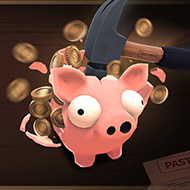
Each run in Bills Must Be Paid comes down to hammering piggy banks for loot before your stamina runs dry. Standard, Fast-Moving, Durable, and Special piggy banks all behave differently, and swinging a slow C-tier hammer at a Fast-Moving target wastes stamina you cannot get back mid-run. Beginners tend to swing at everything indiscriminately; players who last longer learn to target piggies their current hammer can actually handle efficiently.
The collector is always waiting in the background. Ignore bill deadlines for too long and it starts taking a cut of your earnings automatically, which turns a slow run into a genuinely bad one fast.
Building a Skill Tree That Keeps Up
Coins earned from smashing feed directly into a skill tree covering Grip Strength, Caffeine, Gym, Wrist Power, and Luck, plus late-game options like Rock Rain and Electrified Hammers. Caffeine in particular matters more than it sounds like it should, since stamina is the resource limiting almost everything else you do in a single run.
- Grip Strength increases raw hit power per swing.
- Caffeine extends how long your stamina lasts before a run stalls out.
- Rock Rain adds a special attack that clears multiple piggy banks at once.
The Bankruptcy Decision in Bills Must Be Paid
Eventually every serious player in Bills Must Be Paid has to decide when to declare bankruptcy on purpose. Doing so converts your progress into permanent Legacy Points, Rings, and Bracelets for future runs, while your hammer tier, cash, and normal skill upgrades reset to zero. It is a prestige system dressed up as a financial collapse, and the timing of that decision is one of the most argued-about strategic choices in the community.
Some players hoard cash and delay bankruptcy as long as possible to squeeze out one more big purchase first; others prestige early and often, betting that permanent upgrades like the Double Loot Ring compound faster than a single long run ever could.
Late-Game Gear Worth Grinding For
The Double Loot Ring, unlocked at one million Legacy Points, doubles loot from one-hit piggy kills and is widely treated as the single biggest permanent power spike in the game. Reaching it requires multiple bankruptcy cycles, so it functions as a long-term goal rather than something any one run can realistically deliver on its own.
S-tier hammers, fast with wide swing radius, tend to outperform slower C-tier power hammers once your stamina pool is large enough to support frequent swinging rather than a few heavy hits.
Bills Must Be Paid: Reader Questions
- When should you declare bankruptcy in Bills Must Be Paid? Once your current hammer and skill tree have stopped meaningfully improving your run speed, converting progress into Legacy Points usually outpaces squeezing more value from a stalled build.
- What is the best hammer tier for most players? S-tier hammers generally win out for their speed and wide radius, though C-tier power hammers can still be efficient against Durable piggy banks specifically.
- How do you unlock the Double Loot Ring? It costs 1,000,000 Legacy Points, meaning it takes several bankruptcy cycles of steady play to afford, not a single strong run.
Bills Must Be Paid never really stops being about that opening tension between what you owe and what you can currently earn. Every hammer upgrade, every Legacy Point, and every bankruptcy reset is just another attempt to close that gap a little faster than the collector can catch up.