












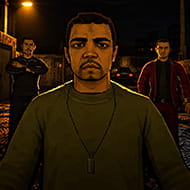



Brainrot Tag Horror













What actually happens once the thing chasing you in Brainrot Tag Horror finally catches up? Nothing dramatic — the screen cuts to black and drops the player back at the start of the level, a smaller punishment than the buildup suggests.
| Genre | First-person tag / chase horror |
| Platform | Browser (WebGL) |
| Core Loop | Explore, avoid detection, reach the exit |
Brainrot Tag Horror strips survival-horror down to one idea: something is loose in the same space as the player, and the objective is reaching an exit before it closes the distance. No inventory, no puzzle chain gating progress, just line-of-sight and how fast a player reacts once footsteps get louder. Cautious explorers spend most of a run listening at doorways rather than rushing a room.
New players consistently bolt in a straight line the moment they hear something, which usually leads them right into whatever cut off that path. Breaking line of sight around a corner works far more reliably than a flat sprint, since the chaser paths toward last-known position rather than tracking through walls.
Reading the Chase in Brainrot Tag Horror
The single most useful skill here is reading distance by sound, since by the time the chaser is visible it’s often close enough to close the gap in seconds. Footstep volume is the only warning given, and players who watch the horizon instead of listening get caught in the open far more often.
Pacing is uneven in a way players debate — some stretches feel almost too quiet before tension deflates, while others throw the chaser in with little warning. That inconsistency is the most divisive thing about the build.
Choke Points and Route Memory
Advanced players memorize choke points rather than relying on reaction speed, since knowing which corner loops back toward the exit matters more than reflexes mid-chase. Speedrun-minded players push further, treating each level as a route to memorize turn by turn.
What Keeps Players Coming Back to Brainrot Tag Horror
Player chatter focuses on how unforgiving one mistake is — no partial punishment for getting spotted, just an immediate restart, which keeps some players trying again after a death that felt avoidable.
Sound cue: footsteps shifting from background rustle to a clear rhythmic pace is the clearest signal a chase has started, well before anything appears on screen.
First Attempts and Early Deaths
First-time streamers get caught early and often, since exploring every corner works against the game’s pacing.
- How long is a typical run of Brainrot Tag Horror? A clean run lands around five to ten minutes, though one death and restart can double that while re-learning a layout.
- Is there a way to fight back? No — the game gives no combat options; avoidance and route knowledge are the only tools once a chase starts.
Brainrot Tag Horror won’t win points for polish, but hearing something get closer while trying to remember which hallway leads to the exit is what makes a short chase-horror game worth a second attempt.