

















Breakout Baby | Baby’s First Step










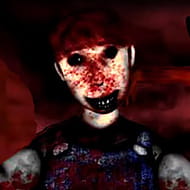


What happens when you get greedy for one more pellet in Breakout Baby? Usually nothing good — one extra step toward a corner you shouldn’t have turned, and a freak is already closing the distance behind you.
| Genre | First-person horror roguelike |
| Core Loop | Clear pellets on a floor, then descend |
| Player Rating | 5 out of 5 |
| Average Session | About an hour |
Clearing Floors in Breakout Baby
The structure will feel instantly familiar to anyone who’s spent time with Pac-Man, and Breakout Baby doesn’t try to hide that lineage — it wears it as the whole premise. You move floor to floor collecting every pellet before the exit opens, except now it’s first-person, the corridors are lined with backrooms-style liminal dread, and you’re carrying a baby the entire time.
Every turn of a corner is a real decision rather than a formality, because the freaks patrolling each floor react to how close and how greedy you get. Push for one more pellet in a corner you haven’t cleared and you can easily turn a clean floor into a chase.
The roguelike layer sits on top of that loop: floor layouts and enemy placement shift between runs, so memorizing a single floor’s pattern only gets you so far before the game rearranges the pressure points on you.
What the Baby Actually Does
Baby’s First Step isn’t a subtitle for flavor — the baby is a functioning game mechanic. Keeping close watch on it feeds you information about where the freaks are on the floor, and shaking it awake when it’s needed is a deliberate action the game asks of you, not background flavor text. It turns a horror roguelike into something with an extra layer of resource management most genre entries don’t bother with.
Beginners tend to treat the baby as scenery for their first few runs of Breakout Baby, which is the single most common early mistake. Ignoring it means giving up positional information on enemies that the game is otherwise happy to hand you for free, and players who skip that habit early usually pay for it two or three floors later.
There’s also a supply layer: rattles, pacifiers, and iPads scattered around each floor grant powerful temporary effects, and holding onto them for the right moment rather than using the first one you find is a distinction that separates longer roguelike runs from short ones.
The Friendly Faces Between Floors
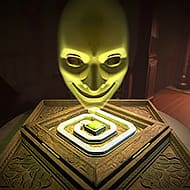
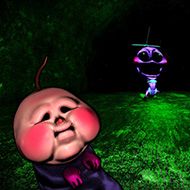
Not everything in Breakout Baby is hostile. Between floors you’ll run into NPCs willing to upgrade your abilities, and the game leans into an uncanny politeness with them — friendly on the surface, but staged inside the same unsettling visual language as everything else. One recurring figure, a yellow-toned character the community has already started referring to by that description, hands out upgrades in a tone that reads as a little too pleasant for the setting around it.
Community discussion around the demo has drawn direct comparisons to Dark Deception, and that comparison isn’t unfair given the maze-chase DNA both games share. What players are debating is whether Breakout Baby differentiates itself enough beyond the baby mechanic and the roguelike structure — a fair question for a game still early in its development.
One rough edge players have already flagged: some NPC animation during dialogue looks stiff, with little facial movement while talking. Minor, but noticeable enough that it’s come up more than once in early feedback on Breakout Baby.
Advanced Movement Around the Freaks
Once you’ve cleared a few floors, the difference between a survivable run and a chase becomes about corner discipline more than raw speed. Freaks in Breakout Baby seem to react to proximity and noise rather than a fixed patrol path, so players managing longer runs tend to slow down near intersections instead of sprinting blind into them.
Speed-focused players push pellet collection as fast as the floor allows and lean on Go-Go Juice to bail out of trouble. Caution-focused players prioritize baby supplies and take floors slower, banking upgrades before pushing pace. Both approaches show up regularly in early community discussion of the demo, and neither is clearly superior yet this early in the game’s development.
- Watch the baby constantly — it’s telling you where the freaks are, not just reacting to them
- Don’t burn Go-Go Juice the moment you pick it up; save it for when a freak is already closing in
- Bank baby supplies rather than using the first one found, especially early on a floor
Breakout Baby is still a young demo, but the core loop of Pac-Man tension wrapped in first-person horror already gives it a clear identity — and between the Go-Go Juice, the watchful baby, and the freaks waiting just past the next corner, there’s more mechanical depth here than the premise lets on at first glance.