






















Bus Simulator Indonesia













You ease a fully loaded bus around a tight Jakarta intersection with motorbikes weaving on every side, and the moment you tap that telolet horn to clear a path, it’s obvious Bus Simulator Indonesia isn’t just borrowing Indonesian scenery — it’s built entirely around the specific driving culture that made the game a phenomenon in the first place.
| Genre | Driving Simulation |
| Platform | Mobile / Browser |
| Setting | Indonesian roads and cities |
| Signature Feature | Telolet horn customization |
Livery Culture and What Makes Bus Simulator Indonesia’s Buses Feel Personal
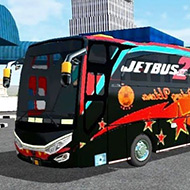
Livery design is where a lot of players spend as much time as they do actually driving. Bus Simulator Indonesia lets players apply custom paint schemes to their bus, and the community around livery-sharing has become almost its own subculture — trading and downloading designs the way other driving games trade car tunes. A distinctive livery isn’t cosmetic filler here; it’s part of how players express identity within the game’s community.
The telolet horn feature ties directly into real Indonesian road culture, where the multi-tone horn sound became a viral phenomenon among bus enthusiasts. Bus Simulator Indonesia leaned into that directly, letting players customize horn sounds and turning something as small as a honk into a recognizable part of the game’s identity.
Driving Physics and What Beginners Get Wrong in Bus Simulator Indonesia
New players consistently underestimate how much space a full-length bus needs on Indonesian roads dense with motorbikes weaving between lanes. Traffic in Bus Simulator Indonesia doesn’t behave like a simple obstacle course — motorbikes cut close, other vehicles merge unpredictably, and players who drive like they’re in an empty simulation get caught off guard by how alive the traffic actually feels.
Fuel and damage management add a layer many beginners ignore until it costs them. Running a route without watching fuel levels or driving aggressively enough to rack up vehicle damage eats into the income that routes are supposed to generate, turning what should be a profitable run into a net loss by the time repairs are factored in.
Multiplayer Convoys and Why They Change Bus Simulator Indonesia
The convoy mode lets players drive the same routes together in real time, and it changes the feel of the game substantially — a solo route through Surabaya’s traffic is a quiet management exercise, while the same route in a convoy becomes a coordinated, social drive where sticking together through heavy traffic matters as much as reaching the destination.
Is the telolet horn just a cosmetic feature in Bus Simulator Indonesia?
It’s presented as a customization option, but it’s tied closely to a real Indonesian road culture phenomenon, which is part of why it resonates more with players familiar with that context than a generic horn sound would.
Does livery design affect anything beyond appearance in Bus Simulator Indonesia?
Livery is primarily cosmetic, but it plays a real social role — sharing and downloading community liveries is a major part of how players engage with the game outside of actual driving sessions.
What’s the biggest adjustment for players new to Bus Simulator Indonesia’s traffic?
Learning to read motorbike movement patterns specifically, since they weave through traffic in ways that don’t match typical car-focused driving games, and misjudging their space is one of the most common causes of early collisions.
Bus Simulator Indonesia earns its dedicated following by treating its setting as more than scenery — the telolet horn, the livery culture, and the specific chaos of motorbike-heavy traffic all come from the same real driving culture the game is named after. That specificity is what separates it from a generic driving sim wearing a different map.