






Dread Disc
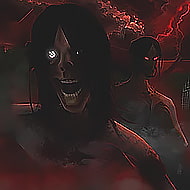
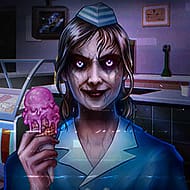

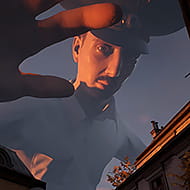

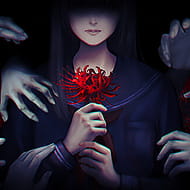
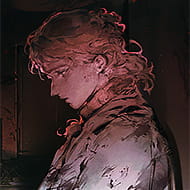
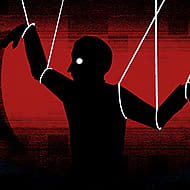
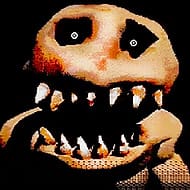
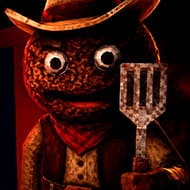
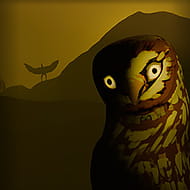
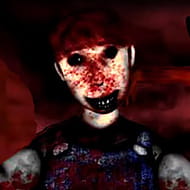
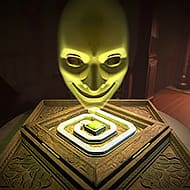
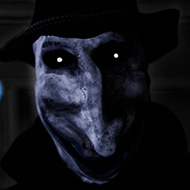
Dread Disc is a short browser horror game built on the Godot engine, and it wastes no time walking a player from a bare title screen straight into a corridor that clearly does not want them there.
What Dread Disc Actually Asks You To Do
Strip away the atmosphere and the goal is simple: move through a small set of connected rooms, find whatever the game marks as your way out, and avoid whatever is sharing that space with you. There's no long tutorial explaining any of it, which is common for a game this size, and that absence of hand-holding is part of what a lot of short horror titles lean on for tension.
Because so little is spelled out, most players spend their first attempt just learning what the game actually wants from them rather than making real progress.
That first-attempt confusion is honest and worth naming rather than dressing up: a game this compact lives or dies on whether the confusion feels like dread or just feels like friction, and Dread Disc lands somewhere in between depending on who you ask.
The Atmosphere Before Anything Chases You
Before any threat shows up, the opening stretch relies almost entirely on empty space and quiet doing the work. Lighting stays dim without going fully black, hallways repeat just enough to feel unfamiliar even on a second pass, and nothing on screen tells you whether you're being watched yet.
That restraint is deliberate, and it's the kind of choice that either works on a player or doesn't.
Players who prefer slow-burn horror tend to enjoy this opening stretch the most, since the game gives them time to absorb the space before anything forces a reaction out of them.
Sound Design and the Sense of Something Nearby
Once movement starts, audio carries more of the tension than anything visible on screen. Footsteps, ambient hums, and the occasional distant thud all function as the player's only early warning system in a game that otherwise gives very little away. A directional audio cue: sound that shifts based on which way a threat is relative to the player, is the single mechanic doing most of the emotional heavy lifting here.
Headphones change the experience noticeably, and plenty of short horror games in this style get reduced to a much flatter experience without them.
New players often miss quieter cues entirely on a first run, since nothing on screen prompts them to listen for anything in particular.
Learning the Loop in Dread Disc
Once a player dies once or twice, the layout stops feeling random and starts feeling like a loop that can be learned. Repeated attempts reveal which doors lead back to already-explored space and which ones actually move a run forward, and that kind of trial-and-error memorization is standard for maze-style horror built at this scale.
By the time a second or third attempt rolls around, most players stop wandering and start moving with intent through rooms they now recognize.
That shift from confusion to familiarity is the clearest sign the game is working as designed, even without any explicit map or waypoint system telling you so.
What Happens When Dread Disc Catches You
Getting caught resets the attempt rather than ending things permanently, which keeps the overall structure closer to a short loop than a single high-stakes run. That reset is quick, with no long death animation or forced replay of earlier sections, so a failed attempt costs seconds rather than minutes.
This kind of fast failure state is common in small browser horror games, since it keeps a short project replayable without needing much additional content.
Some players find that quick reset undercuts the tension a little, since knowing a mistake costs almost nothing can flatten the fear of making one.
Pacing, Length, and Why Short Horror Works This Way
A run rarely stretches past a short handful of minutes, closer to the length of a single tense elevator ride than a full evening's session. That brevity is a feature rather than a limitation for this kind of game, since sustained dread is hard to hold over a long runtime without added content to justify it.
Most players either finish or give up within one sitting, and that's by design rather than by accident.
Anyone expecting a long campaign will be disappointed, but that was never really what a game like this is trying to offer in the first place.
The Parts of Dread Disc Players Argue About
The biggest point of disagreement is documentation, or the near total lack of it. Very little exists explaining objectives, controls, or what exactly counts as winning, which leaves a lot of first-time players guessing longer than they'd like. Some treat that ambiguity as part of the horror, while others just find it frustrating.
Browser exports built on the Godot engine sometimes hitch on first load, and that kind of small technical rough edge is a known gripe with games at this scale.
Neither complaint ruins the experience, but both come up often enough among people who've actually sat through a full run that they're worth acknowledging honestly rather than glossing over.
Getting the Most Out of a Single Sitting
Playing with sound on, in a quiet room, changes how the whole thing lands compared to playing with the volume down and half your attention elsewhere. Since so much of the tension rides on audio cues, treating this like background noise defeats most of what the design is trying to do.
Players who go in expecting a slow, sparse maze rather than a jump-scare gallery tend to walk away more satisfied than those expecting constant action.
Given how compact it is, a second attempt shortly after the first tends to reveal details a rushed first run misses entirely, including some of those quieter audio cues that get lost the first time through.
Dread Disc doesn't try to be more than a tight, sparse maze with something unseen sharing the space, and it's honest about that scope from the moment the title screen fades into that first corridor.