









Drifter Star: Evolution






In Drifter Star: Evolution your first form is a pebble-sized asteroid spinning through a belt of rubble, which matters because nearly every rock on screen is a meal and nearly every bigger rock is a predator. There is no ship, no laser and no story crawl here, just a long climb up the cosmic food chain from loose debris to a black hole hungry enough to swallow whole clusters of galaxies.
| Genre | Cosmic growth arcade |
| Size ladder | Asteroid, planet, star, black hole |
| Branch options | Frozen Fortress, Cradle of Life, War Planet |
| Scale of maps | Asteroid belts up to galaxy clusters |
| Fail state | Getting absorbed by a larger body |
Feeding Rules in Drifter Star: Evolution
The single law of the cosmos here is mass. Anything smaller than you is fuel, anything larger than you is a threat, and things close to your own size are a gamble you rarely need to take. The asteroid belt at the start teaches this quickly, because tiny rubble drifts around you while bigger rocks glide past at the edge of the screen.
New drifters usually make the same mistake: they dart after a shiny cluster of debris and slam straight into a rock twice their size. Circling the outer rim of the belt and grazing on loose pieces is slower, but it keeps the run alive.
Calm, methodical players get through this phase far more often than twitchy ones, and the payoff is a solid head start once the planet stage arrives. A bigger start means fewer risky chases later.
Picking a Path on the Evolution Tree
Reaching the planet stage unlocks the evolution tree, and this is where runs start to look different. Frozen Fortress hardens your world into an icy, durable shell built to survive collisions. Cradle of Life turns it into a living planet, a middle road between defense and growth. War Planet is the aggressive pick, built for players who would rather hunt neighbors than wait for drifting matter.
There is no single correct choice. A cautious run with Frozen Fortress feels steady and forgiving, while War Planet speeds things up but punishes sloppy positioning.
Players who enjoy experimenting with builds usually finish one run on each branch just to compare, and the community often argues about which branch reaches the star stage fastest. That debate rarely ends with a clear winner.
Life as a Star Among Larger Neighbors
Becoming a star changes the camera and the stakes. Planets that once threatened you now look like snacks, but a new tier of massive bodies waits deeper in each system. Moving between systems also means crossing empty stretches where food is scarce, so you need to grow before you travel.
A good habit at this point is clearing every small body near your position before chasing anything distant. Wandering too early into a crowded system tends to end with a bigger star swallowing you whole.
A moment almost everyone remembers is the first time a planet you used to fear gets pulled into your glow without a fight. That sudden reversal is the clearest sign of how far the run has come.
The Black Hole Endgame
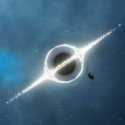
Collapsing into a black hole is the goal every run builds toward. At this size the map opens into galaxy clusters, and matter spirals inward from every direction once it drifts close enough. The scale feels huge compared with the pebble you started as.
Even here, careless movement can end a run if a larger mass sits nearby, so watching the edges of the screen still matters. Overconfidence ends more black hole runs than anything else.
Completionists aim to reach this stage on all three evolution branches, which is the most common long-term goal among regular players. Each branch makes the final climb feel slightly different.
Common Drifter Star: Evolution Questions
- Why do I keep getting absorbed in the first minute? You are probably chasing debris into the path of bigger rocks. Stay on the outer edge of the asteroid belt, eat only pieces clearly smaller than you and let larger rocks pass before moving in.
- Is War Planet better than Frozen Fortress? War Planet grows faster because it rewards attacking nearby bodies, but it is riskier. Frozen Fortress is slower yet far more forgiving, which makes it the better branch for a first full run to the black hole stage.
- What happens after you become a black hole? The game opens up to galaxy clusters, where matter flows toward you from all sides. The goal then shifts to consuming as much as possible while still steering clear of any mass larger than your own.
Drifter Star: Evolution is a patient climb from asteroid belt rubble to a black hole that eats galaxy clusters. Graze safely at first, choose between Frozen Fortress, Cradle of Life and War Planet when your planet forms, and make every star system you cross a little emptier on your way to the top.