




















Escape Buddy













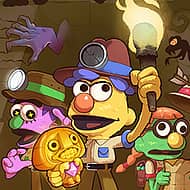
You step into the forest with quests still waiting, coins scattered along the route, and Buddy somewhere beyond the trees. Escape Buddy puts children into a multiplayer horror survival round where the goal is to complete objectives, find the missing TV parts, and get out before Buddy catches them. The forest can shift between day and night, so a path that feels obvious in one round can become much harder to read when the lighting changes. At least two players are needed to start a round, making communication and route awareness important from the first minute.
| Genre | Multiplayer horror survival |
| Setting | Forest with changing day and night conditions |
| Players | At least 2 players per round |
| Primary objective | Complete quests, find the missing TV parts, and escape |
| Secondary progression | Collect coins and work toward skins and rewards |
Forest Routes and Objectives in Escape Buddy
The basic loop is easier to understand once you stop treating every coin as equally important. Children need to explore the forest, work through quests, collect the missing TV parts, and eventually find a route back to safety while Buddy searches for them. Coins are useful because they contribute toward skins, but chasing every visible reward can pull you away from the safer route. The game becomes much more about deciding when to keep exploring and when to leave an area than the simple objective list initially suggests.
Early in the game, learning landmarks matters more than memorizing a perfect route. Forest paths can become difficult to read when the day and night conditions change, and players who only rely on what they can see directly in front of them can lose their bearings. A player who enjoys exploration can focus on learning recognizable locations, while a more cautious player can stay close to a teammate and use shared awareness to avoid wandering into a bad position.
The strongest routine is to treat every objective as part of an escape plan rather than as an isolated task. Check where you are, remember the direction of the nearest useful landmark, and avoid taking a long detour simply because a coin is nearby. Once Buddy becomes part of the immediate situation, survival takes priority over completion speed, and a route that looks inefficient can become the safest choice.
Buddy Changes the Pressure
Buddy is what turns ordinary forest exploration into a chase. The TV is not just background decoration either: players are specifically warned to keep watching it because Buddy can come through the television. That detail gives the game its recognizable horror setup, since the threat is connected to an object that would normally feel harmless. A player who focuses only on quests can therefore miss one of the most important signals in the round.
When Buddy starts closing the distance, panic creates its own problems. Running without knowing where you are going can leave you deeper in the forest with fewer useful choices, while a player who already remembers nearby landmarks has a better chance of turning the chase into a controlled escape. This is especially useful for players who prefer survival games built around awareness rather than complicated combat systems.
The common community-style approach is to think in terms of routes, quests, coins, and escape timing rather than trying to collect everything immediately. That also explains one divisive part of the game: some players may enjoy the simplicity, while others can find repeated forest navigation and changing visibility frustrating. The same limited objective structure that makes a round easy to understand can also make mistakes feel repetitive when a team loses its route early.
Day, Night, and Coin Runs
The changing day and night conditions affect how players read the forest. During a clearer section of a round, it is easier to establish where important paths and landmarks are located, while darker conditions make familiar routes feel less dependable. A good player gradually builds a mental map instead of relying on constant visibility, which becomes particularly useful when returning from a quest with Buddy somewhere nearby.
Coin collecting works best as a secondary goal. Coins can be gathered by survivors and used toward skins, giving players a reason to explore beyond the minimum requirements of a round. The problem appears when a player sees a convenient coin and treats it as mandatory, because a short detour can become dangerous if it separates the group or places a player closer to Buddy than expected.
Players who like progression can use coin collection as an extra objective after learning the basic escape rhythm. Players who prefer tense survival should instead prioritize quests and routes first, then collect rewards when the area is reasonably safe. That difference in priorities gives the same forest a noticeably different feel depending on how aggressively a group explores.
Escape Buddy Questions Players Ask
How do you escape Buddy in Escape Buddy?
Escaping Buddy requires more than simply running in a straight line. Complete the necessary quests and work toward the missing TV parts while keeping track of forest landmarks and possible routes away from Buddy. Remembering where you are before a chase begins is important because the changing day and night conditions can make familiar paths harder to recognize.
What do coins do in Escape Buddy?
Coins are a secondary collectible for children during rounds and contribute toward progression connected with skins. They are useful when the route is already safe, but they should not replace quests or sensible movement through the forest. Players who chase every coin can create unnecessary detours, while players who treat coins as optional rewards can keep their attention on escaping.
How does the day and night cycle affect Escape Buddy?
The day and night changes alter how comfortably players can navigate the forest and make remembered landmarks more valuable. Clearer conditions help with orientation, while darker sections can make the same area feel less familiar and increase the importance of knowing the route before Buddy begins a chase. Learning the forest instead of depending entirely on visibility is therefore one of the most useful habits to develop.
Escape Buddy works best when the forest, Buddy, the TV, quests, and changing light all become parts of the same survival decision. Once you know the important landmarks and understand when coins are worth collecting, each round becomes less about wandering and more about managing risk. Keeping the TV in mind while working toward the missing TV parts gives Escape Buddy its distinctive pressure, especially when a familiar forest route suddenly becomes the path you need for a clean escape.