






















Escape From Playtime













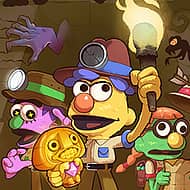
In Escape from Playtime, you start as a Smiling Critter dropped into an abandoned toy factory with up to three friends, a mysterious Voice issuing instructions, and no real sense of who benefits if any of you make it out. That uncertainty is built into the premise before a single enemy ever shows up.
| Genre | Co-op Survival Horror |
| Players | 1–4, online co-op |
| Setting | Playtime Co. toy factory |
| Status | Early Access |
Eight Critters, One Factory, Zero Guarantees
The full eight-character roster of Smiling Critters is playable from the start, and each one sees familiar Playtime Co. locations from a smaller, far more exposed perspective than longtime fans of the wider series are used to. That scale shift changes what counts as dangerous — vents, gaps, and stacked furniture all read differently when you’re built this small.
Which Critter you choose affects the feel of a run more than it affects raw stats, since personality carries through proximity voice chat exchanges with the rest of your group as much as any in-game ability does.
The Voice Behind Every Supply Run
A disembodied Voice sends players into the factory to gather scattered parts and resources, and the game is careful never to clarify who or what is actually being served by that arrangement. Players are told, half as a joke, not to ask too loudly — which tells you everything about the tone without explaining a single thing directly.
Not everyone reads that vagueness the same way. Some players enjoy sitting with the unanswered question for now; others would rather Early Access moved faster toward giving them something concrete.
Testing Labs, Warehouses, and a Layout That Won’t Sit Still
The Voice rearranges the factory’s layout between runs, meaning classrooms, warehouses, and testing labs get shuffled rather than staying fixed in place. That procedural structure keeps repeat runs from feeling identical, at some cost to the more grounded, hand-placed factory geography longtime series fans might have expected.
- Classrooms tend to reward stealth over direct confrontation.
- Warehouses offer more open ground and more places to hide.
- Testing labs are where rejected Playtime Co. creations cluster most densely.
By the time your group has run the factory a handful of times, memorizing a single “correct” route stops being useful, and reading the environment on the fly becomes the actual skill.
Coordinating Over Proximity Chat When Something Goes Wrong
More Critters means more ground covered, but also more chances for something to go badly, and proximity voice chat turns basic coordination into a real part of the gameplay rather than a background feature. A quiet, well-timed warning through the mic often matters more than anything you’re physically carrying.
Solo play is supported, but the factory is clearly designed around a group listening to each other in real time, and playing alone changes the tension considerably — there’s no one to warn you, and no one for you to warn back.
Early Access Right Now Versus the Roadmap Ahead
What’s available today is a single starter zone and a core enemy lineup, with additional zones, characters, and features planned as Mob Entertainment gathers feedback from the community. New players expecting the complete Poppy Playtime-scale experience on day one are the ones most likely to feel shortchanged by the current scope.
Mob Entertainment has targeted roughly a year in Early Access, with the timeline tied to when the core loop feels firmly established rather than a fixed calendar date.
Improvising With Whatever the Factory Hands You
Survival leans on searching for tools, uncovering clues, finding hiding spots, and creating distractions rather than head-on combat. The rejected creations stalking the halls aren’t meant to be fought so much as avoided, delayed, or misdirected using whatever the current room happens to offer.
How many players can join a run of Escape from Playtime?
Up to four players can team up in online co-op, with solo play also available for anyone who wants to work through the factory alone.
Is the factory layout the same on every run?
No — the Voice alters the layout between runs, which is the entire point of the procedural design rather than a technical inconsistency.
Does Escape from Playtime require you to already know the Poppy Playtime series?
It doesn’t strictly require it, though familiarity with Playtime Co. and its creations adds context that newcomers will simply pick up as they explore.
What Escape from Playtime is really testing this early in its life is whether a factory that rearranges itself every time you enter can stay tense without losing the sense of place that made Playtime Co. recognizable to begin with. With the Voice still giving orders and the roster still growing, that question is very much still open.