








Foreborn
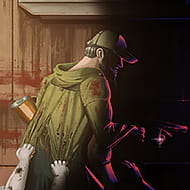


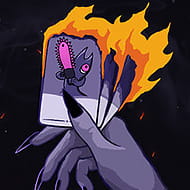
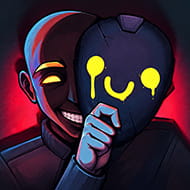
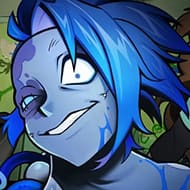


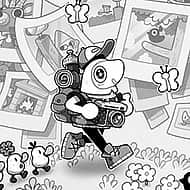
Foreborn looks like a quirky simulation about previewing your future life before you’re born, but it plays like a slow-motion gut-punch that keeps undercutting its own jokes with something considerably darker. That contrast is the entire appeal — the early scenes lean into absurd comedy, and by the back half you’re navigating a knife struggle that most players did not see coming from the opening pitch.
| Genre | Adventure |
| Platform | Windows |
| Average Session | About 25 minutes |
| Controls | Keyboard and mouse |
The Premise Foreborn Builds Its First Ten Minutes On
The setup is stranger than most horror games bother to establish this clearly: you’re unborn, offered a simulation of the future life you’d have if you chose to be born, and asked to decide whether that life is worth living. Foreborn spends its opening stretch letting that premise breathe through dialogue rather than exposition dumps, which is part of why the tonal whiplash later lands as hard as it does.
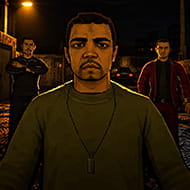
Early scenes are played mostly for comedy — awkward family moments, a birthday cake that gets more screen time than you’d expect, small jokes woven into otherwise mundane simulated memories. Players walking in expecting straight horror often mention being caught off guard by how funny the opening actually is.
That’s deliberate pacing, not tonal confusion. The comedy establishes a baseline of normalcy specifically so the game has somewhere lower to drop you later.
Moving Through the Womb Sequence
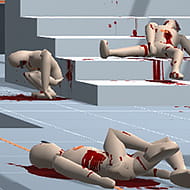
One of the more talked-about stretches is the Womb sequence, a surreal detour that several players and the game’s own team have pointed to as drawing heavily from Twin Peaks-style dream logic. Movement here uses the same WASD controls as the rest of the game, but the space itself behaves less like a level and more like a mood piece — muted lighting, disorienting geometry, and a music track players have been actively hunting down since release.
Interaction stays simple: E to interact, Space to advance dialogue, same as every other section. What changes is pacing. The Womb sequence slows everything down deliberately, and that slowdown is exactly where a lot of players say the game stops feeling safe.
Beginners sometimes rush through this section expecting a jump scare around every corner, and that expectation actually works against the atmosphere the sequence is going for.
The Knife Struggle With Mellow
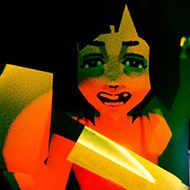
The scene most frequently brought up in player discussion involves Mellow, a character who turns on you with a knife during a tense, close-quarters struggle. The minigame asks you to fight back against the blade using a red-and-white progress bar, and it’s become something of a community talking point — partly for the tension it generates, partly because a visibility bug has made the bar disappear for some players entirely.
Players who hit that bug describe pushing through the struggle by instinct, without any visual feedback telling them whether they’re winning. That it’s still beatable blind says something about how the underlying input timing holds up even when the interface fails.
It’s a rough edge worth acknowledging directly rather than glossing over, since it’s one of the most consistent pieces of feedback showing up in comments on the game.
Reading the Girlfriend’s Letter
A quieter beat involves a letter from a girlfriend figure within the simulated future, paired with a soft jazz track that multiple players have asked about by name without success — confirmed as coming from a stock library rather than an original composition, which hasn’t stopped people from wanting to isolate and save it anyway.
This scene works as a tonal counterweight to the knife struggle a bit further along. Foreborn uses these quieter beats deliberately, spacing them between the louder horror moments so neither the comedy nor the dread gets to dominate the pacing for too long.
It’s a small scene, easy to rush past, but it’s also one of the more frequently mentioned moments in player writeups precisely because of how understated it is compared to everything around it.
Puzzle Pacing and Where Beginners Get Stuck
The knife-push struggle trips up players expecting a quick-time prompt rather than a sustained input battle, and without the progress bar rendering correctly, some players have gotten stuck for several minutes on a sequence that’s designed to last under thirty seconds.
Beyond that specific scene, general puzzle pacing across the roughly 25-minute runtime tends to slow first-time players down more than the difficulty alone would suggest — several comments mention getting stuck less on solving a puzzle and more on figuring out what the game wants from them in the first place, since instructions are kept deliberately sparse.
There’s currently no option to skip a puzzle outright if you’re stuck, something a handful of players have specifically requested given how much of the pacing depends on forward momentum through the story.
Tonal Shifts Between Comedy and Horror
What sets Foreborn apart from a lot of anthology-style horror is how openly it mixes registers rather than picking one and sticking to it. A scene can start with a genuinely funny exchange and end with something that reads as legitimately disturbing within the same few minutes, and that whiplash is consistently the thing players describe first when recommending the game to others.
Not every player responds to this the same way — some find the humor undercuts tension they’d rather stay locked in, while others say the comedy is what makes the darker turns land harder by contrast. Both readings show up regularly enough in comments that neither one feels like a minority opinion.
The mix works because neither half is played as filler. The funny scenes have their own small character beats, and the horror scenes never fully abandon the personality established earlier.
The Ending and the Doctor’s Decision
Without detailing the specifics, the closing stretch centers on a decision tied to a doctor figure within the simulation, and it’s the moment several players single out as recontextualizing everything that came before it. The tonal contrast the whole game has been building — comedy stacked against dread — resolves here rather than earlier, which is part of why the ending lands harder than the midgame horror scenes on their own.
Some players have drawn comparisons to modern anxieties around choice and consent dressed up in a simulation framing, reading the doctor’s decision as carrying more weight than a typical horror-anthology twist usually does.
That reading isn’t universal, and plenty of players simply take the ending as a strong final beat without digging into subtext — both approaches work, since the scene holds up on pacing alone.
Where Foreborn Sits Among The Twisted Zone
As the fourth entry in its ongoing anthology, Foreborn carries expectations from three previous stories, and a fair number of returning players specifically rank it as the strongest of the set so far — citing pacing, the Mellow knife sequence, and the Womb detour as the standout elements compared to earlier entries.
Newcomers unfamiliar with the anthology don’t need prior context to follow the story, since each entry is self-contained. That accessibility, paired with a runtime that comfortably fits a single sitting, is part of why the game keeps getting passed around outside its existing audience.
Whether it’s your first entry in the series or your fourth, the pacing holds up on a second playthrough once you already know where the tonal shifts are coming.
Foreborn earns the reputation it’s built less through any single scare and more through how deliberately it stacks a birthday cake joke against a knife fight against a letter that most players didn’t expect to feel this quiet. Whatever you make of Mellow’s turn against you, it’s the kind of scene that sticks precisely because the game spent its first act convincing you nothing that dark was coming.