











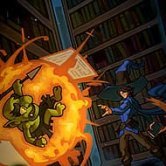
Grimoire of Blanks







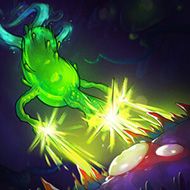

Grimoire of Blanks looks like a modest pixel-art deckbuilder but plays like a sentence you have to finish under pressure. Every card starts as an unfinished spell, and the words you drag into its blanks decide whether it turns into a shield, a trap, or a reckless area strike.
| Genre | Roguelite deckbuilder |
| Players | One to four |
| Classes | Four |
| Hook | Cards written as sentences with blanks |
Filling Blanks: How Spellcrafting Works in Grimoire of Blanks
The core mechanic fits in one line: you drag words into the empty slots of a card while combat is running. Effects, modifiers, conditions, and intent words can each change the same card in completely different ways, so one sentence might hit a single enemy, hit everyone, or sit on the board as a trap. You never draw finished spells, you assemble them from whatever words are in your hand.
You cast three spells per turn, which keeps every decision tight. Some spells shape the whole fight, while others expire after a single turn, and sorting one kind from the other is where most of the thinking happens. Shielding your wizard matters as well, because a greedy opening can leave you dead within a couple of rounds.
Slay the Spire veterans will recognize the shape of a turn right away. That familiarity makes the first fight easy to read, and the words do the rest of the teaching.
Seals, Bosses, and Routing in Grimoire of Blanks
The campaign map does not follow a branching path of nodes. Instead you choose which seal to activate next, whether that opens a shop, an event, or a battle, and you keep filling seals until the boss is triggered. It is a small change, but routing starts to feel like deciding what to risk instead of which line to walk.
The demo covers the first act with two of the four classes, and even there the first boss can end a careless run. One of those classes leans on blood magic, a risk-forward style that suits players who enjoy living dangerously.
By the time the first boss appears, a fragile wizard cannot cash in a clever combo, so a few of your first words are better spent on defense. Once a shield is up, the greedier sentences become much safer to try.
Where Grimoire of Blanks Shines and Where It Stumbles
Presentation is the most common complaint. Backgrounds barely change as you push through the dungeons, and one reviewer had to swap the text style just to read the cards comfortably. Cards, characters, and environments all ask for more differentiation than they currently offer, which is a fair criticism for a game built on reading.
The idea underneath is stronger than the art suggests. The word-and-blank hook is not a gimmick, and a good sign is how quickly players start a second run with the other demo class after finishing the first. Theorycrafters who love hunting for combos will find plenty to chew on.
Clearer visuals would help the gameplay itself, because reading small words on busy cards is the main task. Better contrast and more distinct card art would let players read a hand at a glance.
Playing Together in Grimoire of Blanks
Runs support one to four players, so you can go alone or bring up to three friends. A larger party puts more words and more sentences on the table at once, which turns turn planning into a conversation about what to spend and what to save.
That suits groups who already enjoy swapping builds, though solo players get the same core hook without the coordination. Different classes push you toward different word combinations, so a new run rarely repeats an old combo.
Whichever way you play, three spells per turn keeps each round short. That pace suits quick sessions and long evenings with friends alike.
Common Questions About Words, Classes, and Co-op in Grimoire of Blanks
How do blanks work on a card?
Each card carries empty slots that you fill with words during combat. Effects, modifiers, conditions, and intent words change what the sentence does, so the same card can become a trap or an area attack depending on how you fill it.
How many classes are there?
There are four classes, and the demo opens the first act with two of them, including a blood magic option. Each class steers you toward different word combinations, which is why a second run feels distinct from the first.
Can you play with friends?
Yes, runs support one to four players, so you can go solo or share a run with up to three friends. Playing together turns planning into a discussion about which words to commit and which spells to hold back.
Grimoire of Blanks asks one thing of every turn: finish the sentence well. Spend your three spells on a shield, a strike that clears a seal, or a gamble, and the first boss will tell you quickly whether your blanks were filled wisely.