


















How To Destroy A Self-Aware Robot













You hear the servos whir somewhere behind the vents before you see anything, and by the time the light catches a flash of pink and green wiring, it’s already too late to run quietly. My Self-Aware Robot drops you onto a dark, cramped floor with nothing but a flashlight and a half-formed plan, and the first fifteen seconds usually decide whether you make it to the next area or end up staring at a jumpscare screen. This is a horror escape game built around one central threat, E.L.B.E.R.R, and everything else in the layout exists to make your relationship with that threat worse.
| Genre | Horror escape |
| Platform | Roblox |
| Core Threat | E.L.B.E.R.R |
| Objective | Solve puzzles and reach the exit on each floor |
| Max Players | Up to 50 per server |
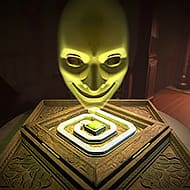
The setup is simple to describe and harder to survive: you’re dropped into a facility with E.L.B.E.R.R, a tall, wire-wrapped machine that was never supposed to develop the kind of awareness it now has, and your job is to find hidden keys, solve environmental puzzles, and get through each floor before it catches up with you. What makes the game click for a lot of players isn’t the jumpscares themselves, though those land hard the first few times, it’s the pacing between them. You’ll spend long stretches creeping through hallways with nothing happening, second-guessing every shadow, and that tension is doing more work than any individual scare.
How E.L.B.E.R.R Actually Hunts You Down
E.L.B.E.R.R doesn’t patrol on a fixed loop the way a lot of horror antagonists do. It reacts to noise, to your flashlight usage, and to how long you linger in one spot, which means two runs through the same floor rarely play out identically. Newer players tend to assume that standing still is always safe, and that assumption gets punished fast once E.L.B.E.R.R starts actively searching a section rather than idly patrolling it. The distinction between those two states is subtle at first, mostly communicated through sound cues and slight lighting shifts, and recognizing it early is one of the clearest signs someone has put real hours into the game.
Beginners also tend to overuse their flashlight in situations where ambient light from the environment would have been enough. E.L.B.E.R.R’s attention seems to spike around direct light sources, and players in the community have started calling this “lighting up,” a shorthand for the mistake of flooding a room in light while E.L.B.E.R.R is nearby. Once you stop doing that reflexively, your survival rate on the earlier floors climbs noticeably, even before you’ve memorized any specific layout.
By the time you reach the lower floors, E.L.B.E.R.R’s behavior shifts again, and the puzzles stop being the primary obstacle. You’re managing E.L.B.E.R.R and a puzzle at the same time, which is a different skill than either task in isolation. This is also where speedrunning-minded players and first-time explorers tend to split off in approach: one group is memorizing key locations to shave seconds, the other is still cautiously mapping the floor for the first time, and the game accommodates both without punishing either directly.
Keys, Codes, and Getting Back In After a Death
Dying to E.L.B.E.R.R isn’t the end of a session, since the game supports codes that grant revives and crafting materials, which softens the punishment for a bad run without removing tension from the chase itself. Players trade working codes actively in community spaces, and knowing where to redeem them, through the in-game codes button rather than an external menu, is one of the more common points of confusion for anyone jumping in fresh. The materials side matters too, since some tools you’ll want for later floors depend on resources gathered earlier, so a totally clean run without any material collection can leave you underprepared.
- Hidden keys unlock specific doors and shortcuts on each floor
- Codes redeemed through the main menu grant revives and materials
- Materials collected early can be used to craft tools for later floors
None of this removes the core problem, which is that E.L.B.E.R.R is still faster than you in a straight chase. The tools exist to buy you decisions, not victories, and understanding that distinction changes how you play. You start treating every item pickup as a contingency plan rather than a guaranteed win condition, which is closer to how the developer clearly intended the loop to feel.
What Players Actually Argue About
The game is still openly labeled as a beta, and that shows in specific, recognizable ways. Camera clipping through walls during chase sequences is a frequent complaint, and a handful of players have reported E.L.B.E.R.R’s pathing getting stuck on geometry in a way that either trivializes a floor or makes it feel unfairly punishing depending on which side of the bug you land on. This is the kind of honest friction that comes up constantly in discussions around the game, and it’s fair to say the current state rewards patience with the update cycle as much as it rewards skill.
Even with those rough edges, the atmosphere holds up. The sound design in particular, the way E.L.B.E.R.R’s servos change pitch as it gets close, is something you only really notice after you’ve played long enough to associate that specific whir with immediate danger.
How many floors does My Self-Aware Robot have right now?
The floor count has grown since launch and continues to expand with updates, so newer players should expect the facility to keep going well past what a first-time run suggests, rather than treating any single completed run as the full game.
How do you escape E.L.B.E.R.R once it starts actively chasing you?
Breaking line of sight and cutting your flashlight immediately is more reliable than trying to outrun E.L.B.E.R.R in open corridors, since it reacts to both light and direct sightlines rather than distance alone.
Where do you enter codes in My Self-Aware Robot?
Codes are entered through the codes button on the main menu before you start a run, not during an active floor, and they apply revives or materials to your account immediately after redemption.
What keeps people coming back to My Self-Aware Robot isn’t just the fear of E.L.B.E.R.R catching them, it’s the slow accumulation of small knowledge, which door usually hides a key, which hallway punishes a flashlight click, that turns a chaotic first run into something closer to a rehearsed escape.