



















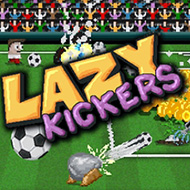
Lazy Kickers


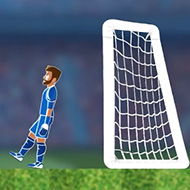
Lazy Kickers sounds like a game about kicking a ball around a pitch. It is not that. What's actually waiting behind that name is an idle incremental where soccer is the theme wrapped around a loop built from growing balls out of plants and letting numbers climb while you barely touch the mouse.
| Genre | Idle incremental with a soccer theme |
| Core Loop | Grow balls, score goals, hire players, climb leagues |
| Progression | Roles, upgrades, and a prestige reset |
| Session Style | Idle-friendly, runs while the tab sits in the background |
Why Lazy Kickers Doesn't Play Like Its Name Implies
The title primes you for something physical, maybe a mini-game about timing a shot or aiming a kick into a goal. Lazy Kickers plays almost nothing like that: no aiming reticle, no timing bar, no direct control over a single kick.
Instead, the whole premise runs on automation from the first minute. Balls grow on plants you tend, get funneled toward a goal on their own, and the coins that result buy upgrades that make the next cycle faster, a much closer relative to clicker games than to any soccer sim.
That mismatch is worth being upfront about. A player expecting sports action is going to be confused by a farm-adjacent idle loop for a few minutes before the actual shape of Lazy Kickers clicks into place.
Growing Balls From Plants, the Actual Core Loop
The plants that grow balls are the real engine here, not the goal itself. Early on you're watching a handful of plants slowly produce balls one at a time, and the goal is almost incidental, just the destination those balls eventually reach on their own.
Beginners fixate on the goal, checking back often to see points tick up, when the plants are what actually need attention. Letting plant coverage sit static while coins pile up is the biggest reason early runs feel slower than they should.
Once you've reinvested a few rounds of coins into more plants, the loop compounds fast. What felt like a trickle of balls turns into a flood by the time your roster and plant coverage scale together.
Turning Coins Into a Bigger Squad
Coins earned from scoring get spent on hiring new players. Lazy Kickers is explicit about the scale it's aiming for: you start with one player and are meant to end up with hundreds, each contributing to a coin rate that eventually reaches the billions per second.
Roles added to the roster give each hire a specific job rather than treating the squad as one undifferentiated pool of numbers. Assigning roles well is one of the harder things to get right early, since it's not obvious which roles matter most before the numbers get large.
Advanced players plan hiring in waves tied to upgrade milestones rather than buying players the moment they're affordable. Spreading coin spending across roles and plant upgrades tends to outperform dumping everything into one category.
Climbing Leagues and Dealing With Sabotage
Teams and leagues give Lazy Kickers a sense of long-term direction beyond watching numbers climb, with generated team and league names giving each run a bit of identity. Climbing from one league into the next is the run's actual win condition, if a loosely defined one.
What players don't expect the first time through is active interference: enemy units sabotage your setup and plant obstacles on the field to disrupt scoring, rather than the run being purely passive. Reacting to that sabotage is the one place Lazy Kickers asks for more attention than a typical idle game.
By the time you're several leagues deep, sabotage frequency and plant output are both scaling at once. Players who ignored the interference early tend to notice their climb stalling before players who dealt with it from the start.
The Prestige Reset and Why It's Worth Taking
Prestige works the way it does in most incrementals: reset your current run for a permanent multiplier that makes the next run faster from the first plant. New players resist it for the usual reason, since giving up visible progress feels like a loss even when the math says otherwise.
Community sentiment leans toward resetting sooner rather than later, especially once ball growth and league climbing both visibly slow down. The permanent bonus almost always outpaces what a few more minutes of the same slowing run would have earned.
Once you've prestiged even once, the early plants that used to take real time to establish start producing within moments. That's usually the point where Lazy Kickers stops feeling like a grind and starts feeling like a game you're actively winning at.
What the Demo Actually Offers
The playable build packs in a lengthy stretch of content, with players reporting close to two hours of idle progression before hitting the current ceiling. That's substantial for a demo, enough to get through several league promotions and at least one meaningful prestige cycle.
Updates have added teams, leagues, name generation, plant-based ball growth, player roles, and the prestige system in stages rather than all at once. The version currently playable reflects several of those additions layered together, with small rough edges here and there.
Players checking in on Lazy Kickers after a break tend to be surprised by how much has been added since an earlier look. The demo has clearly kept growing rather than sitting static.
Who Gets Hooked by Lazy Kickers
Idle and incremental fans who already know the genre's rhythms settle into Lazy Kickers fastest, since the plant-to-goal loop and prestige structure are variations on patterns they've seen before, reskinned with a soccer theme. Players newer to incrementals need a few minutes to realize how little direct control the genre asks for.
Completionists chasing every role and league tier get real mileage out of the demo's current length, treating each league promotion as its own milestone. Players who just want numbers to climb in the background while doing something else get exactly that.
What's less served here are players who read the title and expected genuine soccer action, timing kicks or controlling a match directly. That experience isn't part of what Lazy Kickers is building toward.
What Divides Players About Lazy Kickers
The most common point of friction is exactly the mismatch the name creates. Some players find the disconnect between a soccer-flavored title and a plant-growing idle loop charming once they adjust to it, while others feel the theme is doing more work than the mechanics deliver on.
Pacing between early plant growth and the point where roles and league climbing kick in is also debated, with some finding the opening stretch a touch slow before the loop fully opens up. That's a fair criticism for an idle game whose first impression matters.
None of that stops Lazy Kickers from being well liked among players who stick with it past the first few minutes, and the sabotage mechanic in particular gets singled out as the detail that keeps an otherwise passive loop from feeling hands-off.
Lazy Kickers isn't the game its name suggests. But the idle loop underneath, plants growing balls, coins turning into a bigger squad, leagues climbed one prestige reset at a time, holds up on its own terms once you stop expecting a soccer match and start treating it like the incremental it actually is.