






Lyrvane Park
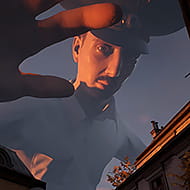


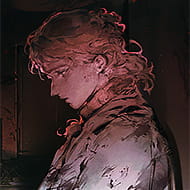
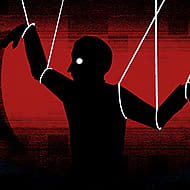

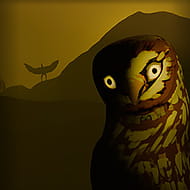
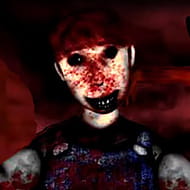
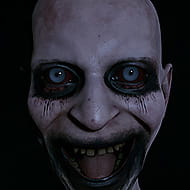
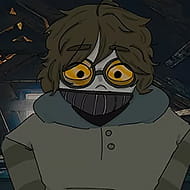
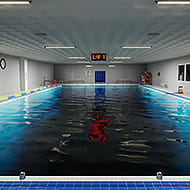
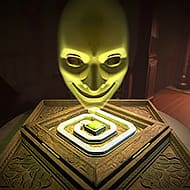
You walk through the turnstile, it hums and glows, and the credits haven’t even started yet before the first thing Lyrvane Park teaches you is that nothing here is going to explain itself. No tutorial popup tells you what the Radar of Emotions actually reads. No arrow points you toward the Puzzle Zone. You’re just standing in an amusement park that used to be full of children, and now it’s full of static.
| Genre | Action, Adventure, Indie |
| Perspective | First-person |
| Estimated Playtime | One evening for a full run |
| Core Mechanic | Reading and using the Radar of Emotions |
The Puzzle Zone and the Radar of Emotions in Lyrvane Park
Once you clear the entrance collectibles and reach the Puzzle Zone, the game stops being about walking and starts being about attention. The color memory booth is the first real test — miss the sequence twice and you’ll feel the pattern of the game click into place: watch, wait, repeat, and don’t rush the crane afterward or you’ll lose the Luna Coin you just earned. The roulette wheel next to it is rigged in the way carnival games are always rigged, and beating it for the first time is one of those small, specific satisfactions the community still talks about on forums.
The crane itself doubles as your introduction to the Radar. You’re not grabbing prizes for fun — you’re calibrating a device that reads what the children who once visited the park left behind. It’s a strange, quiet mechanic buried inside what looks like a normal arcade minigame, and it’s the kind of design choice that either clicks with a player immediately or takes a second pass to appreciate.
Beginners tend to treat the Puzzle Zone as an obstacle between them and the story, speedrunning through without absorbing what the Radar is telling them. That works, technically. But it also means missing the texture that makes this particular game memorable instead of just functional.
Early Missteps Around Staff Only Doors
The signs marked Staff Only are not decoration. New players routinely wander past them looking for a way around, when the intended path is straight through. This is where the pacing shifts — the train sequence waits on the other side, and powering it up requires everything you gathered in the Puzzle Zone. Skip a Luna Coin or leave the Radar under-charged, and the train simply won’t move, which sends players backtracking without realizing why.
- Explorers who check every corner before advancing tend to find the collectibles that make the train sequence painless.
- Speedrunners who rush the Staff Only threshold often hit a dead stop at the train and have to loop back anyway.
- Story-focused players sometimes miss the mechanical setup entirely because they’re reading the environment instead of solving it.
What Changes Once the Blue Mascot Appears
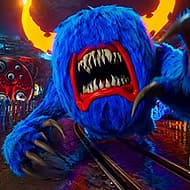
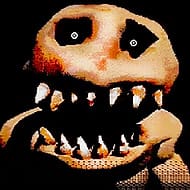
Everything before the train is setup. Everything after the crash at the Food Court is a different game. The blue mascot that starts chasing you doesn’t behave like a scripted horror cutout — it reacts to pacing, and players who panic-sprint in a straight line tend to get caught faster than players who use hiding spots the way the level clearly wants them to. This is the point where Lyrvane Park stops being a puzzle box and becomes something closer to a stealth chase, and it’s also the section players argue about most: some find it tense in exactly the right way, others feel the chase overstays its welcome once it loops back through the same corridors a second time.
That criticism isn’t unfair. The chase sequence reuses geometry you’ve already walked through, and if you die once near the Food Court cannon, the restart puts you back further than some players expect. It’s the most divisive stretch in an otherwise short game, and it’s worth going in knowing that.
Arcade Machines and the Push Toward 100% in Lyrvane Park
By the time you reach the three arcade machines scattered through the park, the game shifts one more time into pure mechanical skill. Each machine wants a star guided toward a moving target using nothing but careful timing, and clearing 65 or more points on all three is what separates a casual clear from full completion. The first machine sits right at the entrance plaza, easy to miss on a first pass; the other two only become reachable once the chase sequence ends.
Players chasing every achievement treat these machines as the real final boss, more so than the blue mascot itself. Hitting the qualifying score on the last machine also triggers an in-game camera permission prompt, which catches almost everyone off guard the first time it happens.
What happens when the Radar of Emotions stops responding?
If the Radar goes quiet mid-puzzle, it usually means you haven’t finished charging it through the crane or color memory booth in the Puzzle Zone. It isn’t broken — it’s waiting on input you haven’t given it yet, and backtracking one step almost always resolves it.
Why does the chase near the Food Court feel unfair on a first attempt?
The Food Court cannon sequence punishes hesitation more than mistakes. Players who keep moving through the crash instead of stopping to assess tend to clear it on the first or second try, while players who pause get caught by the blue mascot closing the distance.
Do all three arcade machines need a 65+ score for full completion?
Yes — each of the three machines gates a separate piece of the completion checklist, and the achievement tied to beating all of them only unlocks once the last qualifying run registers.
Lyrvane Park earns its short runtime by making almost every section double as a mechanical test disguised as atmosphere, from the Radar of Emotions in the Puzzle Zone to the last arcade machine standing between you and full completion. It’s not a long game, and the chase past the Food Court won’t please everyone, but few players walk away from that final Luna Coin without remembering exactly how they earned it.