















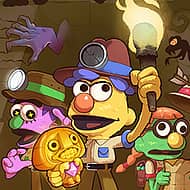


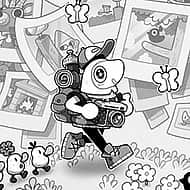





Narinig Mo Ba?













Narinig Mo Ba? looks like a soft, nostalgic errand simulator but plays like a slow psychological unraveling. On the surface, the game hands you a counter, a shelf of familiar snacks, and a line of regulars who just want their usual order. Underneath that, it is quietly building toward something much heavier, and it never announces the shift — it just lets the conversations get stranger while you’re busy counting coins.
| Genre | Story-driven psychological horror visual novel |
| Setting | A single neighborhood sari-sari store |
| Core Loop | Serve customers, gather gossip, piece together the truth |
| Platforms | Browser, Windows, Linux |
Running the Counter in Narinig Mo Ba
The core mechanic is deceptively simple: a customer asks for an item, you find it on the shelf, and you hand back the correct change. That’s the whole loop for most of the game, and it works because it forces you to actually pay attention to what people are saying while you’re digging through inventory. You’re not just filling orders — you’re eavesdropping on a neighborhood that talks in half-sentences and inside jokes, and the store becomes a kind of confession booth nobody signed up for.
New players tend to treat the shopping part as the whole point, rushing to grab items and hand over change as fast as possible. That’s a mistake. The dialogue is doing more narrative work than the shelf-browsing is, and skipping through lines to get back to gameplay means missing the small details that make the later scenes land. Community discussion around the game keeps circling back to this same point: it rewards patience, not speed.
The pacing is also part of the design. Early in the game, orders feel routine — someone wants a snack, someone wants a soda, nothing unusual. It’s only once the gossip starts overlapping between customers that the store stops feeling like a simple simulator.
Axel, Layla, and the Regulars Who Talk Too Much
Two of the more memorable customers are Axel, a kid who dumps his pocket change on the counter for candy, and Layla, who comes in asking for a very specific and very unglamorous item. Neither interaction is dramatic on its own, but both are written with enough specificity that they feel like people you’d actually recognize from a real neighborhood store. That grounded, everyday texture is a big part of why the horror lands when it finally shows up — you’ve spent the whole game around characters who feel mundane and real.
Players who lean toward slower, dialogue-heavy games tend to get the most out of these interactions, since a lot of the actual plot is buried in casual small talk rather than cutscenes. Meanwhile, players who came in expecting a straightforward horror experience sometimes find the early stretch too quiet, since nothing overtly scary happens for a while.
The Debt Mentioned Before Junjun Disappears
One name that keeps coming up in player discussions is Junjun. Early conversations at the counter drop a line about someone owing a debt, and it’s easy to miss it as background chatter. By the time his name resurfaces later in the story, that earlier dialogue suddenly reads very differently. This is the kind of detail that separates a casual playthrough from one where you’re actually listening — Narinig Mo Ba doesn’t restate its clues, it just trusts you to remember them.
What actually happened to Junjun is one of the most debated points in the community. The game leaves the final confrontation intentionally ambiguous rather than spelling it out, which some players find effective and others find frustrating.
When Mare’s Eyes Open
The most talked-about single moment in the entire game is the scene where Mare’s eyes open. It’s a small visual beat, not a jump scare, but it’s the moment that flips the tone of everything that came before it. Players consistently single this out as the point where the cozy-sim atmosphere finally breaks, and it works specifically because of how understated it is compared to the calm shopkeeping that precedes it.
Getting to that moment means working through the store’s dialogue tree with Mare across multiple visits, not just the final one.
What Players Argue About After the Store Closes
- The navigation between shelves has an automatic camera pan that some players find disorienting or even nausea-inducing.
- Customers sometimes hand over more coins than a purchase requires, which some find realistic and others find like unnecessary extra math.
- The final confrontation is short enough that several players wanted more explanation before the credits roll.
None of these points ruin the experience for most people — the game holds a 4.7 out of 5 rating across ninety-three player ratings — but they’re worth knowing going in, especially the pacing of the ending, which plenty of players admit left them re-reading the last scene to piece together what actually happened.
Questions Players Ask Before Opening the Sari-Sari Store
What actually happens to Junjun in Narinig Mo Ba?
The game strongly implies Junjun’s death is tied to a debt referenced early in conversations with Mare, but it never states this outright. The ending leaves the specifics of who was responsible open enough that players still debate it in the comments.
How do you avoid missing the twist in Narinig Mo Ba?
Talk to every customer fully instead of skipping dialogue, and pay attention to small recurring details like the debt line mentioned before Junjun’s name comes up again. The twist relies on information dropped early and never repeated.
Does Narinig Mo Ba work on touchscreens or mobile?
Not yet in a fully supported way. The shelf navigation and item-grabbing were built around mouse controls, so playing on a touchscreen can be inconsistent until dedicated mobile support is added.
Narinig Mo Ba earns its reputation less through jump scares and more through the slow discomfort of realizing that Mare, Axel, Layla, and everyone else at that counter were never just background characters. It’s a short game, but it’s the kind that sticks with you after the shelves are empty and the store closes both ways for the last time.